
Mit Magzter GOLD unbegrenztes Potenzial nutzen
Erhalten Sie unbegrenzten Zugriff auf über 9.000 Zeitschriften, Zeitungen und Premium-Artikel für nur
Versuchen GOLD - Frei
An Equal Stage
Outlook
|December 11, 2025
The Dravidian Movement used novels, plays, films and even politics to spread its ideology
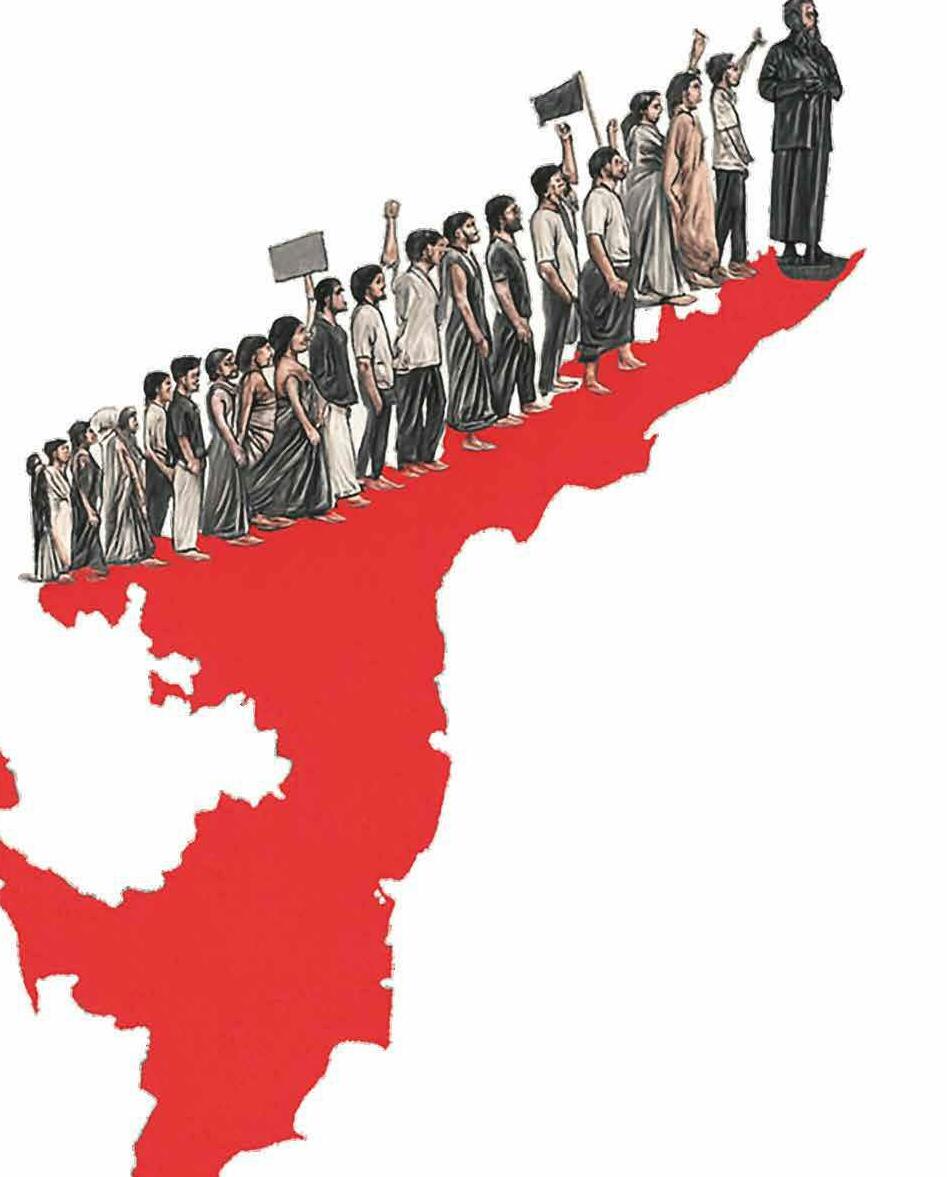
THANTHAI Periyar launched the Self-Respect Movement in 1925 after quitting the Congress. It later evolved into the Dravidar Kazhagam (DK) and then the Dravida Munnetra Kazhagam (DMK). The All India Anna Dravida Munnetra Kazhagam (AIADMK) was also a continuation of that legacy.
It is now nearly a 100 years since the movement was launched, and about 60 years since it first came to power. Today, the DMK, which rules Tamil Nadu, identifies its governance as the “Dravidian Model”.
The reason this century-old movement continues to remain so strong is the support and influence of the people. Through its ideology and its actions, the Dravidian philosophy has reached all sections of society ranging from scholars to ordinary citizens. How did this widespread reach happen?
In the latter half of the 19th century, a consciousness about gaining freedom from British rule began to emerge in India. When movements and protests for independence started rising, the British countered them with the argument that “Indians were not fit to govern themselves; they have no such historical tradition”. This claim was repeatedly asserted and propagated. As a response, A strong awareness arose among Indian scholars about their own history. It can be said that this period was, in every sense, a fertile moment for the formation of Indian history.

Diese Geschichte stammt aus der December 11, 2025-Ausgabe von Outlook.
Abonnieren Sie Magzter GOLD, um auf Tausende kuratierter Premium-Geschichten und über 9.000 Zeitschriften und Zeitungen zuzugreifen.
Sie sind bereits Abonnent? Anmelden
WEITERE GESCHICHTEN VON Outlook
Outlook
Joy Words Club
Lit fests are defined by their audience. Organisers, speakers, curators are all replaceable but not the readers, not the audience

4 mins
February 01, 2026

Outlook
The Sting of the Bar
India today has more than 4.3 lakh undertrial prisoners. A significant number of them are linked to political cases
8 mins
February 01, 2026
Outlook
The Dispossessed
The systematic creation of criminal and security legislations view Adivasis as an inherently suspect class of criminals and terrorists
8 mins
February 01, 2026

Outlook
The Hypocrisy of Liberals
Favour of the self-proclaimed 'liberals' is lost the minute religion intervenes
5 mins
February 01, 2026
Outlook
Inside the Phansi Yard
Death row intensifies the structured brutalities of the penal system and reminds us why the struggle against the death penalty must also include the fact of prison violence
9 mins
February 01, 2026
Outlook
The Detention Legacy
Since Independence, a number of laws have been enacted that allow preventive detention which have been widely used by all regimes against their political opponents
7 mins
February 01, 2026
Outlook
“This Could Happen to You
The Bhima Koregaon case is not only about those who were imprisoned. It is also about the fate of democracy itself
8 mins
February 01, 2026

Outlook
"I Remember Swinging Between Hope and Despair"
HOPE and despair are basic human emotions and I believe that all human beings, now and then, swing between these two ends of the spectrum in life.
2 mins
February 01, 2026

Outlook
Think Ink
In 2026-the 'year of analog'-how will our relationship with literary festivals evolve?
6 mins
February 01, 2026

Outlook
Who Stole My Youth?
A Delhi district court granted Mohammad Iqbal bail in the riots case within three months. On March 18, 2025, he was discharged in the Babbu murder case, even as the riots trial continues
6 mins
February 01, 2026
Listen
Translate
Change font size