
Mit Magzter GOLD unbegrenztes Potenzial nutzen
Erhalten Sie unbegrenzten Zugriff auf über 9.000 Zeitschriften, Zeitungen und Premium-Artikel für nur
Versuchen GOLD - Frei
THE SIMPLE JOY OF DOING SOMETHING COMPLETELY PURPOSELESS on purpose
Psychologies UK
|June 2026
There is a particular feeling that arrives with the first genuinely warm Saturday of year.The window is open, the light has changed and something in the air smells faintly of possibility. And within minutes, sometimes seconds, the mental list begins. The garden needs sorting. You could finally start that thing you've been putting off since January. You could go for a run, or reorganise the kitchen.

The year, which felt perfectly manageable in February, suddenly develops a will of its own. There is catching up to do, there is ground to make up. “The longer days and brighter mornings energise us and make us start to think about what we could do differently,” says Dr Emma Hepburn, clinical psychologist, NHS practitioner and author of The Anti-Burnout Book (Greenfinch, £20). That instinct is real, and it's not wrong. But it has a shadow side. And it might be worth examining what we gain when we choose to ignore it.
The usefulness trap
We have become, without quite noticing, extraordinarily good at justifying how we spend time. Hobbies have become side hustles, walks have become step counts, reading has become self-development, even rest has acquired a vocabulary of optimisation: hygiene, recovery protocols, restorative practices. Leisure, in other words, has been colonised by usefulness.
Dr Giulia Poerio, an associate professor of psychology at the University of Sussex, whose research explores mind-wandering, has spent years studying what the mind does when we finally leave it alone. And she thinks our preoccupation with usefulness has its dangers. “I think we lose the value of activities being intrinsically motivating and rewarding,” she says, “and potentially lose appreciation of the cognitive and emotional benefits of the activities in and of themselves.”
It’s not just that things become less enjoyable. We lose access to something harder to manufacture; something that no productivity metric can measure. “Of course there are benefits associated with achieving goals, but that may come at the cost of more complex emotional experiences such as aesthetic appreciation, connection and meaning that come from simply being absorbed in activities with no specific end goal in mind.”
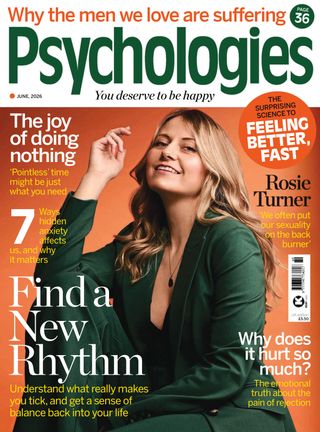

Diese Geschichte stammt aus der June 2026-Ausgabe von Psychologies UK.
Abonnieren Sie Magzter GOLD, um auf Tausende kuratierter Premium-Geschichten und über 9.000 Zeitschriften und Zeitungen zuzugreifen.
Sie sind bereits Abonnent? Anmelden
WEITERE GESCHICHTEN VON Psychologies UK

Psychologies UK
Why do I feel SO SENSITIVE?
I've always been terrible at getting back to people when they communicate with me. Birthday cards? Who am I kidding. A few good friends send them to me, but given they never get one in return, the number is dwindling. Unless I can find the perfect words, a text stays unsent. And don’t even get me started on those two dreaded blue ticks...

5 mins
June 2026

Psychologies UK
HOW THE WILD helped me heal
The sun is warm on my arms as I tentatively step into the lake, the water a delicious cool around my ankles. I give a little shriek as I wade in, little by little, but I soon adjust to the temperature – and it's wonderful to glide through the water. There's the green of the surrounding trees and grass cradling around the lake, the sound of ducks quacking somewhere nearby. I swim gently, and say hello to fellow swimmers out enjoying the sun. It's amazing to me that this place is close to our home.
4 mins
June 2026

Psychologies UK
When our search for safety goes wrong
Kim Morgan's client Anna braves some painful conversations with her children to discover what is really behind her hoarding behaviour
3 mins
June 2026

Psychologies UK
Become an inspirational force in children's emotional wellbeing
Ever wanted to make a difference and train to become a coach? With the Ollie School, you could be changing lives before you know it!
1 mins
June 2026
Psychologies UK
Looking after new mum's mental wellbeing...
Georgie Woollams, founder of Mum-Love.com, a podcast and online space for supporting new mothers, shares what she's learnt from women on the impact of identity loss after childbirth. She explains why looking after new mums should matter to everyone...
1 mins
June 2026

Psychologies UK
Panic buying driven more by group behaviour
It's less about personality — and more about what others are doing
1 min
June 2026

Psychologies UK
Does balance feel like an illusion?
Everyone from the age-old sages to modern-day philosophers have extolled that the art of life is all about balance. But how do you find it?
3 mins
June 2026

Psychologies UK
THE SIMPLE JOY OF DOING SOMETHING COMPLETELY PURPOSELESS on purpose
There is a particular feeling that arrives with the first genuinely warm Saturday of year.The window is open, the light has changed and something in the air smells faintly of possibility. And within minutes, sometimes seconds, the mental list begins. The garden needs sorting. You could finally start that thing you've been putting off since January. You could go for a run, or reorganise the kitchen.
6 mins
June 2026

Psychologies UK
Campaign pushes for better access to countryside
Poor maintenance and signage limit who can enjoy nature
1 min
June 2026

Psychologies UK
Flying isn't all plain sailing...
Harriet Minter is learning to sit with turbulence - both on planes and in real life
2 mins
June 2026
Listen
Translate
Change font size