
Mit Magzter GOLD unbegrenztes Potenzial nutzen
Erhalten Sie unbegrenzten Zugriff auf über 9.000 Zeitschriften, Zeitungen und Premium-Artikel für nur
Versuchen GOLD - Frei
Binary Fixed-Point Arithmetic
Circuit Cellar
|October 2025
Extracting Signals from Noise and Other Distractions

Speed or precision? That's the basic decision involved in fixed-point versus floating-point arithmetic in computing. Bob looks deeply into the hows and whys of fixed-point arithmetic and explains why both speed and precision are possible with the right technique.
When I graduated from college, my first job was with Hamilton Standard (now Collins Aerospace). The part of the company that I worked for made strapdown inertial navigation systems (INS). In those days, most INS consisted of three or four gyroscopes and three or four accelerometers—one for each axis and, optionally, a fourth for error-checking places at 45 degrees to the coordinate system. In conventional systems, the inertial platform was mechanically gimbaled in such a way that the coordinate system remained fixed in space. The inertial platform was kept in a fixed orientation relative to their initial conditions when they were calibrated on the launch pad. The signals from the gyros and accelerometers fed the control system that used the gimbals to keep the inertial platform orientation fixed in space. With no movement of the initial inertial reference frame, the math for navigation was much simpler.
With the advent of computer power, it was possible for the guidance computer to perform the math for navigation with the gyros and accelerometers strapped down to the frame of the spacecraft. The math was intense. Our division’s INS were used on the Apollo Lunar Module backup guidance system (called the LM Abort Guidance System, Figure 1), the Viking Mars lander, and the Delta launch rocket. On the Apollo program, ours was the only strapdown INS.
I think I got the job because my senior project in aerospace engineering was helping a professor build a strapdown INS. I knew basically nothing about what it was or how it worked, but it was on my resume.

Diese Geschichte stammt aus der October 2025-Ausgabe von Circuit Cellar.
Abonnieren Sie Magzter GOLD, um auf Tausende kuratierter Premium-Geschichten und über 9.000 Zeitschriften und Zeitungen zuzugreifen.
Sie sind bereits Abonnent? Anmelden
WEITERE GESCHICHTEN VON Circuit Cellar
Circuit Cellar
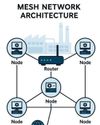
Mesh for Embedded Control
Mesh Networks Are Rewiring Embedded Systems

11 mins
March 2026

Circuit Cellar
A System That Detects, Tracks, and Deters Deer
Using Computer Vision, an Arduino, and a Raspberry Pi 5
14 mins
March 2026

Circuit Cellar
Analog Meets Digital
Part 4: Eliminating Mains Interference with an ADC
19 mins
March 2026

Circuit Cellar
Datasheet: Linux-Based SBCs
SBCs Running Linux Bring Enterprise Power to the Network's Edge
8 mins
March 2026
Circuit Cellar
Running Model Trains Without Human Input
A Raspberry Pi Pico Controls Two Trains
9 mins
March 2026

Circuit Cellar
Inside the Tech: E-Bikes Explained
The Future of Product Developement Nature
5 mins
March 2026

Circuit Cellar
Connector Requirements for High-Voltage Healthcare Applications
Simplifying Safety and Security
9 mins
March 2026
Circuit Cellar
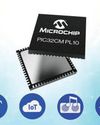
PIC32CM PL10 MCUs Expand Microchip's ARM Cortex-MO+ Portfolio
Building on decades of experience, Microchip Technology has added PIC32CM PL10 MCUs to its PIC32C family of ARM Cortex-M0+ core devices. PL10 MCUs feature a rich set of Core Independent Peripherals (CIPs), 5V operation, touch capabilities, integrated toolsets and safety compliance.
1 mins
March 2026

Circuit Cellar
From Buffer Overflows to Control Flow Attacks
This article extends the January 2026 article by showing a buffer overflow attack that changes a return value. I also discuss the use of the GCC stack protection feature, and demonstrate that it's not always a bulletproof protection method, even if it is better than doing nothing.
7 mins
March 2026
Circuit Cellar
Another Matter-Enabled MCU: the ESP32-C6
The list of MCUs that support the Matter protocol continues to get longer. In this column, Brian goes in-depth on one of the newer Matter-enabled MCUs and shows just how it compares to some of the alternatives now on the market.
21 mins
March 2026
Listen
Translate
Change font size