
Mit Magzter GOLD unbegrenztes Potenzial nutzen
Erhalten Sie unbegrenzten Zugriff auf über 9.000 Zeitschriften, Zeitungen und Premium-Artikel für nur
Versuchen GOLD - Frei
Connector Requirements for High-Voltage Healthcare Applications
Circuit Cellar
|March 2026
Simplifying Safety and Security
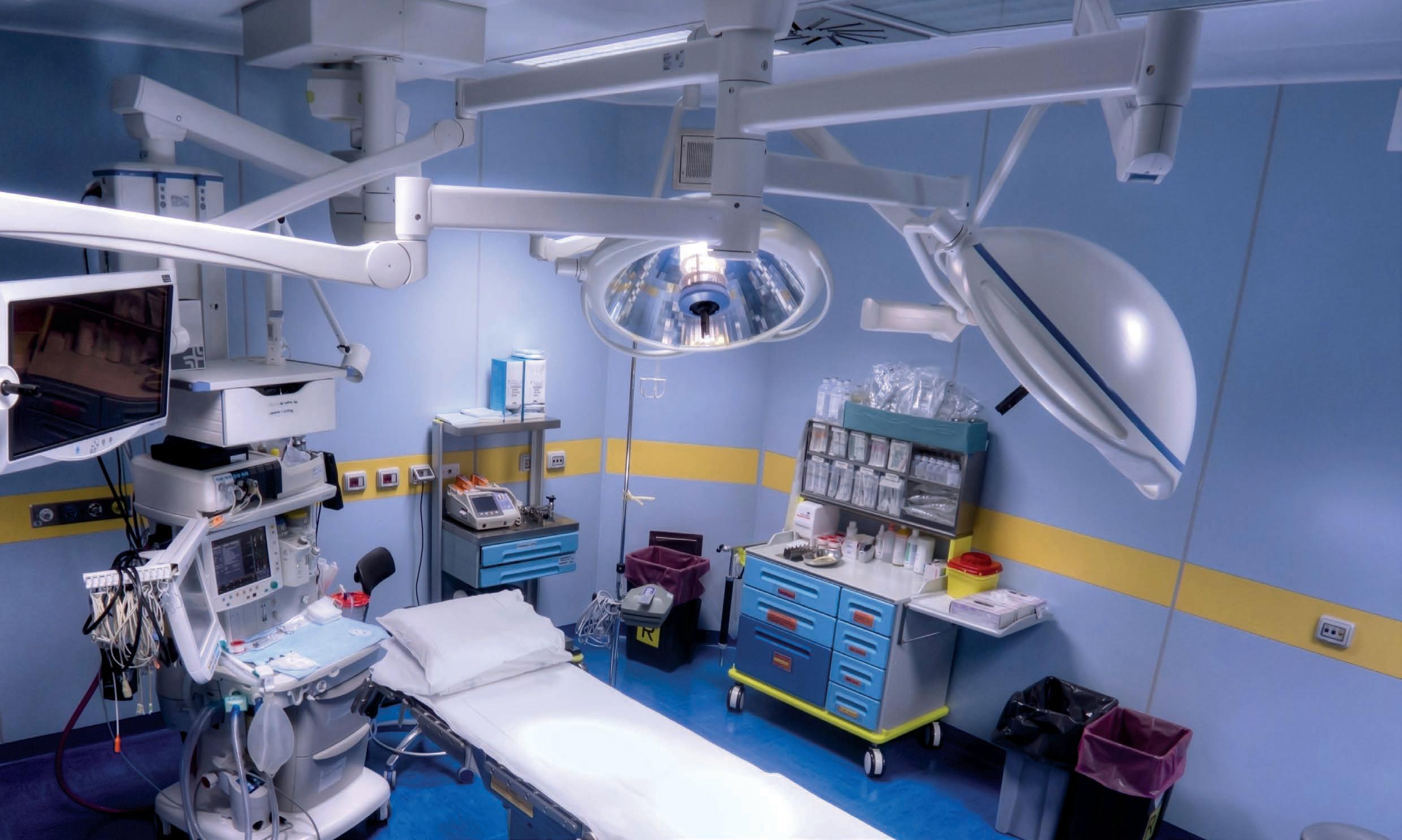
Medical connectors need to meet a plethora of industry standards and unique practical requirements. Both are most stringent in high-voltage applications.
Any procedure involving patients being exposed to high voltages is high-risk. Imaging systems based on traditional X-ray, computed tomography (CT), and fluoroscopy (which uses continuous X-rays to produce a video) can generate voltages up to 150kV. Electrosurgical and ablation devices produce high-frequency (hundreds of kHz) signals with peak voltages around 4kV, with probes in direct contact with tissue to cut and coagulate. Catheter-based electrophysiology systems typically operate at approximately 1.5kV. Other examples include surgical lasers based on solid-state or gas lasers; the former require excitation voltages of one to five kV, and the latter up to tens of kilovolts.
Medical connectors need to function effectively in environments where flexible pin configurations, voltage clearance and creepage, and compatibility with both legacy and future platforms are necessary. Some devices now feature smart capabilities, such as trackable connection histories and on-device confirmation of secure mating.
For these applications and more, medical connectors must meet essential requirements such as safety, sterilization, reliability and customization.
SAFETY DEFINITIONS AND STANDARDS FOR MEDICAL EQUIPMENT
Compliance with established industry standards is essential for any company seeking to introduce high-voltage products into the healthcare market, as regulators, hospitals, and notified bodies all require objective evidence that electrical safety risks are being systematically managed. In the medical field, there is no single, universal definition of “high voltage,” but generally, it includes any voltage level that could pose a hazard to patients, users, or service personnel during normal operation or single-fault conditions.

Diese Geschichte stammt aus der March 2026-Ausgabe von Circuit Cellar.
Abonnieren Sie Magzter GOLD, um auf Tausende kuratierter Premium-Geschichten und über 9.000 Zeitschriften und Zeitungen zuzugreifen.
Sie sind bereits Abonnent? Anmelden
WEITERE GESCHICHTEN VON Circuit Cellar
Circuit Cellar
Mesh for Embedded Control
Mesh Networks Are Rewiring Embedded Systems

11 mins
March 2026

Circuit Cellar
A System That Detects, Tracks, and Deters Deer
Using Computer Vision, an Arduino, and a Raspberry Pi 5
14 mins
March 2026

Circuit Cellar
Analog Meets Digital
Part 4: Eliminating Mains Interference with an ADC
19 mins
March 2026

Circuit Cellar
Datasheet: Linux-Based SBCs
SBCs Running Linux Bring Enterprise Power to the Network's Edge
8 mins
March 2026
Circuit Cellar
Running Model Trains Without Human Input
A Raspberry Pi Pico Controls Two Trains
9 mins
March 2026

Circuit Cellar
Inside the Tech: E-Bikes Explained
The Future of Product Developement Nature
5 mins
March 2026

Circuit Cellar
Connector Requirements for High-Voltage Healthcare Applications
Simplifying Safety and Security
9 mins
March 2026
Circuit Cellar
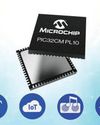
PIC32CM PL10 MCUs Expand Microchip's ARM Cortex-MO+ Portfolio
Building on decades of experience, Microchip Technology has added PIC32CM PL10 MCUs to its PIC32C family of ARM Cortex-M0+ core devices. PL10 MCUs feature a rich set of Core Independent Peripherals (CIPs), 5V operation, touch capabilities, integrated toolsets and safety compliance.
1 mins
March 2026

Circuit Cellar
From Buffer Overflows to Control Flow Attacks
This article extends the January 2026 article by showing a buffer overflow attack that changes a return value. I also discuss the use of the GCC stack protection feature, and demonstrate that it's not always a bulletproof protection method, even if it is better than doing nothing.
7 mins
March 2026
Circuit Cellar
Another Matter-Enabled MCU: the ESP32-C6
The list of MCUs that support the Matter protocol continues to get longer. In this column, Brian goes in-depth on one of the newer Matter-enabled MCUs and shows just how it compares to some of the alternatives now on the market.
21 mins
March 2026
Listen
Translate
Change font size