
Mit Magzter GOLD unbegrenztes Potenzial nutzen
Erhalten Sie unbegrenzten Zugriff auf über 9.000 Zeitschriften, Zeitungen und Premium-Artikel für nur
Automating Metrics in Modern Embedded Development
Circuit Cellar
|October 2025
Complex modern embedded systems can be impossible to debug without serious metrics on performance, resource use, and error conditions. Collecting those metrics manually is laborious and error-prone. Jacob explores the metrics that matter and shows how collecting and delivering them can-and should-be automated.

Modern embedded systems are notoriously complex: hundreds of small modules, countless configuration options, and hardware constraints that affect every decision. Even worse, companies demand more features within tight deadlines, making handling a complex system a stressful task.
As we keep adding features, we lose confidence in whether our system is stable or functionally correct. The sheer complexity makes us doubt the quality of the work we deliver. We often ask ourselves: Will our changes crash the system in the next deployment? We essentially work under a shadow of fear.
And yet many embedded teams still work without real visibility into their code's health. They rely on intuition, firefighting, and gut feel to decide when to refactor or where quality might be slipping.
The problem is, without data, these decisions are often wrong, and the cost shows up as defects, delays, and brittle architectures.
That's why the best embedded teams don't just write software. They measure it. Metrics turn vague hunches into concrete trends, letting you spot risk before it snowballs and steer your development toward maintainable, high-quality code.
In this post, we'll explore why metrics matter, the key ones every team should track, and how to automate them directly into your build system—so measuring quality becomes as routine as compiling code.
WHY METRICS MATTER IN EMBEDDED DEVELOPMENT
In 2007, two elderly ladies in Oklahoma were driving somewhere in their Toyota Camry. Their trip ended tragically since one of them was killed and the other seriously injured in a crash.
The investigation revealed that a defect in the vehicle's electronic throttle control system caused it to accelerate uncontrollably. The car's code also revealed a grim reality: the firmware was extremely complex—often described as “spaghetti code”—and contained:
• 11,000 global variables
• 80,000 coding standard violations


Diese Geschichte stammt aus der October 2025-Ausgabe von Circuit Cellar.
Abonnieren Sie Magzter GOLD, um auf Tausende kuratierter Premium-Geschichten und über 9.000 Zeitschriften und Zeitungen zuzugreifen.
Sie sind bereits Abonnent? Anmelden
WEITERE GESCHICHTEN VON Circuit Cellar
Circuit Cellar
The Future of Sensors in Safety Systems Sensing the Stop
How Magnetic Sensors Are Enabling the Next Generation of Braking Systems

5 mins
December 2025
Circuit Cellar
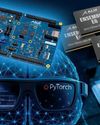
Alif Semiconductor Elevates Generative AI at the Edge with New Support for ExecuTorch Runtime in Its Ensemble MCUs
Alif Semiconductor, the leading global supplier of secure, connected, power efficient Artificial Intelligence and Machine Learning (AI/ML) microcontrollers (MCUs) and fusion processors, announced that developers can now use the ExecuTorch Runtime, a quantization extension of the popular PyTorch ML framework, for AI applications built to run on its Ensemble E4/E6/E8 series of MCUs and fusion processors.
1 min
December 2025

Circuit Cellar
Encrypted MQTT Protocol for Critical Sectors
Mechanisms, Challenges, and Best Practices
3 mins
December 2025
Circuit Cellar
Datasheet: Small Size, Big Power
Smaller Microcontrollers Bring New Possibilities
9 mins
December 2025

Circuit Cellar
Analog Devices Launches ADI Power Studio and New Web-Based Tools
Analog Devices, Inc. (ADI), a global semiconductor leader, announced the launch of ADI Power Studio, a comprehensive family of products that offers advanced modeling, component recommendations, and efficiency analysis with simulation.
1 mins
December 2025
Circuit Cellar
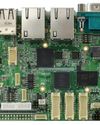
Compact IBR300 2.5" SBC Powered by NXP i.MX 93 from IBASE
IBASE Technology, Inc., a leading provider of rugged embedded computing platforms, announced the release of the IBR300, a 2.5\" RISC-based single board computer (SBC) powered by the NXP i.MX 93 processor with dualcore ARM Cortex-A55 (up to 1.7GHz) and a Cortex-M33 MCU.
1 min
December 2025
Circuit Cellar
Sensors in the Spotlight
The Next Decade of Embedded Sensor Systems
12 mins
December 2025

Circuit Cellar
Bob's Wrap Up
In Bob's last article with Circuit Cellar, he attempts to wrap up a career of more than 50 years as an embedded systems engineer and 14 years with Circuit Cellar. He looks at each of his 58 articles by category and provides some recommendations for his fellow engineers.
7 mins
December 2025

Circuit Cellar
Designing Embedded Software Architectures That Last
I've reviewed hundreds of firmware projects over the years, and one thing always stands out: the most successful projects have a clear, deliberate architecture.
10 mins
December 2025

Circuit Cellar
Broadcom Introduces Industry's First Wi-Fi 8 Silicon Ecosystem Powering the AI Era
Broadcom, Inc. unveiled the first Wi-Fi 8 silicon solutions for broadband wireless, targeting residential gateways, enterprise access points, and smart mobile clients.
1 mins
December 2025
Listen
Translate
Change font size