
Mit Magzter GOLD unbegrenztes Potenzial nutzen
Erhalten Sie unbegrenzten Zugriff auf über 9.000 Zeitschriften, Zeitungen und Premium-Artikel für nur
Painting on the precipice
BBC History UK
|June 2025
Hans Holbein’s masterwork The Ambassadors is an exquisite portrait of two 16th-century diplomats. But it is also crammed with symbols and hidden messages. Tracy Borman deciphers the clues that betray the turbulence of a fateful year
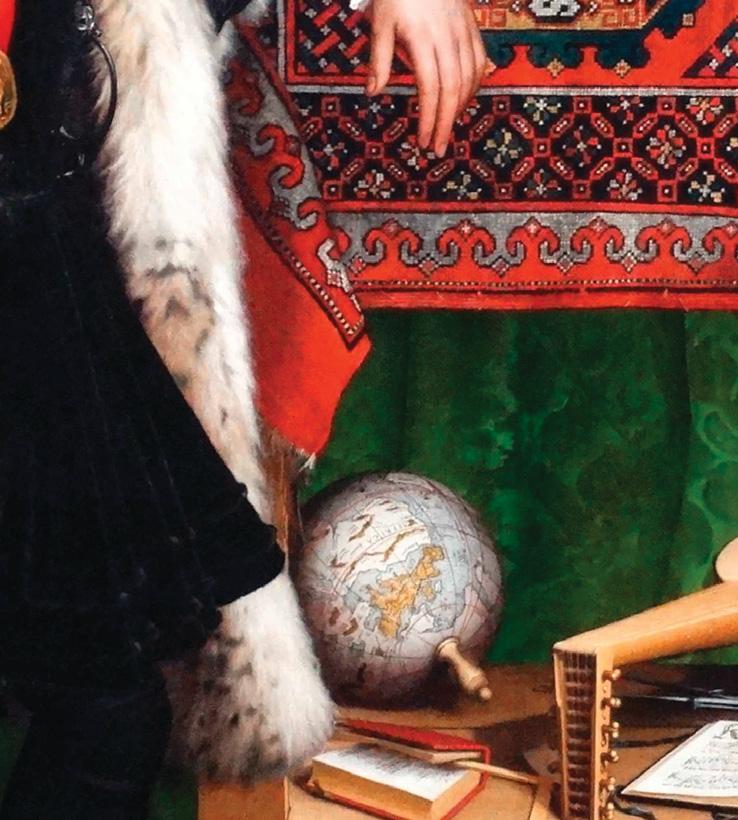
Europe was teetering on the brink of a major rift. Relations between England and continental powers, always fragile, were at risk of fracturing fatally. Often violent confrontations between the Catholic Church and burgeoning Protestant adherents were spreading like wildfire, and the English king seemed determined to add fuel to those flames. Tensions could scarcely be higher.
It was at that moment, in 1533, that Hans Holbein the Younger - the most celebrated court painter of the Tudor age - accepted a commission from a recently arrived visitor to the English court. A portrait would be produced, celebrating the wealth of those depicted. But in its extraordinary details, some more obscure and cryptic than others, the picture also reveals important aspects of the sitters and the tempestuous era in which it was painted. As London’s National Gallery celebrates the reopening of its Sainsbury Wing and a major redisplay of its collection, it seems like an apposite moment to take a fresh look at this masterful painting and the turbulent year that spawned it.
In the eye of the storm
Henry VIII, king since 1509, had recently defied the pope by setting aside his first wife, Catherine of Aragon, to marry Anne Boleyn, the woman who had captivated him for the previous seven years. This sparked a seismic shift in England’s religious, political and social life that would reverberate down the centuries.
Jean de Dinteville, ambassador of Henry VIII's great rival, Francis I of France, instructed Holbein to capture this extraordinary moment with a portrait of himself and his fellow diplomat Georges de Selve, both of whom were caught in the eye of the gathering storm. The result would become one of the artist’s most celebrated works.

Diese Geschichte stammt aus der June 2025-Ausgabe von BBC History UK.
Abonnieren Sie Magzter GOLD, um auf Tausende kuratierter Premium-Geschichten und über 9.000 Zeitschriften und Zeitungen zuzugreifen.
Sie sind bereits Abonnent? Anmelden
WEITERE GESCHICHTEN VON BBC History UK
BBC History UK
Royal progress
Alice Loxton's new book begins with a compelling premise.

1 mins
January 2026

BBC History UK
"Leaving Muslim contributions out of European history has allowed Islamophobic sentiment to flourish"
THARIK HUSSAIN speaks to Danny Bird about the long but often overlooked and distorted history of Muslims in Europe - and the enduring resistance to its reappraisal
9 mins
January 2026
BBC History UK
7 UNMISSABLE TRIPS IN 2026
With new routes, big anniversaries and fresh ways of discovering familiar favourites, TOM HALL highlights historical destinations to explore this year
4 mins
January 2026

BBC History UK
SOPHIE SCHOLL
Novelist Simon Scarrow chooses
2 mins
January 2026
BBC History UK
Portrait of the artists
TRACY BORMAN is enraptured by a beautifully written and richly illustrated exploration of early modern English art
2 mins
January 2026
BBC History UK
Humble heroes
Statues celebrate monarchs, rulers and conquerors - but who remembers the brave folk who gave their lives to save others? Anna Maria Barry recounts stories of selfsacrificing but otherwise ordinary people from the 19th and 20th centuries who are commemorated in one London park.
9 mins
January 2026
BBC History UK
BACK FROM THE DEAD
Britain’s War Office thanked the SAS for its remarkable efforts in WW2 by abolishing it – yet soon realised the error of its ways. Gavin Mortimer tells the story of how the elite unit reinvented itself to confront the challenges of the postwar world
8 mins
January 2026
BBC History UK
Q&A - A selection of historical conundrums answered by experts
Were Roman gladiators vegetarian?
8 mins
January 2026
BBC History UK
Martha McGill on a pioneering study of folk beliefs in early modern England
I was recently chatting with a handful of early modernists about the history book we'd take to a desert island.
1 min
January 2026
BBC History UK
Independent empires
Viewing the British empire through an American lens provides an intriguing alternative perspective on the 'Land of the Free', says DAVID ARMITAGE
4 mins
January 2026
Listen
Translate
Change font size