
Mit Magzter GOLD unbegrenztes Potenzial nutzen
Erhalten Sie unbegrenzten Zugriff auf über 9.000 Zeitschriften, Zeitungen und Premium-Artikel für nur
Versuchen GOLD - Frei
LUDDITE LESSONS
The New Yorker
|April 21, 2025
The weavers lost the fight to save their livelihoods. As A.I. looms, can we do better?
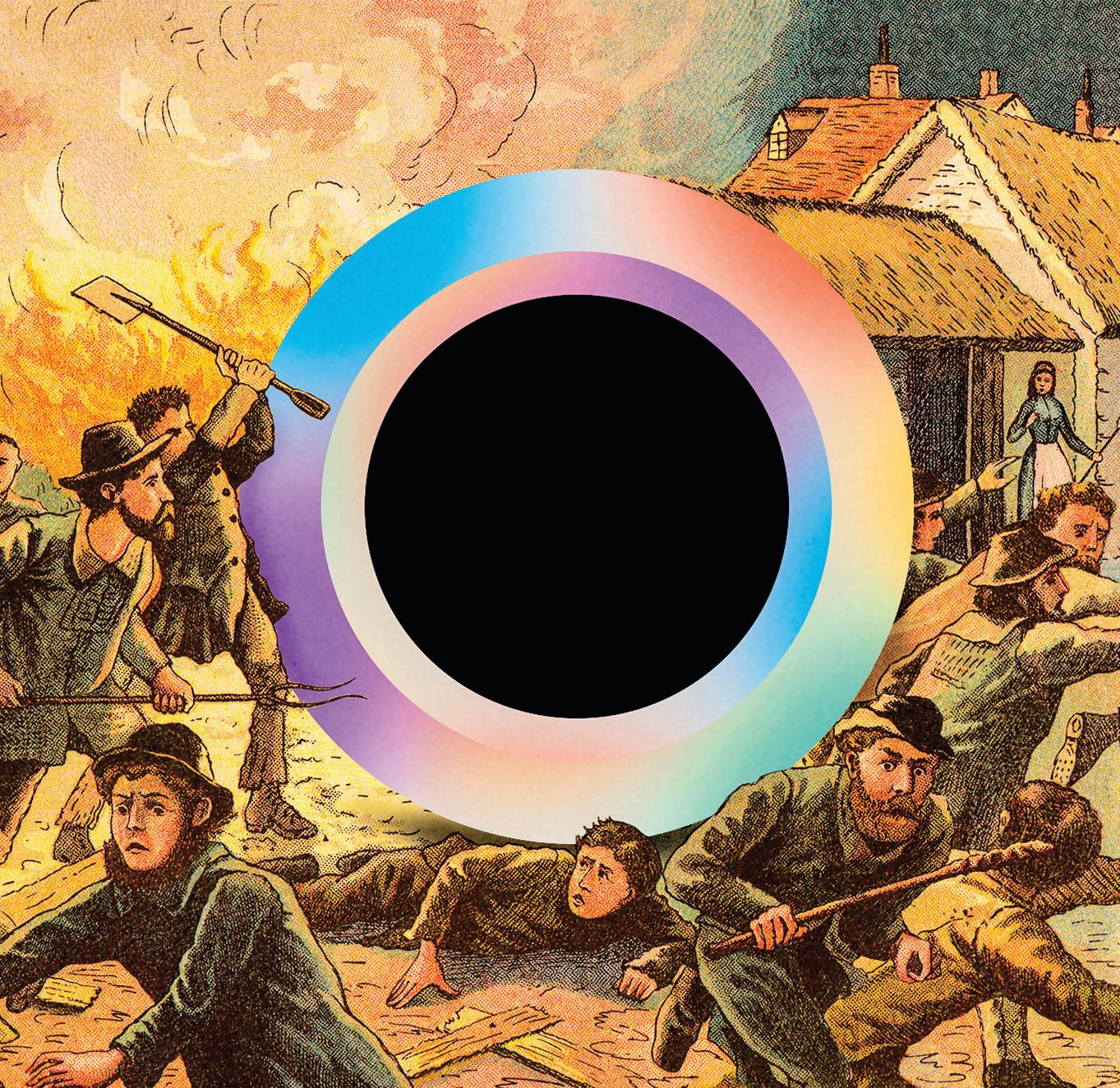
The challenge is to make A.I. work for us, rather than the other way around.
In the early hours of April 12, 1812, a crowd of men approached Rawfolds Mill, a four-story stone building on the banks of the River Spen, in West Yorkshire. This was Brontë country—a landscape of bleak moors, steep valleys, and small towns nestled in the hollows. The men, who'd assembled on the moors hours earlier, were armed with muskets, sticks, hatchets, and heavy blacksmith's hammers. When they reached the mill, those at the front broke windows to gain entry, and some fired shots into the darkened factory. But the mill's owner, William Cartwright, had been preparing for trouble.
During the previous twelve months, a wave of attacks had swept through textile factories across central and northern England. The unrest began in Nottinghamshire, where stocking knitters stormed their employers' premises and destroyed newfangled knitting frames, which they blamed for undercutting wages and reducing them to penury. These attacks spread to Lancashire, the heart of textile manufacturing, and to Yorkshire, where mill owners had begun mechanizing the ancient craft of “dressing” woollen cloth—raising the nap and cutting it into finished pieces.
For centuries, the “shearers” or “croppers” who practiced this craft had formed something like an artisanal priesthood, raising the nap with the heads of teasel plants and finishing the cloth with handheld shears in a ritual of skill passed from father to son. Now came the machines—the gig mills with their cold metal rollers and the shear-ing frames that needed just one man turning a crank, like an organ grinder playing a funeral march for an entire way of life.

Diese Geschichte stammt aus der April 21, 2025-Ausgabe von The New Yorker.
Abonnieren Sie Magzter GOLD, um auf Tausende kuratierter Premium-Geschichten und über 9.000 Zeitschriften und Zeitungen zuzugreifen.
Sie sind bereits Abonnent? Anmelden
WEITERE GESCHICHTEN VON The New Yorker

The New Yorker
HOW SHOULD A MOTHER BE?
We keep revising the maternal ideal—and keep falling short of it.

11 mins
January 26, 2026

The New Yorker
THE VERMONTER
What happened when Bernie Sanders left Brooklyn for Burlington.
16 mins
January 26, 2026

The New Yorker
BREAKING NEWS
Inside Bari Weiss's hostile takeover at CBS.
37 mins
January 26, 2026

The New Yorker
SCHOOL OF FISH
On the water with a Southern California seafood savant.
7 mins
January 26, 2026

The New Yorker
COLD COMFORT
The wintry triumphs of Helene Schjerfbeck.
6 mins
January 26, 2026

The New Yorker
WON'T BACK DOWN
The stubborn songs of Zach Bryan.
6 mins
January 26, 2026

The New Yorker
POWER AND PROTEST
On January 8th, the twelfth day of mass protests in Iran, which began when shopkeepers, responding to runaway inflation, closed Tehran’s Grand Bazaar, the Iranian government shut down public access to the internet, further shrouding an already largely closed society. Nevertheless, isolated images and details have been smuggled out, giving a hint of how brutal and monumental these events are.
4 mins
January 26, 2026
The New Yorker
Vinson Cunningham on Barry Blitt's "The Politics of Fear"
I was in a yellow cab in high summer when I saw it. Twenty-three at the time, I sometimes skimmed articles about politics on my clunky BlackBerry while cruising through Central Park to my first real job, fundraising for Barack Obama’s 2008 Presidential campaign. Usually, the ride was placid.
2 mins
January 26, 2026

The New Yorker
SHOW OF FORCE
After a chaotic visit to an ICE jail, a congresswoman faces felony charges in Trump's war against his critics.
37 mins
January 26, 2026

The New Yorker
THE ICE CURTAIN
Nome, Alaska, seems farther from Russia than ever.
26 mins
January 26, 2026
Listen
Translate
Change font size