Versuchen GOLD - Frei
When to Cut, When to Write
Writer’s Digest
|March / April 2026
Six secrets to writing scenes of perfect length.
If you're like me, when you started writing, you followed rudimentary instincts on all craft questions. Characters simply appeared out of thin air; they did things (or they didn't!). The setting was described. Sometimes. Eventually, inevitably, in my case, a character stood at the window, arms akimbo (why always akimbo?) and stared, deep in thought.
At last, I realized I was making hundreds of craft decisions, and without rationale. In fact, every word was a decision. Who put all these adverbs in my story?!
The first craft element I deliberately started controlling was pacing. Specifically, scene length. Finally, I could rush past boring things and slow down to savor the more delicious moments.
Before we get into the nitty-gritty here, it's useful to think about averages.
What Is a Scene?
Scenes—specific moments in a character's life represented with some amount of vividness—vary in length from a single sentence to a whole book.
Nicholson Baker's entire first novel, The Mezzanine, is structured around a single, short scene. The narrator, on his lunch break, rides the office escalator where he works, and much of the book concerns his thoughts during this brief experience.
Most scenes contain some dialogue—we're social animals, and human interactions provide complex, lively drama. In screenplays, the general recommendation is that scenes not exceed three pages, which is three minutes of screentime.
Most scenes in novels aren't longer than 3-4 pages (500-1,000 words), though, of course, there are many wonderful situations that call for much longer scenes, which we'll get to later.
In fact, many personal essays and short stories are composed of what I call mini scenes or fragments of time, often used as specific examples of a concept.
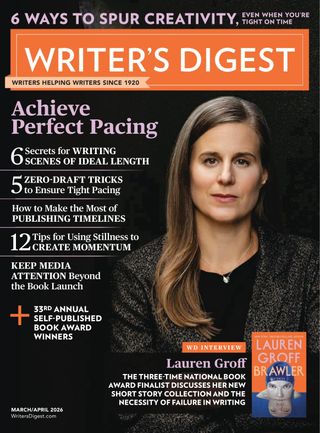

Diese Geschichte stammt aus der March / April 2026-Ausgabe von Writer’s Digest.
Abonnieren Sie Magzter GOLD, um auf Tausende kuratierter Premium-Geschichten und über 9.000 Zeitschriften und Zeitungen zuzugreifen.
Sie sind bereits Abonnent? Anmelden
WEITERE GESCHICHTEN VON Writer’s Digest

Writer’s Digest
Lauren Groff
The three-time National Book Award finalist discusses her new short story collection, Brawler, and the necessity of failure in writing.

14 mins
March / April 2026

Writer’s Digest
Seven
THE CHALLENGE: Write a short story of 650 words or fewer based on the photo below.
2 mins
March / April 2026

Writer’s Digest
Pacing in Nonfiction
It's all about story.
5 mins
March / April 2026
Writer’s Digest
If You're Bored, They're Bored
Five Zero-Draft tricks to ensure tight pacing.
8 mins
March / April 2026

Writer’s Digest
Deities
Gods and goddesses have had power over our imaginations stretching through the ages—whether ancient Norse, Chinese, Mesoamerican, or Greco-Roman, we have a fascination with cosmic beings.
5 mins
March / April 2026
Writer’s Digest
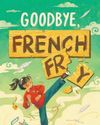
Merging Memory With Imagination
Author Rin-rin Yu's debut middle-grade novel, Goodbye, French Fry, represents a combination of her true childhood experiences and the universal experience of growing into yourself.
5 mins
March / April 2026

Writer’s Digest
Put Yourself in Charge of Your Own Story
Julie Ann Sipos, grand-prize winner of the 33rd annual WD Self-Published Book Awards, on how her career in Hollywood influences her writing style and her business strategy as an indie author.
4 mins
March / April 2026

Writer’s Digest
The Pause Is the Point
How to use stillness to create momentum in your fiction.
10 mins
March / April 2026

Writer’s Digest
Ericka Tiffany Phillips
Ericka Tiffany Phillips is a literary agent at the Stephanie Tade Agency, representing nonfiction authors whose “work have the power to shape culture and catalyze collective transformation,” she says.
2 mins
March / April 2026

Writer’s Digest
Short-Story Dispensers Bring Literature to the Masses
Life is often a wait, whether it's for a commuter train, an appointment with a doctor, or the start of a class.
5 mins
March / April 2026
Listen
Translate
Change font size