
Mit Magzter GOLD unbegrenztes Potenzial nutzen
Erhalten Sie unbegrenzten Zugriff auf über 9.000 Zeitschriften, Zeitungen und Premium-Artikel für nur
Versuchen GOLD - Frei
Pacing in Nonfiction
Writer’s Digest
|March / April 2026
It's all about story.
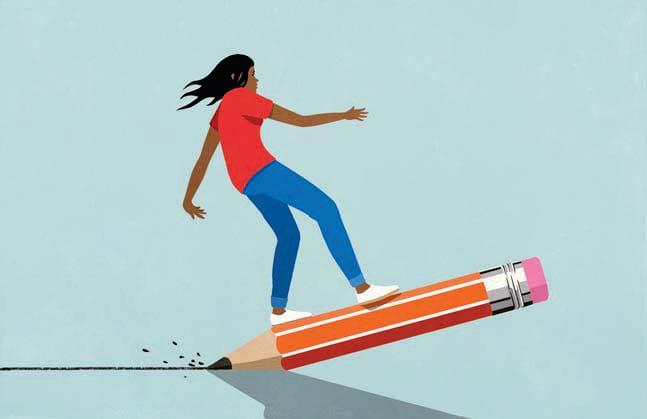
While interviewing the wonderful historical novelist Margaret George, we wound up discussing the unique challenges she faced trying to weave a compelling narrative while remaining true to the myriad details of the period in which her book was set. “You want to get it right, of course,” she said. “My readers expect that accuracy. But you have to be careful not to get too bogged down in all that. Remember, the one sin a writer can never commit is to be boring.”
She was right. The first job of any writer is to be entertaining, and when we talk about pacing, this is really what we mean: How engaged is your reader from chapter to chapter, from scene to scene, and from sentence to sentence? If you write creative (memoir) or prescriptive (self-help) nonfiction, there’s one word you should always hold in mind to keep your work moving: story.
STORY IN PRESCRIPTIVE NONFICTION
If you write self-help, there's a tendency to be so excited about the information you're sharing that you can lose track of pacing. After all, whether it’s weight loss, better business practices, or overcoming writer's block, your goal is to teach something that you think is valuable. Isn't the sheer practicality of the information enough to hold someone’s attention? Usually not. Lists of facts or descriptions of techniques are invitations to memorization. Your book or essay can start to feel like homework, and once that happens, no matter how useful your message, you'll start losing your audience.

Diese Geschichte stammt aus der March / April 2026-Ausgabe von Writer’s Digest.
Abonnieren Sie Magzter GOLD, um auf Tausende kuratierter Premium-Geschichten und über 9.000 Zeitschriften und Zeitungen zuzugreifen.
Sie sind bereits Abonnent? Anmelden
WEITERE GESCHICHTEN VON Writer’s Digest

Writer’s Digest
Lauren Groff
The three-time National Book Award finalist discusses her new short story collection, Brawler, and the necessity of failure in writing.

14 mins
March / April 2026

Writer’s Digest
Seven
THE CHALLENGE: Write a short story of 650 words or fewer based on the photo below.
2 mins
March / April 2026

Writer’s Digest
Pacing in Nonfiction
It's all about story.
5 mins
March / April 2026
Writer’s Digest
If You're Bored, They're Bored
Five Zero-Draft tricks to ensure tight pacing.
8 mins
March / April 2026

Writer’s Digest
Deities
Gods and goddesses have had power over our imaginations stretching through the ages—whether ancient Norse, Chinese, Mesoamerican, or Greco-Roman, we have a fascination with cosmic beings.
5 mins
March / April 2026
Writer’s Digest
Merging Memory With Imagination
Author Rin-rin Yu's debut middle-grade novel, Goodbye, French Fry, represents a combination of her true childhood experiences and the universal experience of growing into yourself.
5 mins
March / April 2026

Writer’s Digest
Put Yourself in Charge of Your Own Story
Julie Ann Sipos, grand-prize winner of the 33rd annual WD Self-Published Book Awards, on how her career in Hollywood influences her writing style and her business strategy as an indie author.
4 mins
March / April 2026

Writer’s Digest
The Pause Is the Point
How to use stillness to create momentum in your fiction.
10 mins
March / April 2026

Writer’s Digest
Ericka Tiffany Phillips
Ericka Tiffany Phillips is a literary agent at the Stephanie Tade Agency, representing nonfiction authors whose “work have the power to shape culture and catalyze collective transformation,” she says.
2 mins
March / April 2026

Writer’s Digest
Short-Story Dispensers Bring Literature to the Masses
Life is often a wait, whether it's for a commuter train, an appointment with a doctor, or the start of a class.
5 mins
March / April 2026
Listen
Translate
Change font size