
Mit Magzter GOLD unbegrenztes Potenzial nutzen
Erhalten Sie unbegrenzten Zugriff auf über 9.000 Zeitschriften, Zeitungen und Premium-Artikel für nur
Versuchen GOLD - Frei
Everyday Wonder
Writer’s Digest
|September - October 2024
How to mine awe from the mundane
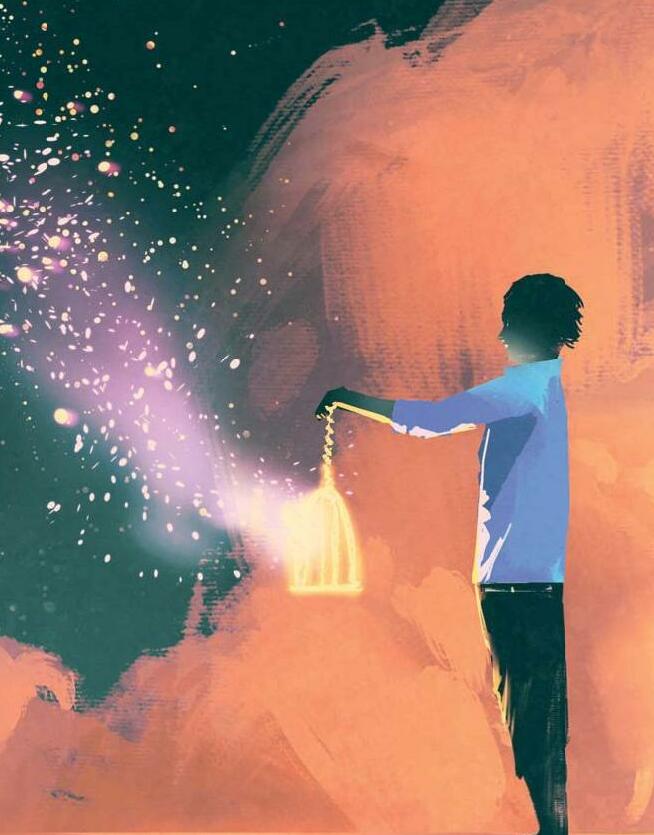
We typically associate wonder with science fiction, fantasy, or magical realism. Yet moments of wonder-an experience of amazement and awe that stills the mind and leaves us speechless-are all around us. Writers in any genre can captivate readers by using specific techniques to highlight the everyday wonder in daily life.
Wonder is a distinctly nonverbal experience, which differentiates it from curiosity (and the verb to wonder). Curiosity engages the thinking mind; the experience of wonder briefly stops thought.
Skilled writers can take everyday objects and processes and turn them into wondrous experiences for the reader.
As you read the examples below, notice how each author uses not only a given technique, but also their specificity of word choice and use of sensory engagement to evoke a sense of wonder. The more specific you are in drawing the reader in through sensory and somatic details, the more universally these moments will resonate.
ZOOMING IN AND BULLET TIME
In order to function in our world, we take many complex processes for granted-unfettered access to utilities, the functioning of our bodies, that hummingbirds and bees will continue to spread pollen. Each of these processes, though, is the inevitable result of dozens to hundreds of earlier moments.
Writers can evoke wonder by zooming in and slowing down time ("bullet time") or zooming in to show details invisible to the human eye.
A masterclass of this approach is Ruth Ozeki's A Tale for the Time Being, which entwines two narratives, one set in Japan and one on a small island off the coast of British Columbia. The latter gives rise to many moments of wonder like this one:
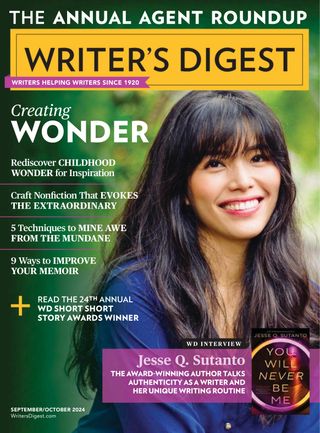

Diese Geschichte stammt aus der September - October 2024-Ausgabe von Writer’s Digest.
Abonnieren Sie Magzter GOLD, um auf Tausende kuratierter Premium-Geschichten und über 9.000 Zeitschriften und Zeitungen zuzugreifen.
Sie sind bereits Abonnent? Anmelden
WEITERE GESCHICHTEN VON Writer’s Digest

Writer’s Digest
Lauren Groff
The three-time National Book Award finalist discusses her new short story collection, Brawler, and the necessity of failure in writing.

14 mins
March / April 2026
Writer’s Digest
Seven
THE CHALLENGE: Write a short story of 650 words or fewer based on the photo below.
2 mins
March / April 2026

Writer’s Digest
Pacing in Nonfiction
It's all about story.
5 mins
March / April 2026
Writer’s Digest
If You're Bored, They're Bored
Five Zero-Draft tricks to ensure tight pacing.
8 mins
March / April 2026

Writer’s Digest
Deities
Gods and goddesses have had power over our imaginations stretching through the ages—whether ancient Norse, Chinese, Mesoamerican, or Greco-Roman, we have a fascination with cosmic beings.
5 mins
March / April 2026
Writer’s Digest
Merging Memory With Imagination
Author Rin-rin Yu's debut middle-grade novel, Goodbye, French Fry, represents a combination of her true childhood experiences and the universal experience of growing into yourself.
5 mins
March / April 2026
Writer’s Digest
Put Yourself in Charge of Your Own Story
Julie Ann Sipos, grand-prize winner of the 33rd annual WD Self-Published Book Awards, on how her career in Hollywood influences her writing style and her business strategy as an indie author.
4 mins
March / April 2026

Writer’s Digest
The Pause Is the Point
How to use stillness to create momentum in your fiction.
10 mins
March / April 2026

Writer’s Digest
Ericka Tiffany Phillips
Ericka Tiffany Phillips is a literary agent at the Stephanie Tade Agency, representing nonfiction authors whose “work have the power to shape culture and catalyze collective transformation,” she says.
2 mins
March / April 2026

Writer’s Digest
Short-Story Dispensers Bring Literature to the Masses
Life is often a wait, whether it's for a commuter train, an appointment with a doctor, or the start of a class.
5 mins
March / April 2026
Listen
Translate
Change font size