
Mit Magzter GOLD unbegrenztes Potenzial nutzen
Erhalten Sie unbegrenzten Zugriff auf über 9.000 Zeitschriften, Zeitungen und Premium-Artikel für nur
Versuchen GOLD - Frei
When FMD hits: Protocols and practices
Stockfarm
|October 2025
South Africa's cattle sector faces tremendous challenges regarding biosecurity and traceability. This year, the dairy industry was among the hardest hit by foot-and-mouth (FMD) disease outbreaks in most provinces in the country, especially the Eastern Cape.
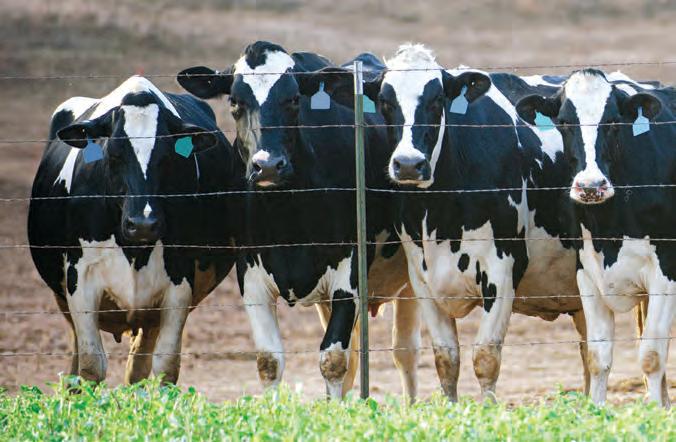
Considering the devastation FMD has caused in dairy herds this year, the Dairy Standard Agency (DSA) invited Dr Mark Chimes, veterinary advisor and manager of Milk SA’s Animal Health and Welfare Programme, to present a webinar on the devastating effect of this debilitating disease but, more importantly, the protocols to follow once FMD has been confirmed.
"FMD is a serious disease with far-reaching consequences," he said. These include the actual losses suffered in the form of culled animals, veterinary costs and additional precautions to be taken when handling animals, milk production losses, added transport costs, culling of sick animals on the farm, maintaining quarantine for at least 16 months after day zero, and not being allowed to sell animals for at least one year.
Cutting to the chase
Three FMD serotypes are classified as South African Territory, namely SAT1, SAT2 and SAT3. It is important that producers understand a number of things regarding the spread of the disease. Firstly, it can spread over vast distances and currently the main problem in this regard is animals being moved illegally during periods of quarantine by owners who are desperate to sell their animals, as they have to cover the costs of keeping and feeding animals on the farm for longer.
Evidence shows the virus may spread via wind, while water's role is unclear. In one case, animals sharing a water source with an upstream farm — where livestock were FMD positive - were suspected to be infected through that water.
Producers should also take care when buying manure from other farms or feedlots to spread on their fields. Contaminated manure can lead to animals being infected when they graze those fields.
Carrier animals may show no signs of the disease, yet they will shed the virus which can lead to it spreading to other farms when sub-clinically infected animals are moved.

Diese Geschichte stammt aus der October 2025-Ausgabe von Stockfarm.
Abonnieren Sie Magzter GOLD, um auf Tausende kuratierter Premium-Geschichten und über 9.000 Zeitschriften und Zeitungen zuzugreifen.
Sie sind bereits Abonnent? Anmelden
WEITERE GESCHICHTEN VON Stockfarm
Stockfarm
Tackle mastitis in dairy COWS
Mastitis is one of the most significant challenges in the dairy industry, reducing milk yield and overall profitability.

5 mins
February 2026
Stockfarm
Ewe nutrition for a healthy lamb crop
Producers widely acknowledge that the success of any sheep enterprise depends heavily on the potential and management of the farm’s female animals.
4 mins
February 2026
Stockfarm
Does chop length really matter?
Chop length is a critical factor in producing successful silage. Mistakes made during this initial stage can have lasting, irreparable effects.
2 mins
February 2026
Stockfarm
Place these ticks on your autumn watch list
Heavy tick infestations and an increase in the incidence of tickborne diseases such as redwater, gallsickness, and heartwater remain a serious challenge for livestock producers in South Africa, particularly when environmental conditions favour these parasites. Effective control strategies and sound management practices are therefore essential.
2 mins
February 2026
Stockfarm
The grazing paradox: Towards better data
Producers are often under pressure to reassess their grazing strategies and consider dramatic management changes aimed at sustainability.
5 mins
February 2026

Stockfarm
Shearer training for improved performance
Lungani Maqakalana has sheep shearing in his blood. Both his father and uncle were shearers, and from a young age he aspired to follow in their footsteps.
4 mins
February 2026
Stockfarm
Misuse of an employer's property
An employer's property is an integral part of the business infrastructure. Any loss, damage, accidental misuse, intentional misuse, or waste of this property constitutes serious misconduct, placing unnecessary strain on the employer to repair or replace it.
2 mins
February 2026
Stockfarm
The dynamics of the South African lucerne hay industry: Grading and quality
In the January issue of Stockfarm, part one of this series explored the role of lucerne hay in South Africa's animal feed industry.
5 mins
February 2026
Stockfarm
Functional efficiency in small stock
Functional efficiency, the combination of structural soundness, adaptability, mobility, mothering ability, and reproductive capability, is as important as genetic merit for economically important, measurable traits.
3 mins
February 2026
Stockfarm
Managing breeding stock and unsold weaner calves
Persistent outbreaks of foot-and-mouth disease (FMD) have dealt a severe blow to the South African cattle industry.
1 mins
February 2026
Listen
Translate
Change font size