
Mit Magzter GOLD unbegrenztes Potenzial nutzen
Erhalten Sie unbegrenzten Zugriff auf über 9.000 Zeitschriften, Zeitungen und Premium-Artikel für nur
A Data-Driven Approach to Advancing Meritocracy
MIT Sloan Management Review
|Fall 2025
Instead of simply relying on best practices, employers should adopt a talent management strategy that addresses bias and inequity while ensuring efficient, fair, and merit-based decisions.

BUILDING MERITOCRATIC AND equitable organizations is a complex yet critical endeavor, as many corporate leaders have come to realize. It requires effective talent management systems to attract, develop, and retain qualified and motivated individuals - key drivers of organizational success. In my book, The Meritocracy Paradox, I caution that certain organizational efforts to foster meritocracy and excellence in organizations may paradoxically deepen inequities and unfairness.
And I have presented evidence of three key findings along with their related warnings - that highlight what I call the meritocracy paradox.
The first warning is that simply having organizational processes in place to hire, evaluate, and promote the best does not automatically guarantee fairness. In fact, any talent management process can be subject to bias and inefficiencies, and there is a risk that, rather than fostering excellence and opportunity for all, people-based management systems may actually reinforce or create advantages for certain groups over others.
The second warning is that emphasizing meri tocracy — whether implicitly or explicitly — as the foundation of hiring, promotion, and reward practices may backfire on women, racial minorities, immigrants, and other historically disadvantaged groups. When individuals believe their organization is meritocratic, they may be less likely to recognize and correct for biases in their decision-making. This can lead to unfair treatment of certain individuals or groups and, inadvertently, exclude candidates whose skills and talents merit inclusion.
The third warning is that there is no universal agreement on what merit actually is. Even managers and executives with similar training and experience within the same organization often hold differing views. This lack of consensus on what constitutes merit or talent can ultimately derail efforts to build a truly meritocratic organization.
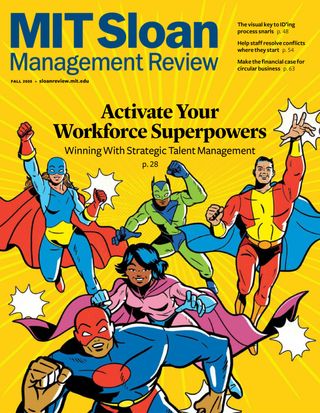

Diese Geschichte stammt aus der Fall 2025-Ausgabe von MIT Sloan Management Review.
Abonnieren Sie Magzter GOLD, um auf Tausende kuratierter Premium-Geschichten und über 9.000 Zeitschriften und Zeitungen zuzugreifen.
Sie sind bereits Abonnent? Anmelden
WEITERE GESCHICHTEN VON MIT Sloan Management Review

MIT Sloan Management Review
Assess What Is Certain in a Sea of Unknowns
Understanding what won't change clarifies what might — and strengthens decision-making in volatile times.

13 mins
winter 2026

MIT Sloan Management Review
Ask Sanyin: Why Is It So Hard to Pull the Plug on a Project?
We're finding it difficult to wind down projects that no longer serve our priorities.
2 mins
winter 2026

MIT Sloan Management Review
Integrate Sustainability and Innovation to Find New Opportunities
Five common innovation practices can help leaders pursue sustainability as a growth strategy.
12 mins
winter 2026

MIT Sloan Management Review
The Case for Quiet Corporate Activism
Leaders concerned that they will be penalized for championing sustainability and diversity can still sustain their commitments.
11 mins
winter 2026

MIT Sloan Management Review
The Perils of Algorithmic Pricing
Some revenue management systems based on algorithms may lead to unintended collusion and antitrust violations.
9 mins
winter 2026

MIT Sloan Management Review
Broadening Future Perspectives at the Bank of England
Leaders at the U.K’s central bank sought to broaden their thinking about future risks and opportunities. Here’s how they built longer-term horizon-scanning capabilities and what they learned along the way.
9 mins
winter 2026

MIT Sloan Management Review
How Nesting Changes Platform Strategy
Should your platform host another platform — or be hosted by one? Here's how to think through the choices.
14 mins
winter 2026
MIT Sloan Management Review
Are You an Authentic Leader or an Authentic Jerk?
Leaders who are true to their values can inspire trust and respect, but not if \"being yourself\" becomes the problem.
13 mins
winter 2026

MIT Sloan Management Review
How to Make Scenario Planning Stick
Developing future scenarios can deepen leaders’ strategic insights. Establishing scenario planning as an ongoing capability and reaping its full benefits require linking it to other processes.
16 mins
winter 2026

MIT Sloan Management Review
A Faster Way to Build Future Scenarios
This streamlined approach to scenario planning incorporates AI and helps managers navigate future uncertainties more efficiently.
13 mins
winter 2026
Listen
Translate
Change font size