
Mit Magzter GOLD unbegrenztes Potenzial nutzen
Erhalten Sie unbegrenzten Zugriff auf über 9.000 Zeitschriften, Zeitungen und Premium-Artikel für nur
Versuchen GOLD - Frei
Ngunis: low-cost, high-value production for South African farmers
Farmer's Weekly
|September 12-19, 2025
This article details the resilience, adaptability, and economic value of Nguni cattle in South Africa, with insights shared by a Nguni farmer on their heritage, fertility, and farming benefits.
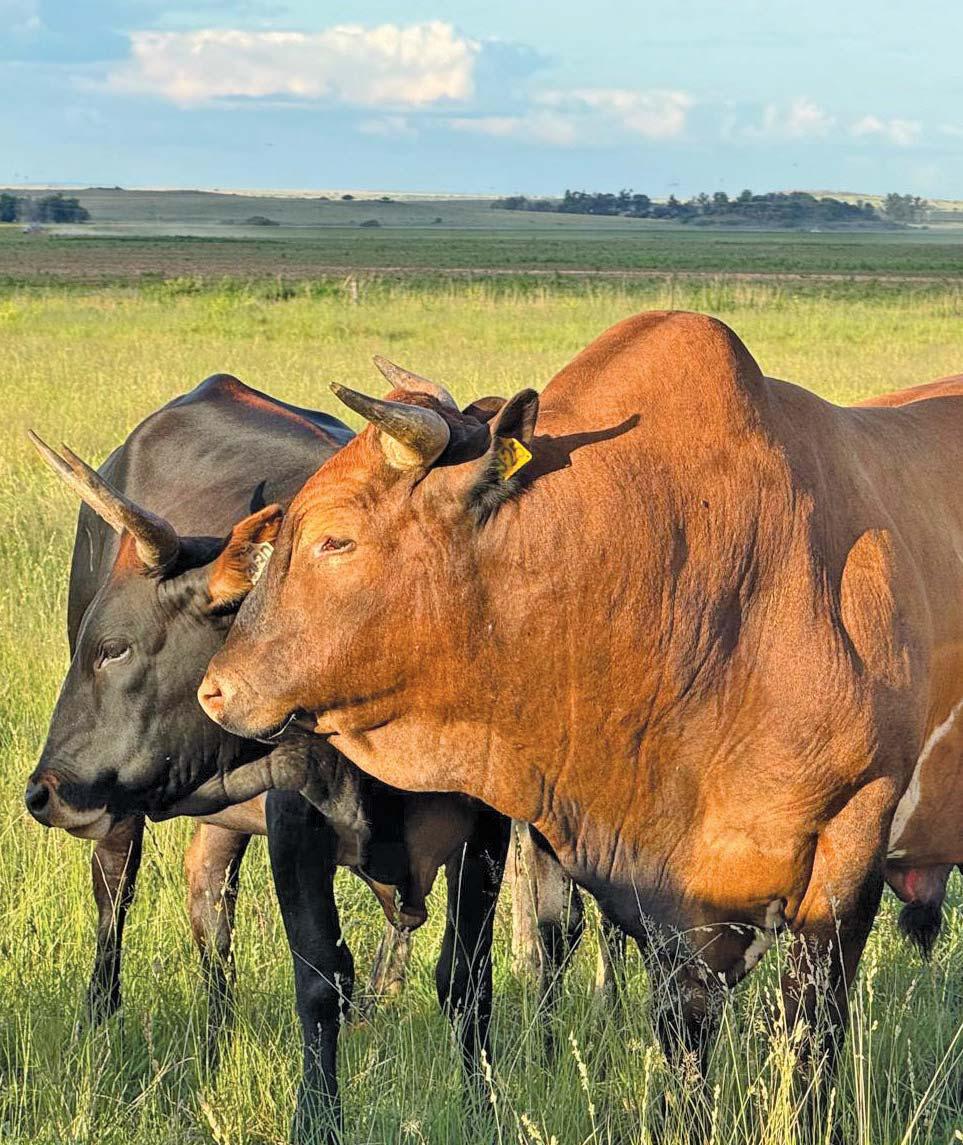
Nguni cattle remain one of South Africa’s most resilient and productive indigenous breeds, valued for their adaptability and contribution to beef production in rural and commercial systems.
Their hardiness, low maintenance requirements, and ability to thrive under extensive conditions make them an important part of livestock production, especially in areas prone to drought and disease challenges. Speaking to Farmer’s Weekly, Nguni farmer Hannes Eksteen shared why this indigenous cattle breed remains one of the most sustainable options for local farmers. He says that beyond their cultural heritage, Nguni cattle offer economic advantages that make them an attractive choice in today’s challenging farming environment.
A BREED ROOTED IN HERITAGE
“Nguni cattle came down through Africa with the indigenous people that moved southwards, and the cattle were an integral part of their culture. The cattle featured greatly as part of their wealth status, marriage lobola, funeral ceremonies, and so on. It was and still is an inseparable part of their culture and lifestyle,” says Eksteen.
While heritage is important, Eksteen mentions that for producers, the real strength of the Nguni lies in its adaptability and cost efficiency.
DISTINCTIVE TRAITS AND ADAPTABILITY
One of the breed’s most striking features is its appearance. “The first thing you notice is the distinct colour patterns. Every Nguni animal is unique; no two looks alike,” says Eksteen.
However, it is their resilience that truly sets them apart. “They are adapted to most of the common diseases in Africa. Their resistance to disease and parasites makes them unique compared to the exotic breeds found in South Africa,” he adds.
Even under tough conditions, Nguni cattle continue to produce.


Diese Geschichte stammt aus der September 12-19, 2025-Ausgabe von Farmer's Weekly.
Abonnieren Sie Magzter GOLD, um auf Tausende kuratierter Premium-Geschichten und über 9.000 Zeitschriften und Zeitungen zuzugreifen.
Sie sind bereits Abonnent? Anmelden
WEITERE GESCHICHTEN VON Farmer's Weekly

Farmer's Weekly
The foot-and-mouth disease threat is growing
Foot-and-mouth disease poses a growing threat to the livestock industry, especially communal farmers, with devastating economic consequences unless awareness and compliance improve, writes Shane Brody.

3 mins
January 30 - February 06, 2026

Farmer's Weekly
Shipping conditions to ease in 2026, but risk remains high
Early signs suggest a more favourable export season for South African producers, as easing global shipping congestion and improved performance by Transnet point to higher throughput at local ports. Lindi Botha reports.
2 mins
January 30 - February 06, 2026

Farmer's Weekly
A path of accelerating land reform in South Africa
Delivering the ANC's January 8th Statement a few weeks ago, President Cyril Ramaphosa noted, amongst other things, that: “Land reform remains one of the most urgent tasks of the National Democratic Revolution. While progress has been made, much more is required to give effect to the constitutional requirement for redress and equitable access to land.”
2 mins
January 30 - February 06, 2026
Farmer's Weekly
Reflections on 2025 and the policy space for 2026
The year 2025 was a year characterised initially by a wave of misinformation, particularly relating to legislation and tariff issues. This year some big moves are expected in the trade space.
3 mins
January 30 - February 06, 2026

Farmer's Weekly
From planning to peak lay: building a profitable egg business
Mpumalanga poultry farmer Lebogang Mashego spoke to Octavia Avesca Spandiel, and shared practical insights on planning, building systems that work, breed choice, feed management, and markets to build a profitable and sustainable egg business.
5 mins
January 30 - February 06, 2026

Farmer's Weekly
Impofu Wind Farm becomes a canvas for community connection through Enel's Blowing Art Initiative
Enel Green Power South Africa has introduced the Blowing Art Initiative at the Impofu Wind Farm in the Eastern Cape, a creative community project that turns renewable energy infrastructure into a living gallery.
2 mins
January 30 - February 06, 2026

Farmer's Weekly
Geely is intent on hanging around
Having fallen off the radar around a decade ago following a short local stint, Chinese manufacturer Geely has announced its proposed return to South Africa towards the end of 2026. The Citizen's Jaco van der Merwe reports.
4 mins
January 30 - February 06, 2026

Farmer's Weekly
Great reads to enjoy during ‘me-time'
Patricia McCracken has plucked an assortment of fascinating titles covering different areas of interest, from coastal exploration and dining in the wild, to African traditions surrounding love and marriage.
3 mins
January 30 - February 06, 2026
Farmer's Weekly
Thokoman Peanut Butter marks 25-year milestone with R500 000 commitment to food security
Thokoman Peanut Butter, one of South Africa's biggest producers of peanut butter, celebrates 25 years of consistent quality and community support, marking the occasion with a significant R500 000 partnership with Hot 102.7's Hot Cares initiative for 2026.
2 mins
January 30 - February 06, 2026
Farmer's Weekly
South Africa's famous wandering hippo
From 1928 to 1931, a hippopotamus trekked 1 600km from what was then northern Natal to the Eastern Cape's Keiskamma River near Peddie, where it was shot dead by a posse of farmers. As Mike Burgess writes, this journey would immortalise the hippo in South African history.
3 mins
January 30 - February 06, 2026
Listen
Translate
Change font size