Versuchen GOLD - Frei
Help to protect dormice!
The Country Smallholder
|February 2026
English Woodlands explain what you need to make your smallholding Dormouse friendly
-
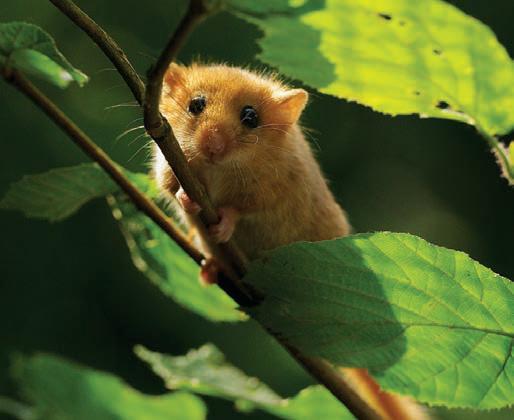
Did you know that hazel dormice are fully protected by law? These little rodents are now a Biodiversity Action Plan species (BAP). This status provides full protection and they cannot be intentionally disturbed, injured, or killed. A license is required to trap or handle a dormouse and conservation plans aim to halt or reverse the dormouse decline that has taken place over the last 100 years.
Here in the UK, hazel dormice (Muscardinus avellanarius) are found mainly in the southern half of the country and, alarmingly, their population is said to have declined by up to 70 per cent over the last 25 years. They are considered to be excellent indicators of biodiversity and their spread offers a wider picture of habitat health. Protection and improvement to dormice habitats will help to create healthier, more diverse ecosystems which will benefit a multitude of wildlife. Suitable environments for these tiny, balls of fluff are also ideal for birds, butterflies and many invertebrates that favour woodland; woodland edge; wildlife corridors, hedges and areas of scrub and thicket.
Few people have seen dormice in the wild, although most of us are familiar with the lovable dormouse who appears in Alice's Adventures in Wonderland, a novel written in 1865 by Lewis Carroll. During the infamous Mad Hatter's Tea Party, Dormouse is used as a comfy cushion because he's a fluffy, sleepy creature who frequently dozes off in the middle of conversations. But is this parody of a dormouse accurate?
The Latin dormio means 'I sleep' and, indeed, dormice are said to spend up to three quarters of the year asleep. They hibernate from around October through to April and they are crepuscular, which means they are most active at dawn and dusk. Not only do they nap throughout most of the day but they are capable of entering a state known as torpor which helps them to save energy. This is useful when food is hard to find, and when the weather is chilly.

Diese Geschichte stammt aus der February 2026-Ausgabe von The Country Smallholder.
Abonnieren Sie Magzter GOLD, um auf Tausende kuratierter Premium-Geschichten und über 9.000 Zeitschriften und Zeitungen zuzugreifen.
Sie sind bereits Abonnent? Anmelden
WEITERE GESCHICHTEN VON The Country Smallholder
The Country Smallholder
Making sure you put enough nutrition into your dairy goat to support her milk production
Sarah Day, nutritionist for Small Holder Feed offers feeding advice for your dairy goats to help them be happy, healthy and milky animals.

6 mins
March 2026
The Country Smallholder
Welcoming the very start of the spring season
Henrietta Balcon makes the most of the new crop rhubarb
2 mins
March 2026
The Country Smallholder
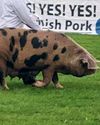
Starting with Pigs - before you start
Linda Aldous outlines what you need to do before anything porcine arrives on your smallholding
3 mins
March 2026
The Country Smallholder
Insurance to protect livestock - and your peace of mind
Looking ahead to a busy 2026 for Pedigree Sales, farmers and breeders will be preparing their livestock for the upcoming markets
2 mins
March 2026
The Country Smallholder
Getting Your Electric Fence Spring-Ready: Expert Q&A
As Spring arrives, it’s the perfect time to give your electric fence some attention. Based on questions we discuss regularly here at www.electricfencing.co.uk, here’s a list of the checks you should be carrying out now, and why they matter.
2 mins
March 2026
The Country Smallholder
Check your kit for the busy seasons ahead
Agricultural journalist, and machinery writer Jane Brooks, joins us for her regular look at the world.
4 mins
March 2026
The Country Smallholder
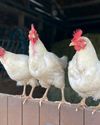
Flock together: is now the right time to add more hens?
Andy Hill explains how to integrate birds into a flock without feathers flying
4 mins
March 2026
The Country Smallholder
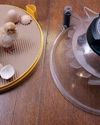
The secrets behind maximising incubator hatch rates
Buying quality point of lay hens can be an expensive proposition these days (even if you can find a local source of the breed that you want). Incubating fertilised eggs can save a great deal of money and make many more breeds accessible. If you already keep poultry that includes a cockerel, an incubator means that you can hatch their eggs either to increase your flock or to sell. Hugh & Fiona Osborne have been using incubators for many years and have learned that getting a good hatch means attention to detail.
7 mins
March 2026
The Country Smallholder
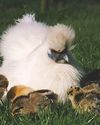
Making choices for your chicks
Victoria Roberts BVSc MRCVS says Natural and Artifical Incubation are not an either/or choice
5 mins
March 2026
The Country Smallholder
An appetite for asparagus
Our Experts answer your questions
1 mins
March 2026
Listen
Translate
Change font size