Versuchen GOLD - Frei
Vixen A105MII achromatic refractor
BBC Sky at Night Magazine
|April 2022
A well-built telescope that is tailored to intermediate astronomers

VITAL STATS
Price £838
Optics Achromatic refractor
Aperture 105mm
Focal length 1,000mm, f/9.5 Dimensions 1,010mm x 115mm
Focuser Single-speed rack and pinion
Extras Vixen XY Red Dot Finder II, tube rings with dovetail bar and carry handle, flip mirror diagonal
Weight 4.8kg (including the dovetail bar)
Supplier Telescope House
Tel 01342 837098
www.telescope house.com
Impressive focal length
The A105MII's 1,000mm focal length makes it ideal for viewing a variety of astronomical objects, including the Moon and planets, plus a wide range of deep-sky objects such as planetary nebulae, galaxies and star clusters. It also allows the use of lower powered eyepieces for improved 'eye relief - the distance your eye must be from the eyepiece to see the entire field of view - to ensure a better observing experience, as well as helping astronomers who wear glasses. The 105mm aperture provides a proficient level of light-gathering capability to enhance the viewing of faint and fuzzy objects, without the scope becoming difficult to manoeuvre. Generally, refractors are simple enough for beginners to use confidently, as they don't require collimation or a complicated setup routine. They also tend to offer the most natural and satisfying viewing experience, with good background contrast and sharp stars, allowing users to explore open clusters and other stellar phenomena.
As soon as we unpacked the Vixen A105MII achromatic refractor, we noticed its impressive build quality - there's not a piece of plastic in sight. It was also pleasing to discover that the optical tube comes with some robust accessories, including a handy, metal flip mirror diagonal - a unique addition and one that allowed us to switch from visual to imaging targets with ease. Feeling eager to put this 105mm refractor through its paces, we headed outside.

Diese Geschichte stammt aus der April 2022-Ausgabe von BBC Sky at Night Magazine.
Abonnieren Sie Magzter GOLD, um auf Tausende kuratierter Premium-Geschichten und über 9.000 Zeitschriften und Zeitungen zuzugreifen.
Sie sind bereits Abonnent? Anmelden
WEITERE GESCHICHTEN VON BBC Sky at Night Magazine
BBC Sky at Night Magazine
The Giant Leap: Why Space is the Next Frontier in the Evolution of Life
“Earth is the cradle of humanity, but one cannot live in the cradle forever,” wrote Konstantin Tsiolkovsky in 1911.

1 mins
February 2026
BBC Sky at Night Magazine
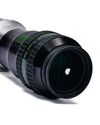
Tele Vue Nagler Type-7 series eyepieces
These premium optics were inspired by Apollo - and deliver a giant leap to your views
4 mins
February 2026
BBC Sky at Night Magazine
Once Upon a Time in Space
While the Space Race of the Cold War years was ultimately a geopolitical contest between the USA and the Soviet Union, the rivalry sparked rapid innovation and inspired multiple generations to look skyward.
1 mins
February 2026
BBC Sky at Night Magazine
The Multiverse: When One Universe Isn't Enough
The concept of a 'multiverse' – the idea that our Universe may be just one of many – is widespread in science fiction and a common thread of online discussions.
1 mins
February 2026
BBC Sky at Night Magazine
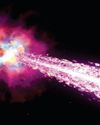
Q&A WITH A GAMMA RAY SPECIALIST
In 2025, astronomers detected a blast from space that lasted seven hours. Now they're uncovering the strange processes behind the exceptional outburst
3 mins
February 2026

BBC Sky at Night Magazine
Astronomy Photographer of the Year
The world-leading astrophotography competition returns. Could your image take the top prize of £10,000?
2 mins
February 2026
BBC Sky at Night Magazine
MOONWATCH
February's top lunar feature to observe
2 mins
February 2026

BBC Sky at Night Magazine
NOVAStar Scarlet A62Q 62mm f/8.4 quadruplet achromatic refractor
Well-built and capable, this beginner scope punches well above its bargain price
4 mins
February 2026
BBC Sky at Night Magazine
STAR OF THE MONTH
Rasalas, Leo the Lion's metal-rich crown
1 min
February 2026
BBC Sky at Night Magazine
Comet 24P/Schaumasse
Having reached perihelion on 8 January, comet 24P/ Schaumasse is now fading. Starting the month at a small-telescope-friendly mag. +10.5, it dims throughout February to below 12th magnitude.
1 min
February 2026
Translate
Change font size