Versuchen GOLD - Frei
The 2016 Election Was Just a Dry Run
The Atlantic
|June 2020
Russia’s goal was never merely to elect Donald Trump. It was to bring down American democracy. Is Vladimir Putin poised to complete the mission he began four years ago?

Jack Cable sat down at the desk in his cramped dorm room to become an adult in the eyes of democracy. The rangy teenager, with neatly manicured brown hair and chunky glasses, had recently arrived at Stanford—his first semester of life away from home— and the 2018 midterm elections were less than two months away. Although he wasn’t one for covering his laptop with strident stickers or for taking loud stands, he felt a genuine thrill at the prospect of voting. But before he could cast an absentee ballot, he needed to register with the Board of Elections back home in Chicago.
When Cable tried to complete the digital forms, an error message stared at him from his browser. Clicking back to his initial entry, he realized that he had accidentally typed an extraneous quotation mark into his home address. The fact that a single keystroke had short-circuited his registration filled Cable with a sense of dread.
Despite his youth, Cable already enjoyed a global reputation as a gifted hacker—or, as he is prone to clarify, an “ethical hacker.” As a sophomore in high school, he had started participating in “bug bounties,” contests in which companies such as Google and Uber publicly invite attacks on their digital infrastructure so that they can identify and patch vulnerabilities before malicious actors can exploit them. Cable, who is preternaturally persistent, had a knack for finding these soft spots. He collected enough cash prizes from the bug bounties to cover the costs of four years at Stanford.
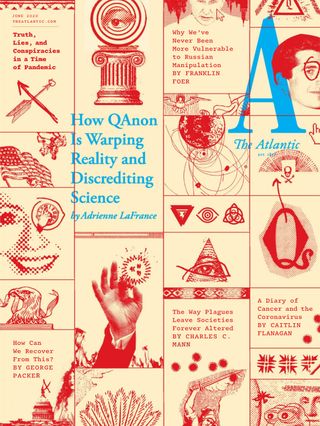

Diese Geschichte stammt aus der June 2020-Ausgabe von The Atlantic.
Abonnieren Sie Magzter GOLD, um auf Tausende kuratierter Premium-Geschichten und über 9.000 Zeitschriften und Zeitungen zuzugreifen.
Sie sind bereits Abonnent? Anmelden
WEITERE GESCHICHTEN VON The Atlantic
The Atlantic
You Had to Be There
An emerging field of history asks if we can ever really understand how our forebears experienced love, anger, fear, and sorrow.

23 mins
January 2026

The Atlantic
By the Horns
The week before the biggest bullfight of her career, in Cádiz, Spain, this past July, 24-year-old Miriam Cabas posted a carefully produced video on Instagram.
1 mins
January 2026

The Atlantic
The New German War Machine
After World War II, Germany embraced pacifism as a form of atonement. Now the country is arming itself again.
18 mins
January 2026
The Atlantic
The Eloquence
The prime minister was watching a disaster movie when we found him.
4 mins
January 2026

The Atlantic
What's for Dinner, Mom?
The women who want to change the way America eats
12 mins
January 2026

The Atlantic
How Terror Works
A 1947 German novel explores the sometimes corrosive, sometimes energizing nature of fear.
8 mins
January 2026

The Atlantic
Yesterday's Idea of a Modern Man
Sam Shepard, a self-made cowboy, was also a poet of masculine angst.
7 mins
January 2026

The Atlantic
ACCOMMODATION NATION
America's colleges have an extra-time-on-tests problem.
11 mins
January 2026

The Atlantic
Respect the Drummer
A new history of rock, told through its overlooked heroes
5 mins
January 2026

The Atlantic
THE MOST POWERFUL MAN IN SCIENCE
WHY IS ROBERT F. KENNEDY JR. SO CONVINCED HE'S RIGHT?
42 mins
January 2026
Translate
Change font size