
Mit Magzter GOLD unbegrenztes Potenzial nutzen
Erhalten Sie unbegrenzten Zugriff auf über 9.000 Zeitschriften, Zeitungen und Premium-Artikel für nur
Versuchen GOLD - Frei
HQ, Nagpur
Outlook
|September 10, 2018
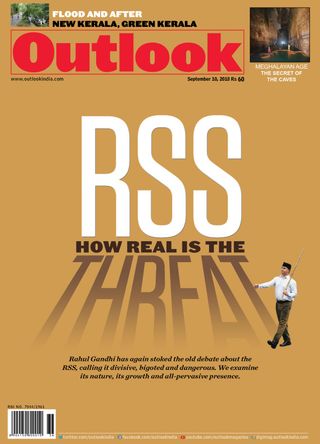
The RSS evokes a sense of parallel authority—a secretive fraternity with its own idea of India. Questions abound as it seeks to mainstream itself.

For decades considered to be working behind thick veils of secrecy—impenetrable and impervious to light—the Rashtriya Swayamsevak Sangh (RSS) has lately found itself in the centre of much public attention. With the Narendra Modi government in its fourth year—as muscular a presence as ever—interest in the ruling BJP’s ideological fountainhead has only burgeoned. For the first time perhaps, it seems to be reciprocating—by encouraging a kind of wider engagement, inviting other voices to a tentative dialogue, eager to dispel the fear.
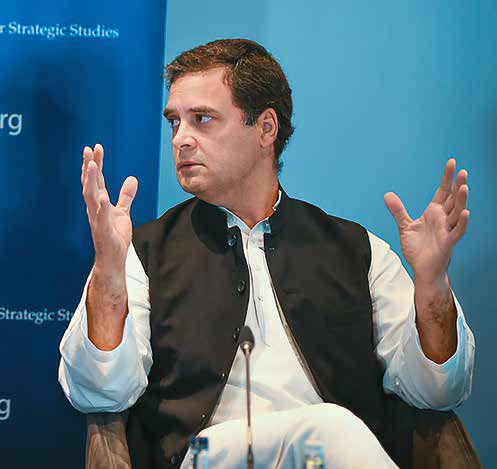
‘Mainstreaming’, though, will call for clarity on a host of questions. Does the Sangh interfere in governance? Does its political writ outline the limit of possibility for any government under its broad mandate? Does its Hindutva agenda, with the final goal of an Akhand Hindu Rashtra, form the governing spirit for regimes otherwise sworn to India’s secular Constitution? Does that not make for a split personality? If its cadres help the BJP during elections, can it claim to be apolitical, and merely a cultural and social organisation? How did its chief Mohan Bhagwat claim the RSS is capable of raising a fighting force for the country in three days? Does its authority, such as it is, lie outside and parallel to India’s statuted frameworks?
On the social side, is the RSS anti-Dalit, anti-Muslim? Does the “fringe” accused of lynching in the name of gauraksha derive their sense of entitlement from the Sangh? What its stand on reservations? Several in the BJP believe Bhagwat’s statement asking for a review of the reservation policy in the middle of 2015 Bihar elections perhaps cost the party.

Diese Geschichte stammt aus der September 10, 2018-Ausgabe von Outlook.
Abonnieren Sie Magzter GOLD, um auf Tausende kuratierter Premium-Geschichten und über 9.000 Zeitschriften und Zeitungen zuzugreifen.
Sie sind bereits Abonnent? Anmelden
WEITERE GESCHICHTEN VON Outlook
Outlook
The Obituary that Took Me 30 Years to Write
When most of us were clueless about our ambitions in life, my classmate and best friend Samaresh Maitra announced, one hot day in April, that he wanted to become a goonda (gangsta) when he grew up.

3 mins
April 21, 2026

Outlook
Policing the Self
A democratic law on transgender rights would begin by trusting the person- recognising self-identification without bureaucratic mediation
7 mins
April 21, 2026

Outlook
Whatever Happened to the Voice of America?
War, once the defining moral crisis of American youth, no longer commands the same fire
6 mins
April 21, 2026

Outlook
Welfare Against Democracy
Among the four states where the election process has begun, three—Kerala, Tamil Nadu and West Bengal—present a striking picture of defiance; defiance directed at the style of politics associated with the Union government.
17 mins
April 21, 2026

Outlook
Why This War?
Failure to stop the war will hurt not only the region, but the entire global economy
6 mins
April 21, 2026

Outlook
Assam is a Place for All
It was as much a political signal as a warning, as Assam Chief Minister Himanta Biswa Sarma recently said that if the Bharatiya Janata Party (BJP) returns to power, his government will “break the backbone” of “Miyas”.
5 mins
April 21, 2026

Outlook
Bullets in Persepolis
The deep-seated love of Iranians for their land and cultural roots is what remains at stake in a war where the aggressors threaten to eradicate an entire civilisation
8 mins
April 21, 2026

Outlook
Why the Elite Hate Freebies
The deeper question to ask is not whether India can afford welfare but what happens without it
6 mins
April 21, 2026
Outlook
Machinery Vs. Maths
As more than 27 lakh people have their democratic rights suspended, Amit Shah's 'Mission Bengal' aims to bulldoze all equations, but they may still have to fight the maths
7 mins
April 21, 2026
Outlook
War From an Ocean Away
In the many endings that I picture, my mother and Ali end up stranded on roads, separated in different cities, looking for their belongings in the rubble, or chewing some meagre bread to quell their hunger
6 mins
April 21, 2026
Translate
Change font size