Versuchen GOLD - Frei
Asymmetric Warfare Two Can Play The Game
Geopolitics
|July 2018
India is in the unique and unfortunate position of being targeted by a large number of terrorist movements with ample foreign backing. The country’s political and military leadership must employ innovative ways to meet and combat the newly evolving patterns involving non-state actors and asymmetric warfare.

Around 512 BCE, Darius the king of Persia advanced with a massive army to subdue the Scythian tribesmen who were raiding his empire. Hundreds of thousands of Persian soldiers chased the Scythians through Central Asia, the Balkans and into Ukraine, but to Darius’ frustration the Scythians refused to stand and fight. Knowing they were too weak to counter the Persians in open battle, the tribesmen chose to retreat.
Herodotus wrote in his Histories that Darius became so frustrated that he sent a plaintive message to Idanthyrsus, the king of the Scythians, demanding, “You strange man, why do you keep on flying before me. Come, let us engage in battle.”
Idanthyrsus sent back a disdainful reply: “That is my way, Persian. We Scythians have neither towns nor cultivated lands, which might induce us, through fear of their being taken or ravaged, to be in any hurry to fight with you. We shall not join battle, unless it pleases us.”
The exchange between the two rulers illustrates the wide chasm that separates regular armies from their irregular foes who pursue asymmetric warfare. Darius, who had a large empire to administer back home, decided to turn back his armies rather than waste time and energy chasing the Scythians. Meanwhile, the tribesmen continued to raid the extremities of the Persian Empire.
Asymmetry in the modern era

Diese Geschichte stammt aus der July 2018-Ausgabe von Geopolitics.
Abonnieren Sie Magzter GOLD, um auf Tausende kuratierter Premium-Geschichten und über 9.000 Zeitschriften und Zeitungen zuzugreifen.
Sie sind bereits Abonnent? Anmelden
WEITERE GESCHICHTEN VON Geopolitics
Geopolitics
JOINTNESS TO REDEFINE MARITIME AIR POWER
The buzzword in New Delhi is multidomain warfare, which involves a high level of jointness between the three services. As mentioned in the last issue of Geopolitics (November 2025), jointness takes time and requires a large investment by the government in weapons systems, sensors, and training. But sensible and easy steps can be taken, especially in the maritime sphere, to integrate the Coast Guard, Air Force, and Navy into a potent force to safeguard the Arabian Sea and the Bay of Bengal, argues AMIT GUPTA

8 mins
December 2025

Geopolitics
THERMAL IMAGING AND BALLISTIC PROTECTION DRIVE SOLDIER MODERNISATION
Contemporary defence modernisation prioritises integrated soldier systems blending advanced thermal imaging with lightweight multi-hit ballistic protection, meeting demands for superior low-visibility awareness and survivability against evolving threats. India's indigenous manufacturing push aligns with Atmanirbhar Bharat, enhancing national security. A special report
5 mins
December 2025
Geopolitics
INDIA'S NEW HIGH-ALTITUDE PIVOT NEAR THE CHINA BORDER
Just kilometres from the LAC, India has activated one of the world's highest military airfields, a dramatic shift in Ladakh's strategic landscape. The Mudh-Nyoma airbase, now fully operational, signals faster mobility, sharper surveillance and a renewed posture along a frontier where infrastructure has become the new currency of power.
2 mins
December 2025
Geopolitics
THE MARITIME MAKEOVER
JOSEPH P CHACKO analyses the transforming role of the Indian Navy as an indigenous force multiplier, a modern blue-water fleet, and a crucial instrument in shaping India's emergence as an integral Indo-Pacific power
17 mins
December 2025

Geopolitics
GUARDING THE RIM
India's post-26/11 coastal security system boasts radars, patrol boats and new laws - yet beneath the optics lie old weaknesses. Training gaps, stranded infrastructure, jurisdictional clutter and climate stress continue to erode readiness.VISHAL DUGGAL reports
9 mins
December 2025

Geopolitics
SAGAR DEFENCE INAUGURATES PUNE FACILITY
Defence Engineering Pvt. Ltd has inaugurated its new plant in Pune, India. The plant will manufacture Uncrewed Surface Vehicles (USVs), marking a major step forward in the partnership with Liquid Robotics, a Boeing company, that was announced earlier this year to co-develop and co-produce advanced maritime systems.
2 mins
December 2025

Geopolitics
COCHIN SHIPYARD: THE COUNTRY'S SOLE AIRCRAFT CARRIER BUILDER
India is getting ready to add another aircraft carrier that will be nuclear-powered to its fleet, joining INS Vikramaditya and INS Vikrant. SUBHANGI PALVE takes a look at the only shipyard in the country to have built one.
7 mins
December 2025

Geopolitics
ICEYE'S BLUEPRINT FOR THE NEXT FRONTIER
ICEYE's fusion of miniaturised satellites, AI, and agile manufacturing transforms geospatial power, enabling nations to swiftly understand, decide, and act for strategic foresight, disaster preparedness, and security through real-time Earth Observation. A Special Report
4 mins
December 2025
Geopolitics
A report that calls for action
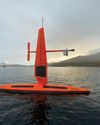
The Parliamentary Standing Committee on External Affairs has concluded that India’s current Indian Ocean strategy is fragmented, under-resourced, and insufficiently coordinated to meet accelerating geopolitical, security, and environmental challenges, especially China's expanding presence.
3 mins
December 2025
Geopolitics
SHOW STOPPER
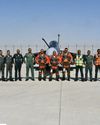
The 19th edition of the Dubai Airshow recorded deals worth a historic USD 202 billion, but was marred by the unfortunate fatal crash of an IAF Tejas fighter jet. ATUL CHANDRA reports
10 mins
December 2025
Translate
Change font size