
Mit Magzter GOLD unbegrenztes Potenzial nutzen
Erhalten Sie unbegrenzten Zugriff auf über 9.000 Zeitschriften, Zeitungen und Premium-Artikel für nur
THE SIEGE
BBC History Magazine
|June 2022
When some 6,000 parliamentarians tried to prise a few hundred royalists out of Basing House in 1643, they began a brutal siege that would drag on for years - and see thousands slaughtered. Jessie Childs tells the story of a desperate struggle that became a defining episode of the Civil War

In the line of fire
The siege of Basing House, in a contemporary engraving. The royalist stronghold was seen as a "microcosm of Stuart degeneracy", which the parliamentarians were determined to purge
On a plant-finding expedition to Kent in 1633, the apothecary Thomas Johnson looked out from the tower of Canterbury Cathedral and despaired at the inadequacy of the town's defences. "Our people," he lamented, "like the Spartans of old, set more store upon arms than upon walls for protection." A decade later, Lieutenant Colonel Johnson was shoring up the defences of Basing House in Hampshire, ahead of an imminent parliamentarian attack and presumably wishing that someone had listened to him earlier.
We have always preferred the glamour of the battle to the dog-work of a siege. We hear the rumble of the cavalry charge and the first dry rattle of new-drawn steel more keenly than the sound of digging and guard duty. We imagine the king's battle standard rescued at Edgehill and the royalist horse reduced to "stubble" by Cromwell's troops on Marston Moor, but a half-starved garrison negotiating terms of surrender is rarely part of the picture.
Yet the Civil War was not only won at Marston Moor, nor even at Naseby when Charles I lost his artillery and a large part of his officer corps in June 1645. It was won three months later, at Bristol, when his nephew Prince Rupert yielded England's second city and, with it, his command of the royalist army. It was won when further strongholds were taken and destroyed, securing parliament's supply lines and, ultimately, giving the king nowhere to hide.
"We make war more like foxes than lions," wrote Roger Boyle. "You will have 20 sieges for one battle"
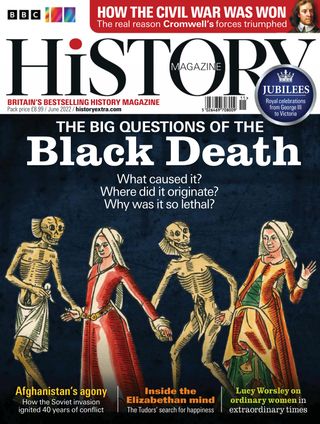

Diese Geschichte stammt aus der June 2022-Ausgabe von BBC History Magazine.
Abonnieren Sie Magzter GOLD, um auf Tausende kuratierter Premium-Geschichten und über 9.000 Zeitschriften und Zeitungen zuzugreifen.
Sie sind bereits Abonnent? Anmelden
WEITERE GESCHICHTEN VON BBC History Magazine
BBC History UK
On the skids
Richard Rodgers and Oscar Hammerstein II's smash musical Oklahoma! opened on Broadway on 31 March 1943.

1 min
Christmas 2025

BBC History UK
Small pleasures
Memory is imperfect, but what if you could get a professional model maker to recreate a moment from the past?
1 min
Christmas 2025

BBC History UK
Bath in five places
In the Georgian era, Bath became arguably Britain's most fashionable destination. KIRSTEN ELLIOTT promenades five historic highlights
3 mins
Christmas 2025
BBC History UK
End times
Why do civilisations that dominated their epoch fail? In an era of autocracy, climate change, the rise of Al and a first-hand understanding of how deadly pandemics can be, it's a question that seems pertinent.
1 min
Christmas 2025
BBC History UK
What are the origins of the Yule Lads?
To learn about the Jólasveinar (Yule Lads), we must start with their mother, the terrifying ogress Grýla. Her name appeared in Icelandic texts as early as the 13th century, although it wasn’t until later that those 13 mischievous lads became associated with her. Folk tales and poems tell how she descends from the mountains with an empty sack to stuff full of children. Grýla owns the monstrous Jólaköttur (Yule Cat), which roams the countryside on Christmas Eve, searching for children to gobble up if they're not wearing new clothes.
1 mins
Christmas 2025
BBC History UK
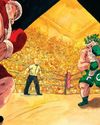
Santa Claus v Father Christmas
The true identity of the white-bearded, red-robed figure who fills children's stockings at Christmas has long been debated. Thomas Ruys Smith sizes up the merry contenders
8 mins
Christmas 2025

BBC History UK
Frontier friction
Set in Washington Territory in 1854, The Abandons is a Western that's unusual for having two matriarchs, women whose lives become entangled, at its centre.
1 min
Christmas 2025

BBC History UK
The Last Days of Pompeii: The Immersive Experience
Delve into the culture of daily Roman life, witness the momentous eruption of Mount Vesuvius, and follow its fallout in Immerse LDN's new exhibition. In a blend of cutting-edge technology and vivid storytelling, this exhibition launches visitors into Pompeii's rich history with recreations of the ancient city's beautiful pre-eruption landscape, a 360-degree virtual reality Roman amphitheatre experience, and a digital metaverse recreating Pompeii's 'Villa of Mysteries'.
1 min
Christmas 2025
BBC History UK
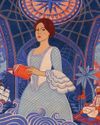
Elizabeth Marsh The corsair's captive
Taken hostage by a Barbary ship's captain in the 18th century, a young Englishwoman found herself fighting for her freedom in Marrakech. ADAM NICHOLS introduces a brave captive who later wrote a book about her dramatic experiences
6 mins
Christmas 2025
BBC History UK
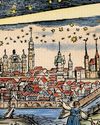
29 DECEMBER 1170: Thomas Becket is murdered in Canterbury
Knights loyal to Henry II rid him of the “low-born cleric”
2 mins
Christmas 2025
Translate
Change font size