Versuchen GOLD - Frei
December 7, 1941
Archaeology
|January/February 2017
The underwater archaeology of the attack on Pearl Harbor.

The two hours of the attack on Pearl Harbor on December 7, 1941, might be the most heavily documented and studied in history. There are eight official investigations, from a Naval Court of Inquiry to a Joint Congressional Committee, reams of records, and enough books, oral histories, documentaries, and feature films to fill a library. Yet there are still things that can be learned about the morning when 350 Japanese warplanes killed 2,403 Americans, wounded another 1,104, and sank or severely damaged 21 ships in a coordinated attack on military sites around Oahu, Hawaii.
A number of factors have obscured details—big and small— from that day. For example, the surprise of the attack complicated eyewitness accounts. Secrecy shrouded the active war effort on both sides. And, in the aftermath, the United States rushed to rebuild its naval power in the Pacific with the greatest maritime salvage project in history, which returned all but three of the damaged ships to service. This effort begins to explain why there are few archaeological sites directly tied to December 7.
In 2016, the National Oceanic and Atmospheric Administration (NOAA) and the Bureau of Ocean Energy Management completed the first database of submerged cultural resources in the main Hawaiian Islands. Of 2,114 entries, just five come from the attack: two battleships in the harbor, two Japanese submarines in deep water, and a lone American seaplane. All were spared salvage—and in some cases discovery—for decades by some combination of depth, damage, and respect for the dead.
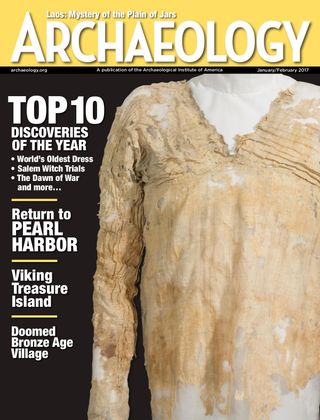

Diese Geschichte stammt aus der January/February 2017-Ausgabe von Archaeology.
Abonnieren Sie Magzter GOLD, um auf Tausende kuratierter Premium-Geschichten und über 9.000 Zeitschriften und Zeitungen zuzugreifen.
Sie sind bereits Abonnent? Anmelden
WEITERE GESCHICHTEN VON Archaeology
Archaeology
THE EGYPTIAN SEQUENCE
Until now, the earliest Egyptians to have even part of their DNA sequenced were three people who lived between 787 and 544 B.C.

1 mins
November/December 2025
Archaeology
SOURCE MATERIAL
As early as 40,000 years ago, some hunter-gatherers in southern Africa ventured long distances to procure special types of stone to make their tools.
1 min
November/December 2025

Archaeology
Secrets of the Seven Wonders
How archaeologists are rediscovering the ancient world's most marvelous monuments
13 mins
November/December 2025
Archaeology
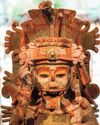
ACTS OF FAITH
Evidence emerges of the day in 1562 when an infamous Spanish cleric tried to destroy Maya religion
12 mins
November/December 2025
Archaeology
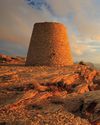
OASIS MAKERS OF ARABIA
Researchers are just beginning to understand how people thrived in the desert of Oman some 5,000 years ago
8 mins
November/December 2025
Archaeology
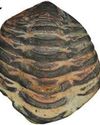
FOSSIL FORCE
One of the planet's most successful arthropods, trilobites, abounded in the oceans from about 520 million to 250 million years ago.
1 min
November/December 2025
Archaeology
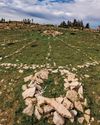
BIGHORN MEDICINE WHEEL, WYOMING
Perched almost 9,700 feet above sea level on Medicine Mountain in Wyoming's Bighorn Range, the Medicine Wheel is an 80-foot-diameter circular structure made from limestone boulders.
2 mins
November/December 2025
Archaeology
ANCIENT LOOK BOOK
A young woman buried in China's Tarim Basin some 2,000 years ago went to the afterlife accompanied by the height of fashion.
1 mins
November/December 2025
Archaeology
A FAMILIAR FACE
In the early eleventh century, a landslide on the island of Ostrów Lednicki in western Poland caused a hillfort to collapse and slip to the bottom of Lake Lednica.
1 min
November/December 2025
Archaeology
Temples to Tradition
A looted cache of bronzes compels archaeologists to explore Celtic sanctuaries across Burgundy
13 mins
November/December 2025
Translate
Change font size