
Mit Magzter GOLD unbegrenztes Potenzial nutzen
Erhalten Sie unbegrenzten Zugriff auf über 9.000 Zeitschriften, Zeitungen und Premium-Artikel für nur
Versuchen GOLD - Frei
A Good Ending
Writer’s Digest
|May - June 2023
Learn where a personal essay delivers its gift.

I started writing personal essays more or less accidentally. I had (and still have) what began as a monthly column for the online magazine Author but soon tally. I had (and still have) what began as a monthly column for the online magazine Author but soon turned, despite my mild objections, into a daily column.
I didn't think I had enough to say about writing and publishing to fill 400 words, five days a week. And I was right! After only a month, I didn't want to pen another piece about query letters or agents or markets. So, I decided to tell a story.
While I had been telling fictional stories for years, I was not accustomed to personal narrative, at least not on the page. I told stories to my friends and family all the time, but this, I knew, would be different. Fortunately, Author was intended to be an uplifting magazine-we would publish no articles or interviews filled with any gloom and doom about the publishing world or how hard it is to write. Instead, we would always encourage.
That meant my story had to be uplifting, which helped serve as a guide, a definite target for my narrative arrow. However, I didn't appreciate until I reached the story's end, specifically the last paragraph and then the very last line, that whether the story left the reader feeling hopeful or indifferent or discouraged would be determined in these final words. What's more, when I finished it to my satisfaction, and as I pushed myself away from the desk, I noticed how peaceful and soothed I felt. It was an important lesson for a newly minted essayist: In writing it, I had left myself feeling how I hoped my readers would feel.
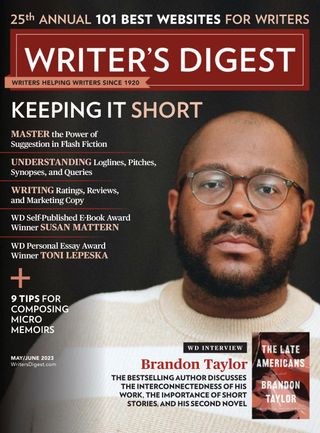

Diese Geschichte stammt aus der May - June 2023-Ausgabe von Writer’s Digest.
Abonnieren Sie Magzter GOLD, um auf Tausende kuratierter Premium-Geschichten und über 9.000 Zeitschriften und Zeitungen zuzugreifen.
Sie sind bereits Abonnent? Anmelden
WEITERE GESCHICHTEN VON Writer’s Digest

Writer’s Digest
Lauren Groff
The three-time National Book Award finalist discusses her new short story collection, Brawler, and the necessity of failure in writing.

14 mins
March / April 2026

Writer’s Digest
Seven
THE CHALLENGE: Write a short story of 650 words or fewer based on the photo below.
2 mins
March / April 2026

Writer’s Digest
Pacing in Nonfiction
It's all about story.
5 mins
March / April 2026
Writer’s Digest
If You're Bored, They're Bored
Five Zero-Draft tricks to ensure tight pacing.
8 mins
March / April 2026

Writer’s Digest
Deities
Gods and goddesses have had power over our imaginations stretching through the ages—whether ancient Norse, Chinese, Mesoamerican, or Greco-Roman, we have a fascination with cosmic beings.
5 mins
March / April 2026
Writer’s Digest
Merging Memory With Imagination
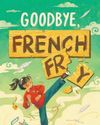
Author Rin-rin Yu's debut middle-grade novel, Goodbye, French Fry, represents a combination of her true childhood experiences and the universal experience of growing into yourself.
5 mins
March / April 2026

Writer’s Digest
Put Yourself in Charge of Your Own Story
Julie Ann Sipos, grand-prize winner of the 33rd annual WD Self-Published Book Awards, on how her career in Hollywood influences her writing style and her business strategy as an indie author.
4 mins
March / April 2026

Writer’s Digest
The Pause Is the Point
How to use stillness to create momentum in your fiction.
10 mins
March / April 2026

Writer’s Digest
Ericka Tiffany Phillips
Ericka Tiffany Phillips is a literary agent at the Stephanie Tade Agency, representing nonfiction authors whose “work have the power to shape culture and catalyze collective transformation,” she says.
2 mins
March / April 2026

Writer’s Digest
Short-Story Dispensers Bring Literature to the Masses
Life is often a wait, whether it's for a commuter train, an appointment with a doctor, or the start of a class.
5 mins
March / April 2026
Translate
Change font size