Prøv GOLD - Gratis
WHY IS LIDAR ADOPTION SLOWER Than Expected?
Electronics For You
|May 2025
A decade of hype. Billions invested. But lidar still isn’t mainstream. What went wrong—and what does it mean for the future of autonomous vehicles?

Heralded as a breakthrough for the automotive industry’s shift towards safer, fully autonomous vehicles, lidar technology promises a future with zero road fatalities and enhanced accessibility. Despite a decade of extensive development, testing, and financial investments such as partnerships and acquisitions, lidar-equipped vehicles remain scarce on the roads. Known for its high-resolution 3D mapping and precise depth perception, lidar is essential for driverless cars but faces significant adoption challenges.
Although lidar delivers accurate data for autonomous navigation, several obstacles hinder its mainstream integration. High costs, technical limitations in various environments, complex data management, and competition from other sensor technologies have impeded its widespread use.
Despite its advantages in depth perception and detailed mapping, lidar confronts economic and technical barriers. Performance issues in adverse weather and the substantial investment required for deployment have made manufacturers and consumers cautious, slowing the technology’s adoption in the automotive sector.
The cost barrier to lidar adoption
Lidar technology, known for its precise point cloud mapping and high-resolution data, faces a significant adoption barrier due to its high cost. Lidar systems are substantially more expensive to produce and integrate than more economical sensors like cameras and radar. This cost disparity has kept lidar from becoming a mainstream option in the automotive industry, leading manufacturers to favour cheaper alternatives.
Challenges of creating 3D maps with lidar technology
- High costs and complexity. Collecting, processing, and storing lidar data is resource-intensive.
- Data ownership disputes. Companies, governments, and service providers often clash over rights to lidar data.


Denne historie er fra May 2025-udgaven af Electronics For You.
Abonner på Magzter GOLD for at få adgang til tusindvis af udvalgte premiumhistorier og 10.000+ magasiner og aviser.
Allerede abonnent? Log ind
FLERE HISTORIER FRA Electronics For You

Electronics For You
FM RADIO RECEIVER Using TDA7000
This FM radio receiver demonstrates the practical application of RF engineering and analogue signal-processing techniques.

4 mins
July 2026

Electronics For You
Latest 3D chip stacking method could extend Moore's Law
Engineered by a team at the University of Illinois Grainger College of Engineering in Urbana-Champaign, the process uses ultrathin single-crystalline silicon nanomembranes transferred at temperatures below 200°C, avoiding heat damage to underlying circuits.
1 min
July 2026
Electronics For You
Stretchable patch detects heart failure risks
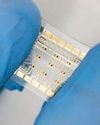
Researchers at the University of Chicago's Pritzker School of Molecular Engineering in Chicago have developed an AI-powered stretchable computing patch capable of processing health data directly on the body in milliseconds, eliminating the need for external servers or wireless connections.
1 min
July 2026

Electronics For You
Simple 12V To 24V VOLTAGE DOUBLER
Many electronic circuits require a voltage higher than that available from the power supply.
3 mins
July 2026
Electronics For You
Crystal stress method reshapes nanochip manufacturing techniques
Research conducted at Rice University in Houston, Texas, demonstrated that alpha-molybdenum trioxide crystals can deform under an electron beam, generating highly ordered nanoscale wrinkles that function as optical gratings for guiding and manipulating light on chips.
1 min
July 2026

Electronics For You
Hidden Costs In IoT PRODUCT DEVELOPMENT
Hardware mistakes do not show up early in development. The most expensive hardware mistakes are rarely the obvious ones. Decisions made during design, testing, and architecture shape costs for years.
7 mins
July 2026

Electronics For You
Temperature-Based DUAL SAFETY SYSTEM For Smart Homes
A temperature-based dual safety system addresses common household risks through intelligent control.
4 mins
July 2026
Electronics For You
Smart material developed to fight counterfeiting
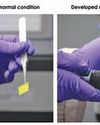
Engineered by a team at the Indian Institute of Technology Guwahati, the technology uses perovskite nanocrystals with a double-layer protective coating that improves resistance to heat and chemicals while maintaining optical performance.
1 min
July 2026

Electronics For You
President Murmu inaugurates semiconductor training fab at IISc
On June 3, 2026, President Droupadi Murmu inaugurated IISc Bengaluru’s Semiconductor Training Fab at CeNSE, established with support from the Ministry of Tribal Affairs.
4 mins
July 2026

Electronics For You
Quantum Li-Fi secures networks
Research conducted in Germany by a consortium led by KEEQuant and supported by Fraunhofer IPMS highlights a pathway toward flexible, high-security next-generation wireless networks.
1 min
July 2026
Listen
Translate
Change font size