يحاول ذهب - حر
DISCOMS PRIVATISATION: A STEP TOWARDS EFFICIENCY
March 2025
|EPR Magazine (Electrical & Power Review)
Private energy companies must compete with government-backed entities such as NTPC, BHEL and Power Grid, often offering more stable job security and better benefits.
-
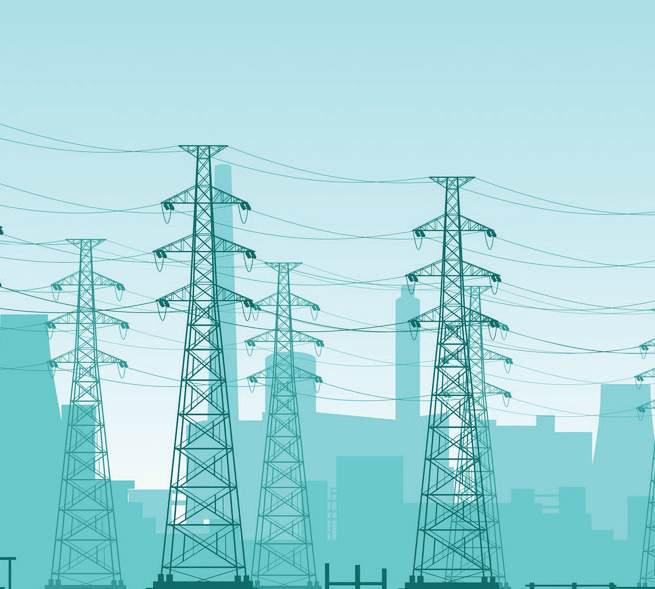
The Indian power distribution sector has long been a subject of reform, with privatisation playing a pivotal role in driving efficiency and service quality. The government's introduction of reforms linking distribution schemes and disinvestment efforts has sparked significant discussions on their impact on privatisation. The energy sector is undergoing a major transformation, with an increasing push towards privatisation, renewable energy adoption, and regulatory reforms.
These changes bring challenges and opportunities for private companies, regulators, and consumers. The core questions in this transition revolve around how private companies can compete with government entities, ensure job security, keep electricity tariffs affordable, and enhance efficiency while ensuring a fair regulatory framework.
Privatising Indian Power
Privatisation in the Indian power sector enhances efficiency, attracts investment and improves service quality. It reduces government burden, fosters competition and encourages innovation. However, challenges like tariff concerns, regulatory hurdles and equitable access remain. Successful privatisation requires balanced policies ensuring affordability, sustainability and reliable electricity supply for all consumers.
Himadri Banerji highlights that privatisation in India has a long history, beginning with the Calcutta Electric Supply Corporation. Over time, cities like Ahmedabad and Delhi have seen privatisation efforts with varying levels of success.
One crucial observation is that privatisation cannot be successful without significant investment. As Himadri states, "The investment required to bring in change has to come, without which you cannot do anything." While cultural change and workforce motivation are necessary, financial resources remain the foundation for effective transformation.


هذه القصة من طبعة March 2025 من EPR Magazine (Electrical & Power Review).
اشترك في Magzter GOLD للوصول إلى آلاف القصص المتميزة المنسقة، وأكثر من 9000 مجلة وصحيفة.
هل أنت مشترك بالفعل؟ تسجيل الدخول
المزيد من القصص من EPR Magazine (Electrical & Power Review)

EPR Magazine (Electrical & Power Review)
Predictive operations replace reactive maintenance on India's shopfloors
Predictive operations go beyond simple alarms or scheduled maintenance. It is based on the ability to observe asset behaviour continuously, detect early deviations from normal patterns, and act before failures occur, ultimately optimising performance in real time.

2 mins
March 2026

EPR Magazine (Electrical & Power Review)
Al-driven UPS turn grid-interactive for smart utilities
With the integration of real-time analytics, machine learning algorithms, and advanced control systems, UPS units can now dynamically respond to grid conditions, supporting frequency regulation regulation, voltage stabilisation and load balancing with high precision.
2 mins
March 2026

EPR Magazine (Electrical & Power Review)
Electrical manufacturers retool for bidirectional grids and digital substations
The industry is scaling up production of smart inverters, hybrid transformers, and advanced protection systems to address the intermittent nature of renewable energy.
2 mins
March 2026

EPR Magazine (Electrical & Power Review)
The unpredictable grid
The rapid growth of data centres and EVs complicates forecasting. It is difficult to predict precisely when and where new loads will materialise.
2 mins
March 2026

EPR Magazine (Electrical & Power Review)
Shift focus from capacity addition to grid resilience
The Indian electricity industry is evolving structurally to align with the country’s 2030 initiative.
3 mins
March 2026

EPR Magazine (Electrical & Power Review)
Digital grids rise as EV charging transforms utility business models
No longer confined to being mere electricity providers, utilities are evolving into region-specific system operators managing dynamic, data-driven, and decentralised grids.
2 mins
March 2026

EPR Magazine (Electrical & Power Review)
INTELLIGENT WIRES
Once silent carriers of electricity, wires are evolving into intelligent, data-enabled lifelines of the modern grid. In India's renewable surge, the physical backbone is becoming smarter, stronger and digitally connected.
2 mins
March 2026

EPR Magazine (Electrical & Power Review)
Dek & Mavericks moving beyond solar EPC to wind and hybrid projects
With the rapidly changing renewable scenario, the solar industry is accelerating innovation and capacity expansion.
2 mins
March 2026
EPR Magazine (Electrical & Power Review)
HIKMICRO AI Acoustic Imager enhancing industrial efficiency through compressed air leak detection
Predictive maintenance of equipment using compressed gases is essential to ensure operational efficiency and safety.
2 mins
March 2026

EPR Magazine (Electrical & Power Review)
Gensets evolving from emergency standby units to integral components
Gensets now support grid stability during peak demand, bridge renewable intermittencies in hybrid systems, and ensure resilience for critical sectors.
3 mins
March 2026
Listen
Translate
Change font size