
استمتع بـUnlimited مع Magzter GOLD
احصل على وصول غير محدود إلى أكثر من 9000 مجلة وصحيفة وقصة مميزة مقابل
يحاول ذهب - حر
THE MASSIVE MICROWAVE OVEN AND OTHER HOME APPLIANCE FIRSTS
Issue 214
|How It Works UK
Discover the prototypes of everything from the microwave to the electric toothbrush – and why some were unreliable, weird or downright dangerous
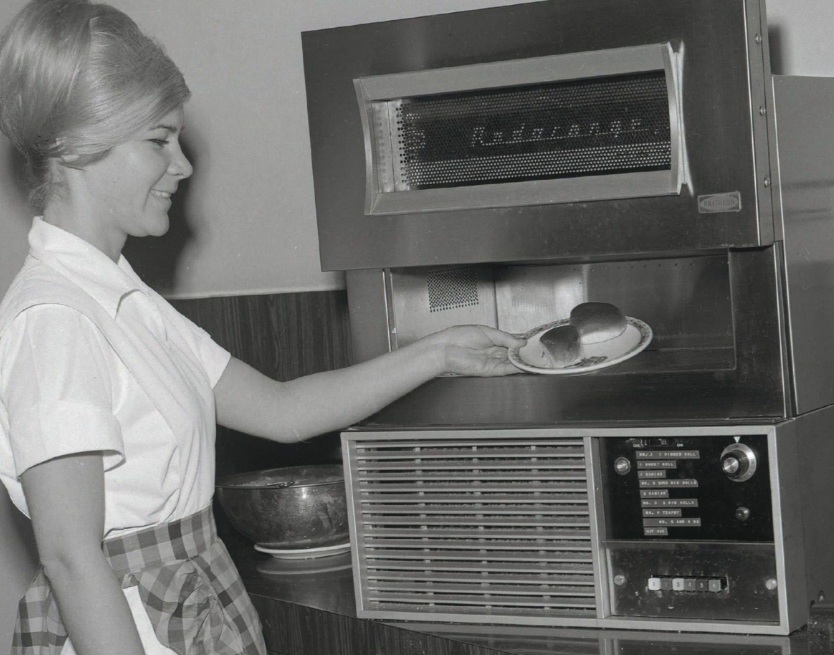
You may take for granted many of the devices and appliances you rely on today, whether it's the rapid and efficient heating of meals in a compact microwave oven or the automated washing of your clothes. But these trailblazing inventions, which have now become commonplace in our homes and part of our daily routines, were once novel time-saving devices. The microwave oven was patented by American engineer Percy Spencer in 1945, just after the end of World War II. This invention was an accidental discovery. After Spencer was working with a live radar set that was emitting microwaves, he found that the chocolate bar he had in his pocket had melted. He discovered that the radar’s magnetron – a high-powered vacuum tube that generated microwaves by accelerating electrons under a strong magnetic field – had caused the chocolate to heat up and melt. The tube was originally used to emit radar signals for detecting enemy aircraft during the war. Following his chocolatey discovery, he experimented by pointing the magnetron tube towards other foods.
Sure enough, he could turn corn kernels into popcorn, cook an egg and heat many products using this method, and the rapid-heating microwave method was born. Spencer then built a metal box to contain the microwaves, with an opening for the magnetron tube to deliver microwaves into the box. At the front, he engineered a door that allowed food to be placed inside. This was the first microwave oven.

هذه القصة من طبعة Issue 214 من How It Works UK.
اشترك في Magzter GOLD للوصول إلى آلاف القصص المتميزة المنسقة، وأكثر من 9000 مجلة وصحيفة.
هل أنت مشترك بالفعل؟ تسجيل الدخول
المزيد من القصص من How It Works UK
How It Works UK
WHY ANIMALS PLAY DEAD
These species have mastered faking their own deaths for several different reasons

1 min
Issue 214
How It Works UK
THE JAMES WEBB SPACE TELESCOPE MAPS 3D AURORAE ON URANUS
An international team of researchers has uncovered new insights into the upper atmosphere of Uranus, where ions swirling above the ice giant's clouds meet its magnetic field.
1 min
Issue 214
How It Works UK
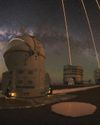
LASERS BEAM 'ARTIFICIAL STARS' INTO CHILE'S SKIES
The European Southern Observatory has released a breathtaking photo of the Milky Way shining over Paranal Observatory in Chile as lasers create artificial 'guide stars' in the dark sky above.
1 min
Issue 214

How It Works UK
WHISKERS AT WORK
How long hairs on a cat's face fine-tune their senses
2 mins
Issue 214

How It Works UK
HOW AI IMPROVES CAR SAFETY
The vehicle technology that saves lives today - and the innovations that will soon make the roads safer for everyone
4 mins
Issue 214

How It Works UK
APOLLO 17: THE LAST CREWED MOON LANDING
It's been over 50 years since the final Apollo mission, so why haven't we put astronauts on the Moon since then?
4 mins
Issue 214
How It Works UK
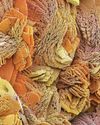
WHAT IS LIMESCALE?
Why 'hard' water leaves chalky, flaky deposits wherever it settles
2 mins
Issue 214

How It Works UK
Astronauts describe the moment a crack was discovered on their spacecraft
Chinese astronauts have described what happened when they were nearly stranded in space last year after a suspected piece of space junk struck their return capsule.
2 mins
Issue 214
How It Works UK
The Vera C. Rubin Observatory found 800,000 objects of interest in a single night
The newly commissioned Vera C. Rubin Observatory has issued 800,000 astronomy alerts in just one night, a staggering number of nightly discoveries that's expected to grow nearly tenfold by the end of this year.
2 mins
Issue 214

How It Works UK
RETURN TO THE MOON
Project Artemis is accelerating its push to put humans back on Earth's orbital dancing partner before the end of the decade
5 mins
Issue 214
Listen
Translate
Change font size