يحاول ذهب - حر
THE GREAT FARM HUSTLE
March 01, 2025
|Down To Earth
Agroforestry is fast emerging as a win-win strategy to mitigate climate change and improve farmers' income. It is particularly so in India, home to one-fifth of the agroforestry carbon projects in the world. Over the past months ROHINI KRISHNAMURTHY has travelled to almost 20 villages across the country to understand how this market works. At all locations, she finds that communities and their land and labour are central to the projects. But they do not always benefit from the carbon revenue
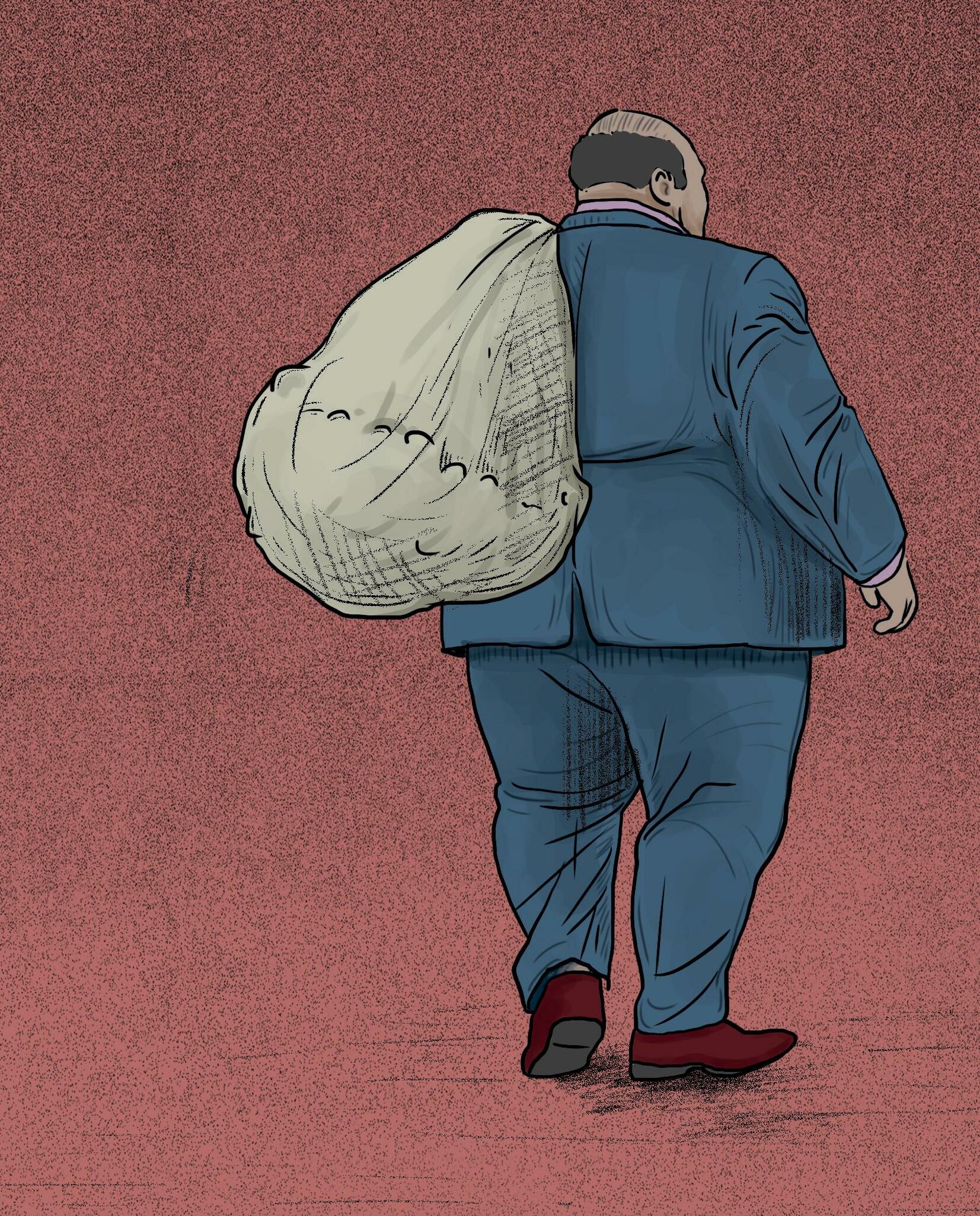
There was a palpable and building sense of unease at the residence of Arun Dutta Kadale upon enquiring about his mahogany plantation. Spread over 1 hectare (ha) at Navingar village in Maharashtra's Pune district, the plantation is part of an agroforestry project that generates carbon credits. Kadale hopes to earn ₹61,750 a year from these carbon credits.
For the uninitiated, carbon credits are issued against activities that either abate (such as by using an efficient cookstove or lighting system) or remove (for instance, by planting trees) greenhouse gases (GHGS) from the atmosphere. Each tonne of carbon dioxide or the equivalent GHGS (CO,e) avoided or removed generates one carbon credit, which is then bought by businesses that wish to offset their emissions or meet climate goals. "I set up the plantation in 2019, after one Pune-based Mahogani Vishwa Agro Private Limited (MVAPL) approached me and said I could earn more by participating in its carbon credit backed agroforestry programme.
It promised a cash incentive of ₹25,000 a year from 2024, apart from ₹2.75 crore from the sale of mahogany timber when the trees mature at 15 years. But I have not received the money yet," Kadale said when Down To Earth (DTE) met him at his residence in November 2024, adding quickly, "I am confident that the company will deliver on its promise."
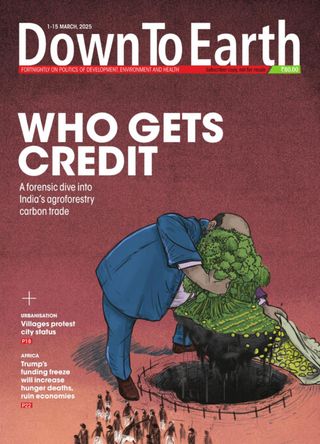

هذه القصة من طبعة March 01, 2025 من Down To Earth.
اشترك في Magzter GOLD للوصول إلى آلاف القصص المتميزة المنسقة، وأكثر من 9000 مجلة وصحيفة.
هل أنت مشترك بالفعل؟ تسجيل الدخول
المزيد من القصص من Down To Earth

Down To Earth
THINK TWICE BEFORE FELLING SAL TREES
Many trees considered to be affected by sal borer in the 1990s are still alive today

1 mins
February 16, 2026

Down To Earth
EDGE OF SURVIVAL
Caste divides deny marginalised communities land, resources and essential aid, leaving them more vulnerable to climate disasters
6 mins
February 16, 2026

Down To Earth
A WISH LIST?
Union Budget for 2026-27 conveys the impression of a roll-call of intentions and ambitious proposals, with little detail on their formulation
6 mins
February 16, 2026
Down To Earth
Break down the gender wall
THE RULING National Democratic Alliance (NDA) government has been heavily invested in the goal to make India a developed economy by 2047.
2 mins
February 16, 2026

Down To Earth
MENSTRUAL HEALTH, NOW A FUNDAMENTAL RIGHT
In a landmark judgement, the Supreme Court has recognised menstrual health and hygiene as a fundamental right under Article 21 of the Constitution of India, which guarantees the right to life and dignity.
8 mins
February 16, 2026

Down To Earth
Of devolution and new disasters
The 16th Finance Commission pushes for changes in view of new fiscal and climatic conditions
11 mins
February 16, 2026
Down To Earth
Rising risks of plastics
NEGATIVE IMPACTS on human health due to emissions linked to the plastic lifecycle could double by 2040, according to a study published in The Lancet Planetary Health in January.
1 min
February 16, 2026

Down To Earth
GAP BETWEEN EPIDEMICS NARROWING
A watershed-based and landscape-level approach is needed to address forest degradation
2 mins
February 16, 2026
Down To Earth
WAITING TO STRIKE
Sal heartwood borer is considered the biggest threat to forestry in India, especially to the sal tree, where it lives and breeds.
11 mins
February 16, 2026

Down To Earth
A SPRING DELIGHT
Mustard flowers are not meant only for the eyes. Invite them to your plate once in a while
3 mins
February 16, 2026
Listen
Translate
Change font size