يحاول ذهب - حر
Invisibilisation of Dalit scholars
September 16, 2022
|Down To Earth
A PERSON READING CASTE AND PARTITION IN BENGAL: THE STORY OF DALIT REFUGEES, 1946-1961 WOULD THINK THAT DALITS HAVE NEVER DONE A CASTE ANALYSIS OF PARTITION, WHICH IS ABSOLUTELY UNTRUE
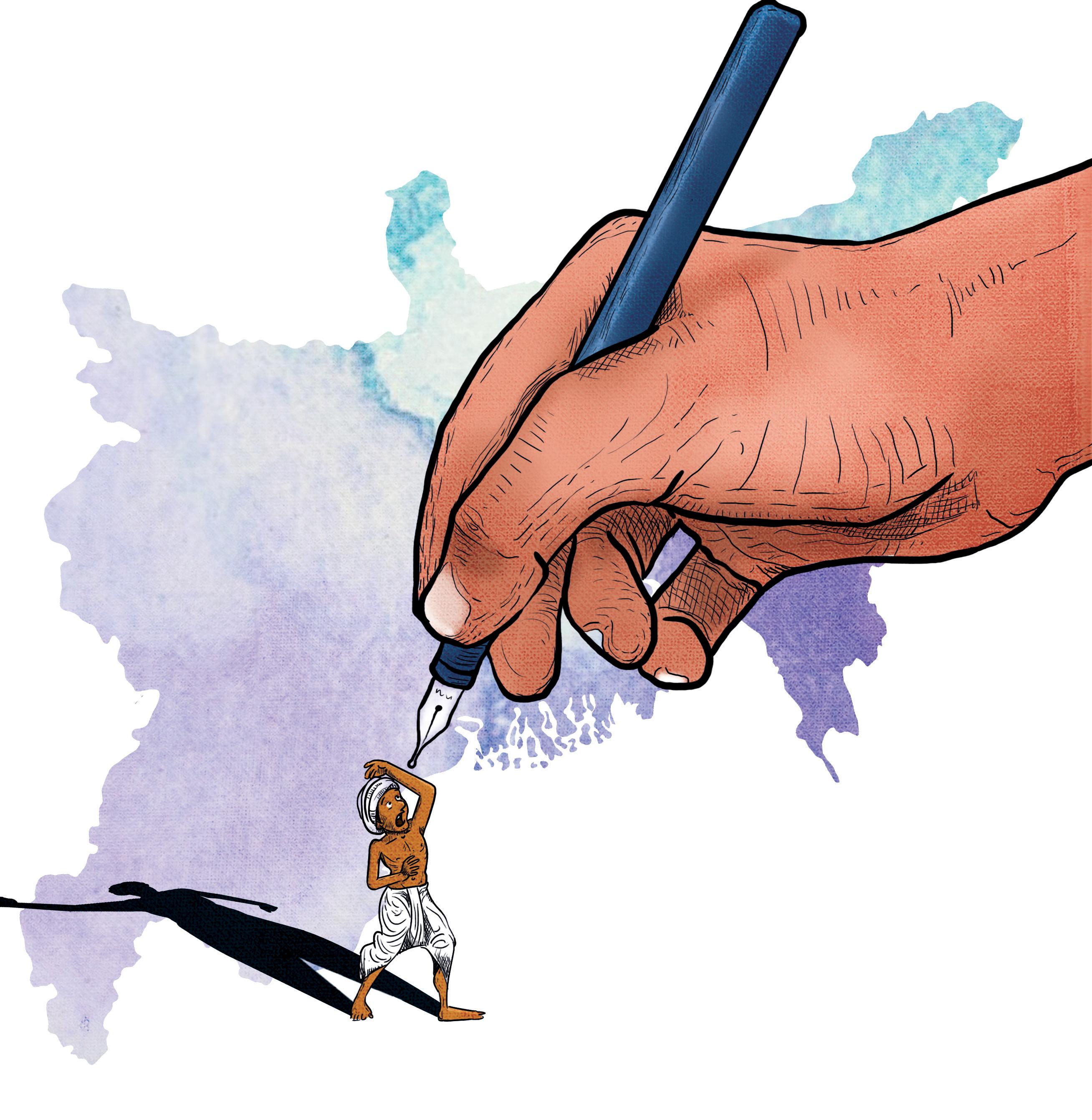
IN A staggering display of literary gymnastics, Sekhar Bandyopadhyay and Anasua Basu Ray Chaudhury have managed to write a book ostensibly to address the "discursive absence of the caste question and the Dalit from the long history of Partition in Bengal", using virtually no theoretical contribution from Dalit intellectuals. This is not to say that the book does not quote Dalits. It does have interviews, speeches, newspaper articles, stories and references to empirical studies conducted by them.
The authors talk about the history of the anti-caste struggle in British India without so much as mentioning G Aloysius, a scholar-in-residence at the English and Foreign Languages University, Hyderabad, whose 1997 book Nationalism Without a Nation in India is of direct relevance to the subject matter of this book, in that it painstakingly delineates, among other things, how partition was a compact between upper caste Hindus and Muslims against the interests of the lower castes in both religions. BR Ambedkar is used only as a historical figure, as a politician made speeches and conducted movements, and not once as an academic or intellectual. To say that Ambedkar sought to politicise the structural violence of untouchability, they have quoted and referenced Anupama Rao, a professor of history at Barnard College, Columbia University. They did not even design to quote Ambedkar's academic work directly.

هذه القصة من طبعة September 16, 2022 من Down To Earth.
اشترك في Magzter GOLD للوصول إلى آلاف القصص المتميزة المنسقة، وأكثر من 9000 مجلة وصحيفة.
هل أنت مشترك بالفعل؟ تسجيل الدخول
المزيد من القصص من Down To Earth

Down To Earth
THINK TWICE BEFORE FELLING SAL TREES
Many trees considered to be affected by sal borer in the 1990s are still alive today

1 mins
February 16, 2026

Down To Earth
EDGE OF SURVIVAL
Caste divides deny marginalised communities land, resources and essential aid, leaving them more vulnerable to climate disasters
6 mins
February 16, 2026

Down To Earth
A WISH LIST?
Union Budget for 2026-27 conveys the impression of a roll-call of intentions and ambitious proposals, with little detail on their formulation
6 mins
February 16, 2026
Down To Earth
Break down the gender wall
THE RULING National Democratic Alliance (NDA) government has been heavily invested in the goal to make India a developed economy by 2047.
2 mins
February 16, 2026

Down To Earth
MENSTRUAL HEALTH, NOW A FUNDAMENTAL RIGHT
In a landmark judgement, the Supreme Court has recognised menstrual health and hygiene as a fundamental right under Article 21 of the Constitution of India, which guarantees the right to life and dignity.
8 mins
February 16, 2026

Down To Earth
Of devolution and new disasters
The 16th Finance Commission pushes for changes in view of new fiscal and climatic conditions
11 mins
February 16, 2026
Down To Earth
Rising risks of plastics
NEGATIVE IMPACTS on human health due to emissions linked to the plastic lifecycle could double by 2040, according to a study published in The Lancet Planetary Health in January.
1 min
February 16, 2026

Down To Earth
GAP BETWEEN EPIDEMICS NARROWING
A watershed-based and landscape-level approach is needed to address forest degradation
2 mins
February 16, 2026
Down To Earth
WAITING TO STRIKE
Sal heartwood borer is considered the biggest threat to forestry in India, especially to the sal tree, where it lives and breeds.
11 mins
February 16, 2026

Down To Earth
A SPRING DELIGHT
Mustard flowers are not meant only for the eyes. Invite them to your plate once in a while
3 mins
February 16, 2026
Translate
Change font size