يحاول ذهب - حر
Hybrid takeover
September 01, 2023
|Down To Earth
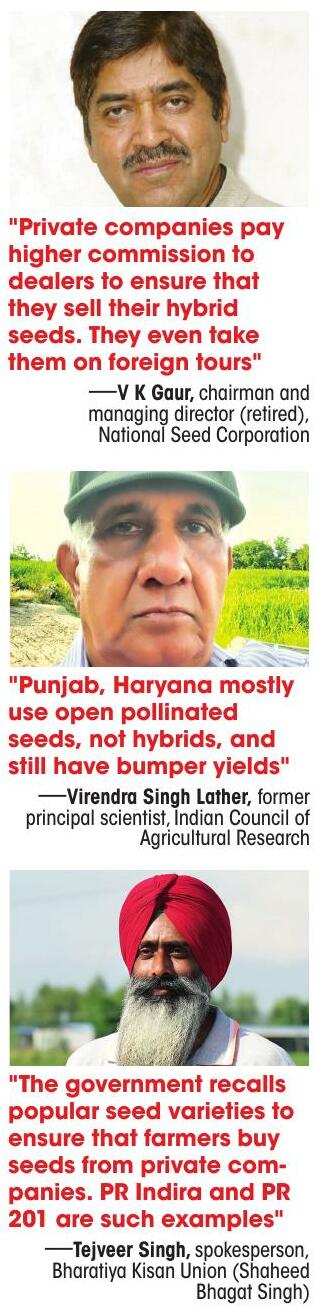
DALJIT SINGH usually harvests 10 tonnes of rice from his 1.5-hectare farmland. But in 2022, the yield was just 1.9 tonnes. Most of the crop was dwarfed due to a Fiji virus infection. "I had used hybrid seeds manufactured by German company Bayer.

This year, all the farmers in my village have decided not to use seeds manufactured by Bayer because they seem to catch infection easily," says Daljit.
Daljit is a farmer in Shahbad, a village in Ambala district of Haryana. Though the farmers of Shahbad did not use seeds by Bayer this year, they have not become averse to hybrid seeds altogether. "We have used hybrid varieties of a different brand because hybrid seeds give better yield," says Daljit.
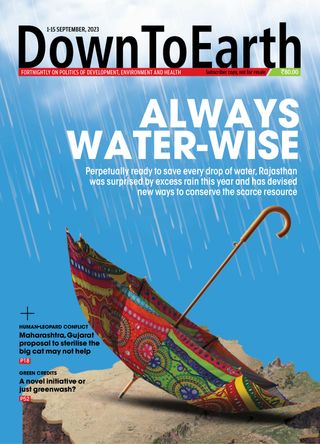
Over the decades, popularity of hybrid seeds has been increasing among farmers in India. Hybrid varieties get ready for harvest quickly as compared to traditional varieties (these are handpicked by farmers from the field after harvest for use next year, and the process can be replicated for generations) or the open pollinated variety (OPV) seeds (these are mostly developed by agricultural universities and can be used for five to seven years). "The quicker harvest quality of hybrid seeds gives farmers a window to sow short-duration crops, such as potato, between two crop cycles," says Manjit Singh, a farmer from Mohri in Ambala district.

هذه القصة من طبعة September 01, 2023 من Down To Earth.
اشترك في Magzter GOLD للوصول إلى آلاف القصص المتميزة المنسقة، وأكثر من 9000 مجلة وصحيفة.
هل أنت مشترك بالفعل؟ تسجيل الدخول
المزيد من القصص من Down To Earth
Down To Earth
MAJESTIC SARUS STAGES COMEBACK
Involvement of farmers in conservation helps the sarus crane population soar in eastern Uttar Pradesh over the past decade

5 mins
June 16, 2026

Down To Earth
Global resistance to AI data centres hardens
India must learn how to regulate environmentally disastrous data centres that guzzle more water and power than entire nations
4 mins
June 16, 2026

Down To Earth
SUMMER SMOG
Ground-level ozone is one of the national capital's least appreciated public health threat
1 mins
June 16, 2026

Down To Earth
A FOREST IN WAIT
For five decades, Abujhmad in Chhattisgarh was closed to the country. Now, as the region opens up, ANIL ASHWANI SHARMA travels to villages in its dense forests to see how isolation has impacted the people and development
6 mins
June 16, 2026

Down To Earth
DON'T WASTE THE FUTURE
Policymakers may need to focus less on expanding programmes and more on improving their effectiveness and reach, suggests the latest NFHS-6 data
3 mins
June 16, 2026
Down To Earth
NEED A FOREST TRIBUNAL
A tribunal will provide people a dedicated independent forum where they will have a statutory right to approach
2 mins
June 16, 2026
Down To Earth
Moment or movement
ONE DEFINITION of the word metamorphosis in the dictionary is “a striking alteration in appearance, character, or circumstances”.
2 mins
June 16, 2026

Down To Earth
El Niño, amplified
As a possible super El Niño looms in 2026, scientists warn of devastations that may extend into 2027
6 mins
June 16, 2026
Down To Earth
A mindless denial
District level bodies are increasingly refusing tribal population's rights over resources guaranteed by the forest rights Act
5 mins
June 16, 2026

Down To Earth
TOOR TOUR
What makes pigeon pea so ubiquitous across cuisines in India
4 mins
June 16, 2026
Translate
Change font size