
استمتع بـUnlimited مع Magzter GOLD
احصل على وصول غير محدود إلى أكثر من 9000 مجلة وصحيفة وقصة مميزة مقابل
يحاول ذهب - حر
FARM FOLKLORE
May 16, 2025
|Down To Earth
Agriculture has stemmed from folk science or traditions of environmental conservation, documented orally
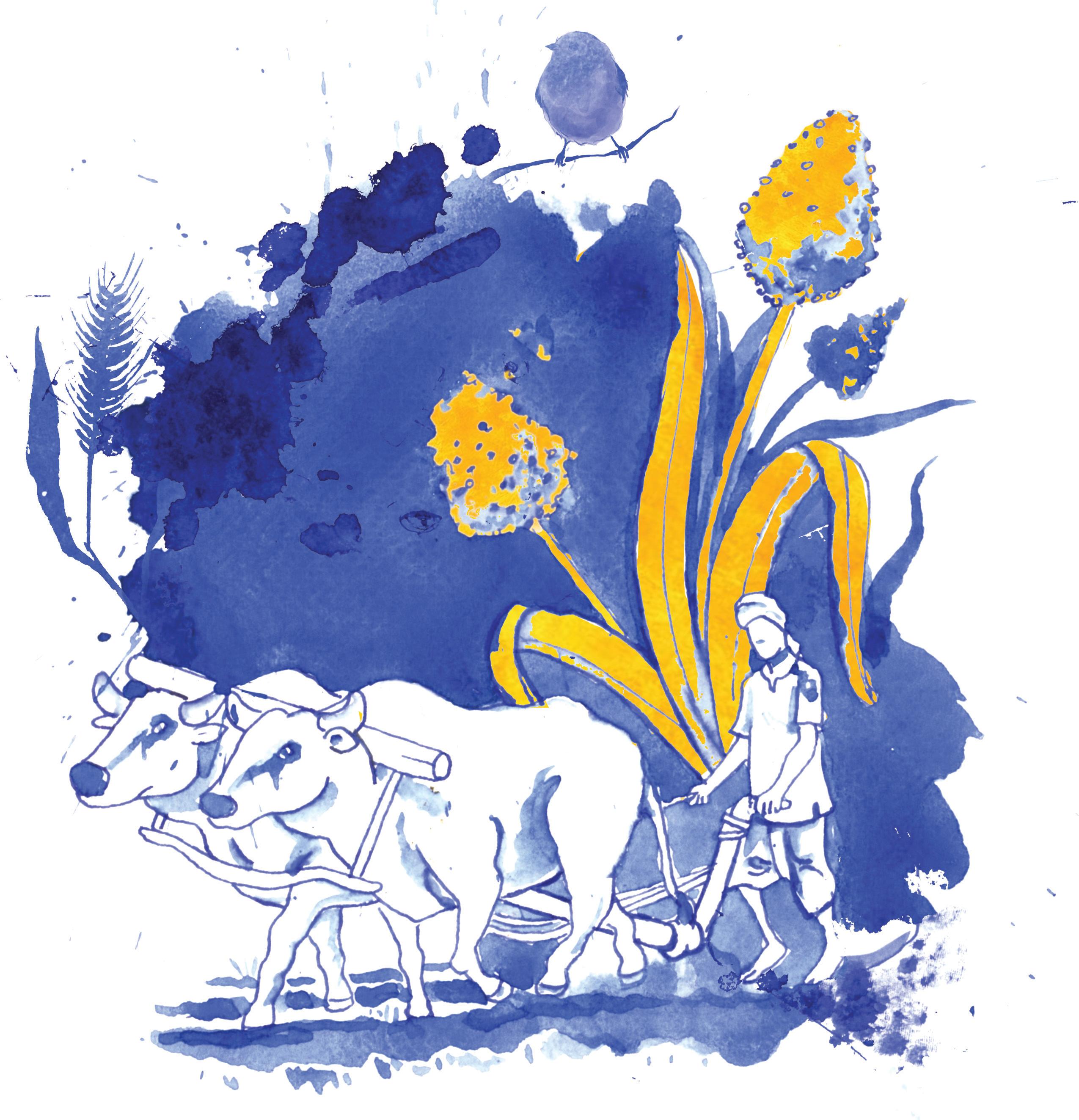
Folk literature is people's literature, village literature, or, one may say, agricultural literature. This is because even today, 60-70 per cent of the population depends on farming. That's why when a city dweller goes to buy wheat or rice, their business is completed in just 10-12 words. A bag or sack in hand, they ride a bicycle or rickshaw to the seller; bargaining, weighing, money—with these few words, wheat and rice will arrive at their home. But when a farmer grows the same grain in the field, from the preparation of the field to storage in the granary, approximately 250 words are used. These words are not formally recognised and yet called dialects.
Agriculture started some 10,000 years ago; people settled in plains and started digging wells. Before the discovery of iron, all prehistoric settlements were located along rivers and drank their waters. But with the expansion of agriculture and discovery of iron ore, other cottage industries also developed, creating a farming-dependent society with barter systems in villages. The literature created from this experiential knowledge, or the oral traditions that developed, came to be called folk traditions and folk literature. Before modern, chemical-based, environmentally-destructive farming, all agriculture stemmed from folk science or folk traditions of environmental conservation, where the environment was protected at every step. This is because farming was for the entire village's sustenance, in contrast to the present-day merchant farming. It involved conservation, not reckless exploitation of natural resources.


هذه القصة من طبعة May 16, 2025 من Down To Earth.
اشترك في Magzter GOLD للوصول إلى آلاف القصص المتميزة المنسقة، وأكثر من 9000 مجلة وصحيفة.
هل أنت مشترك بالفعل؟ تسجيل الدخول
المزيد من القصص من Down To Earth

Down To Earth
THINK TWICE BEFORE FELLING SAL TREES
Many trees considered to be affected by sal borer in the 1990s are still alive today

1 mins
February 16, 2026

Down To Earth
EDGE OF SURVIVAL
Caste divides deny marginalised communities land, resources and essential aid, leaving them more vulnerable to climate disasters
6 mins
February 16, 2026

Down To Earth
A WISH LIST?
Union Budget for 2026-27 conveys the impression of a roll-call of intentions and ambitious proposals, with little detail on their formulation
6 mins
February 16, 2026
Down To Earth
Break down the gender wall
THE RULING National Democratic Alliance (NDA) government has been heavily invested in the goal to make India a developed economy by 2047.
2 mins
February 16, 2026

Down To Earth
MENSTRUAL HEALTH, NOW A FUNDAMENTAL RIGHT
In a landmark judgement, the Supreme Court has recognised menstrual health and hygiene as a fundamental right under Article 21 of the Constitution of India, which guarantees the right to life and dignity.
8 mins
February 16, 2026

Down To Earth
Of devolution and new disasters
The 16th Finance Commission pushes for changes in view of new fiscal and climatic conditions
11 mins
February 16, 2026
Down To Earth
Rising risks of plastics
NEGATIVE IMPACTS on human health due to emissions linked to the plastic lifecycle could double by 2040, according to a study published in The Lancet Planetary Health in January.
1 min
February 16, 2026

Down To Earth
GAP BETWEEN EPIDEMICS NARROWING
A watershed-based and landscape-level approach is needed to address forest degradation
2 mins
February 16, 2026
Down To Earth
WAITING TO STRIKE
Sal heartwood borer is considered the biggest threat to forestry in India, especially to the sal tree, where it lives and breeds.
11 mins
February 16, 2026

Down To Earth
A SPRING DELIGHT
Mustard flowers are not meant only for the eyes. Invite them to your plate once in a while
3 mins
February 16, 2026
Listen
Translate
Change font size