يحاول ذهب - حر
Did asteroids bring life to Earth?
December 2025
|BBC Sky at Night Magazine
Nick Spall examines the evidence that life on Earth came from outer space – and how close science is to proving it
-
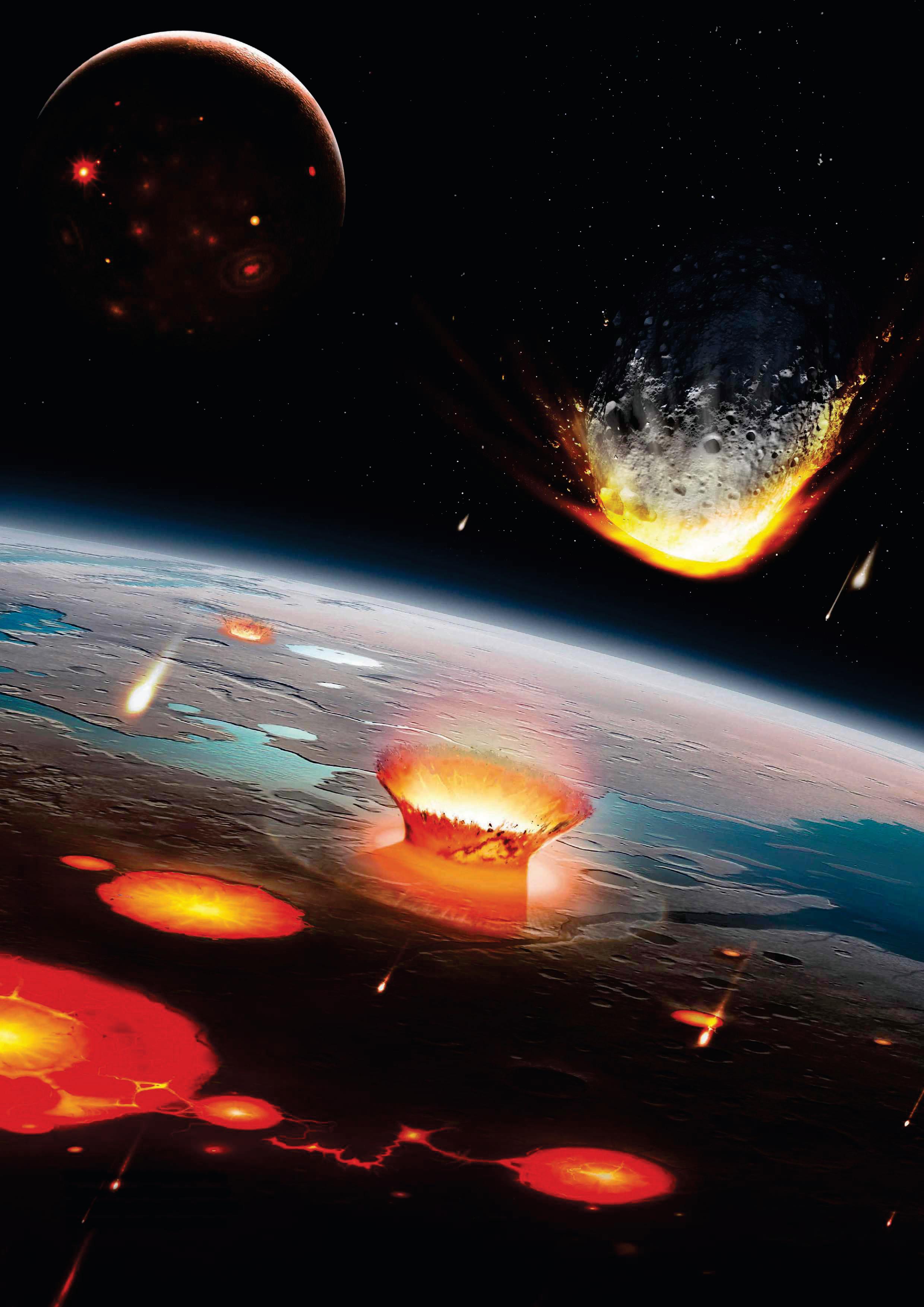
We humans are always wondering whether we're alone in the Universe.
But what if we are one of a long line of species that were around long before our planet even existed? This intriguing idea, that life didn't originate on Earth but arrived from elsewhere in the Galaxy, has always been controversial, but it's one that keeps resurfacing. In fact, it's only gaining credence as we uncover more potential signs of life on other planets. If we do find proof that life exists elsewhere, the question that then arises is: did that life evolve separately on each planet, or did it travel there from an earlier source? And if we can entertain the idea that that could have happened elsewhere, why not on Earth?
The 'panspermia' theory asserts that the building blocks of life, or even life itself, were delivered to Earth by piggybacking on a comet or asteroid, kickstarting the evolutionary process that culminates in life existing and, ultimately, you reading this article. It's an idea that's had much derision in the past, so why do so many serious scientists still entertain it as possible fact? What makes it so attractive? Let's have a look at the evidence that supports it...
Organics everywhere
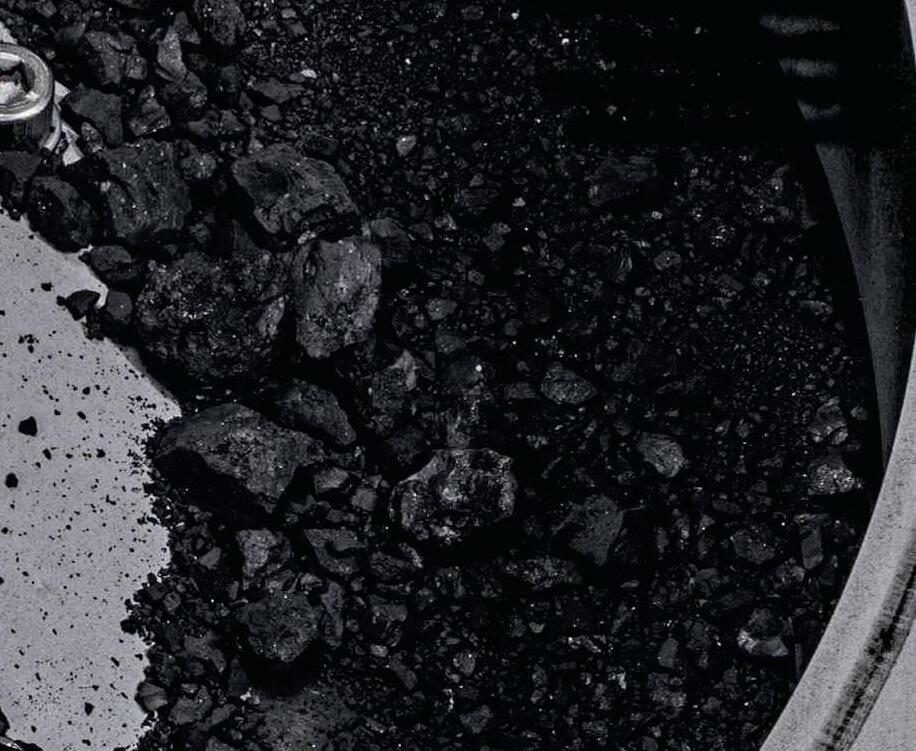
The panspermia theory isn't new. Over 50 years ago, the work of the late Sir Fred Hoyle and Chandra Wickramasinghe argued that microbial life permeates the Galaxy on a vast cosmic scale. Their hypothesis, extending the thinking of 19th-century scientists, including Lord Kelvin and Svante Arrhenius, was that life may be distributed from world to world by meteors, asteroids, dust and comets.
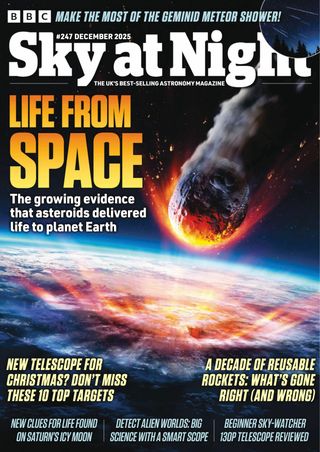

هذه القصة من طبعة December 2025 من BBC Sky at Night Magazine.
اشترك في Magzter GOLD للوصول إلى آلاف القصص المتميزة المنسقة، وأكثر من 9000 مجلة وصحيفة.
هل أنت مشترك بالفعل؟ تسجيل الدخول
المزيد من القصص من BBC Sky at Night Magazine
BBC Sky at Night Magazine
MOONWATCH
January's top lunar feature to observe

2 mins
January 2026
BBC Sky at Night Magazine
Speed up your processing workflow
How to use Photoshop's Actions tool to drastically cut your processing time
3 mins
January 2026
BBC Sky at Night Magazine
Chasing Canada's polar lights
With solar maximum peaking and a new Moon promising dark skies, Jamie Carter travels to Churchill, Manitoba to hunt the Northern Lights - and dodge polar bears – in Canada's far north
7 mins
January 2026
BBC Sky at Night Magazine
Beyond Pluto: The search for the hidden planets
Could one – or even two - undiscovered planets lurk at the edges of our Solar System? Nicky Jenner explores how close we are to finding the elusive 'Planet 9'
6 mins
January 2026
BBC Sky at Night Magazine
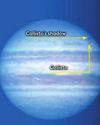
Jupiter moon events
Jupiter is a magnificent planet to observe.
2 mins
January 2026
BBC Sky at Night Magazine
What samples from space have taught us
Alastair Gunn explains what scientists have learnt in the 20 years since the first unmanned mission brought materials back from alien worlds
3 mins
January 2026
BBC Sky at Night Magazine
The Milky Way as you've never seen it before
This is the largest low-frequency radio colour image of our Galaxy ever assembled
1 min
January 2026
BBC Sky at Night Magazine
Merger of ‘impossibly' massive black holes explained
Scientists discover how enormous, fast-spinning black holes can exist after all
1 mins
January 2026
BBC Sky at Night Magazine
Lunar occultation of the Pleiades
BEST TIME TO SEE: 27 January from 20:30 UT
1 min
January 2026
BBC Sky at Night Magazine
The Universe's expansion may be slowing down
New study suggests current theories of dark energy could be wrong
1 mins
January 2026
Listen
Translate
Change font size