
استمتع بـUnlimited مع Magzter GOLD
احصل على وصول غير محدود إلى أكثر من 9000 مجلة وصحيفة وقصة مميزة مقابل
يحاول ذهب - حر
RESISTING PERSECUTION
June 2025
|The Caravan
Muslim prisoners' writings in contemporary India
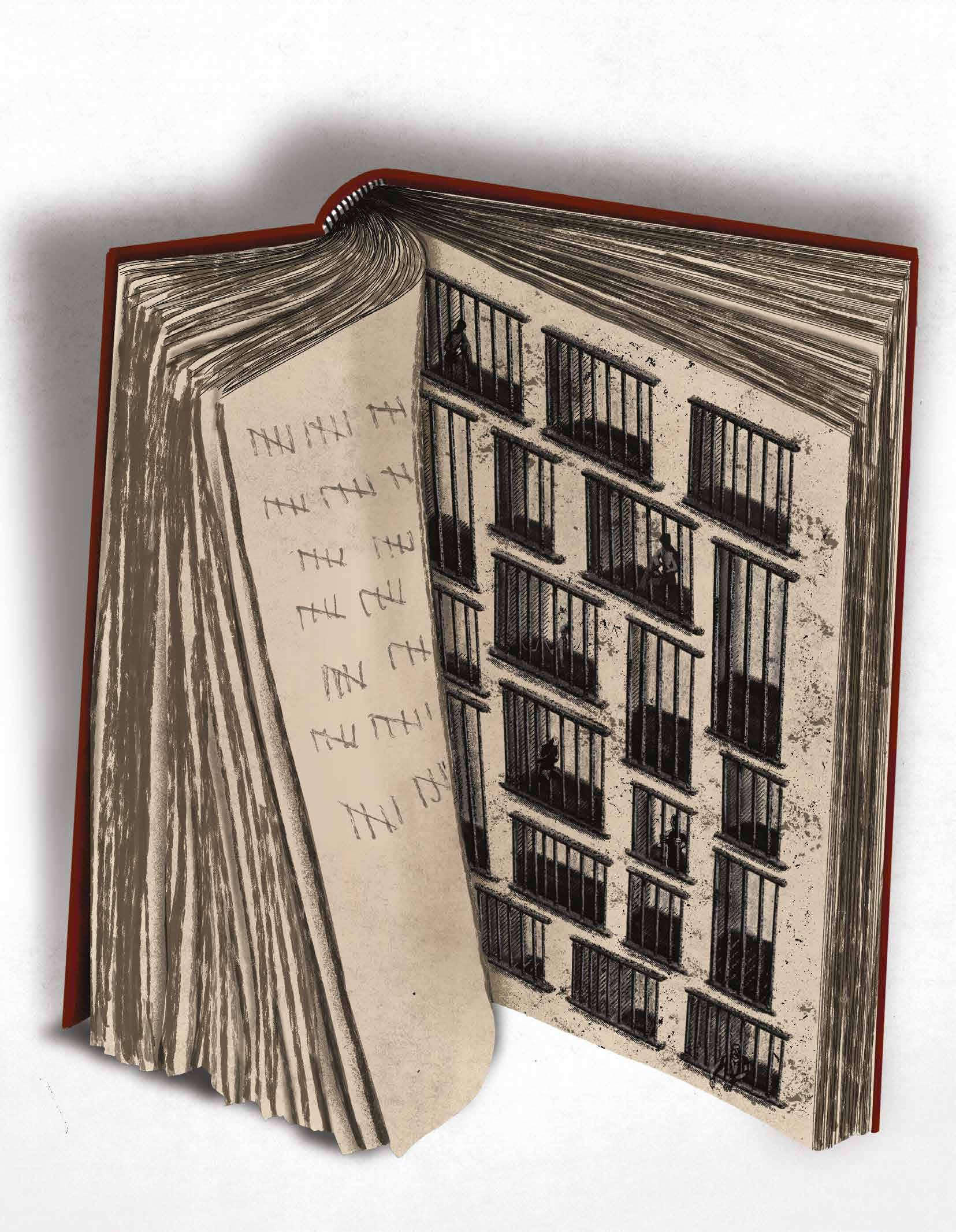
“BECAUSE THIS WAS a setting/ Hence, forget about telling anybody/ What happened in custody.” This stanzaic ending repeats throughout Horror Saga, a prison memoir by Ehtesham Qutubuddin Siddiqui, published in 2024. It makes for unusual reading, by highlighting the author's difficulty in “telling” what happened to him in custody because of a “setting”—a word annotated in the text as a “cooked up plot by corrupt people.”
At the same time, the recurring lines reiterate the author's need to narrate, despite his difficulty, what went on behind bars. Siddiqui's authorial difficulties are not uncommon among writers narrating experiences of prison, as they grapple with the problem of relaying events that are associated with the stigma of punishment and lie outside the purview of public scrutiny. However, Siddiqui's insistence that it was “a setting” begs an obvious question: why does he do so? Is Horror Saga an all-too-familiar tale of a criminal who insists upon their innocence by drawing attention to settings? Or is it that Siddiqui pens a larger story, one that is more than an individual tale of suffering, as he uses the collective pronoun “we” at the end of the text to describe the intolerable conditions of prison?

هذه القصة من طبعة June 2025 من The Caravan.
اشترك في Magzter GOLD للوصول إلى آلاف القصص المتميزة المنسقة، وأكثر من 9000 مجلة وصحيفة.
هل أنت مشترك بالفعل؟ تسجيل الدخول
المزيد من القصص من The Caravan

The Caravan
Dim Views
Punjab's new media suffers from old problems

22 mins
February 2026

The Caravan
ON FIRM GROUND
The civic struggle against uranium mining in the West Khasi Hills
6 mins
February 2026

The Caravan
DANGEROUS LIAISON
Why India enabled Israel's genocide in Gaza
44 mins
February 2026

The Caravan
Platform for Change
A women-led union gives voice to India's gig workers
6 mins
February 2026

The Caravan
NARAVANE'S Moment of Truth
An army chief's unpublished memoir exposes how the Modi government spun the China border crisis
44 mins
February 2026
The Caravan
A Brief History of the Slap
How Telugu cinema's heroes turn violence against women into romance
9 mins
February 2026

The Caravan
FACE PALM
Why the Congress keeps losing elections
33 mins
January 2025

The Caravan
The Great Transformation
Challenges facing independent news outlets in the digital age/Media
6 mins
January 2025

The Caravan
The Mob Comes for Film Critics
Dhurandhar and the manufacture of a national consensus
11 mins
January 2025
The Caravan
Memories Are Made of This
FOOD IN DALIT AND ADIVASI WRITING
15 mins
January 2025
Listen
Translate
Change font size