يحاول ذهب - حر
Out of Place
May 2025
|The Caravan
In November 2022, a confrontation over podu—shifting cultivation practised on forest land—between forest officials and Gutti Koya Adivasis in Telangana’s Bhadradri Kothagudem district ended with the death of Chalamala Srinivas Rao, a forest range officer.
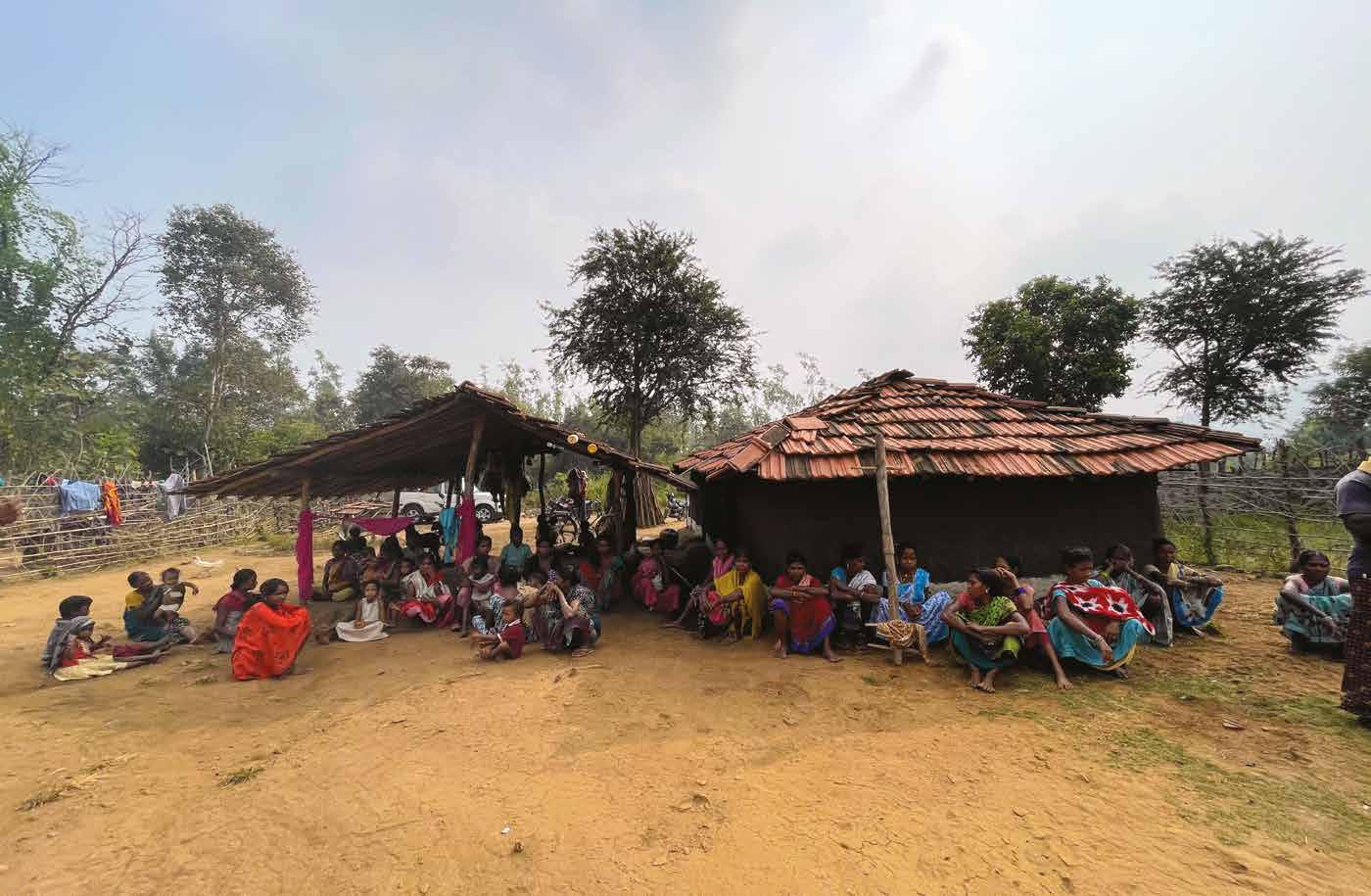
The Gutti Koyas, also known as Muria Gonds, are an Adivasi community from south Chhattisgarh, particularly Bastar, Dantewada and Sukma districts. Ethnically linked to the Koya and Gond tribes, they are known by different names across state borders.
The Gutti Koyas began migrating to Telanganaand Andhra Pradesh around 2005, fleeing the brutal state-sponsored violence of Salwa Judum. The militia razed entire villages in Bastar under the pretext of anti-Maoist operations, displacing tens of thousands of Adivasis. A 2017 report by Save the Children recorded that Maoist violence and counterinsurgency operations had displaced nearly 1.5 lakh Muria and Dorla Adivasis, with Chhattisgarh alone accounting for over one lakh. Yet, nearly two decades on, there is still no policy framework in India to recognise or rehabilitate internally displaced persons.
Today, most Gutti Koyas reside in Telangana’s Bhadradri Kothagudem, Mulugu, Jayashankar Bhupalpally and Khammam districts, and in Andhra Pradesh’s East and West Godavari districts. Some have also settled in Maharashtra and Odisha. They continue to rely on podu cultivation and the collection of minor forest produce, sustaining ways of life that are routinely criminalised by the state.
Following the forest officer’s death, the backlash against the community was severe. The gram panchayat of Bendalpadu, the site of the incident, passed a resolution demanding the expulsion of Gutti Koyas to their “home state.” The resolution described the community as “addicted to ganja and liquor,” and claimed they “tote around fatal weaponry,” are “losing discretion,” and are “committing murders.” The Telangana High Court struck down the resolution after community members filed a petition challenging it, but the damage had been done. Gutti Koyas were portrayed not as displaced and disenfranchised people frequently harassed by state officials and local populations, but as dangerous interlopers.

هذه القصة من طبعة May 2025 من The Caravan.
اشترك في Magzter GOLD للوصول إلى آلاف القصص المتميزة المنسقة، وأكثر من 9000 مجلة وصحيفة.
هل أنت مشترك بالفعل؟ تسجيل الدخول
المزيد من القصص من The Caravan

The Caravan
Dim Views
Punjab's new media suffers from old problems

22 mins
February 2026

The Caravan
ON FIRM GROUND
The civic struggle against uranium mining in the West Khasi Hills
6 mins
February 2026

The Caravan
DANGEROUS LIAISON
Why India enabled Israel's genocide in Gaza
44 mins
February 2026

The Caravan
Platform for Change
A women-led union gives voice to India's gig workers
6 mins
February 2026

The Caravan
NARAVANE'S Moment of Truth
An army chief's unpublished memoir exposes how the Modi government spun the China border crisis
44 mins
February 2026

The Caravan
A Brief History of the Slap
How Telugu cinema's heroes turn violence against women into romance
9 mins
February 2026

The Caravan
FACE PALM
Why the Congress keeps losing elections
33 mins
January 2025

The Caravan
The Great Transformation
Challenges facing independent news outlets in the digital age/Media
6 mins
January 2025

The Caravan
The Mob Comes for Film Critics
Dhurandhar and the manufacture of a national consensus
11 mins
January 2025
The Caravan
Memories Are Made of This
FOOD IN DALIT AND ADIVASI WRITING
15 mins
January 2025
Listen
Translate
Change font size