
استمتع بـUnlimited مع Magzter GOLD
احصل على وصول غير محدود إلى أكثر من 9000 مجلة وصحيفة وقصة مميزة مقابل
يحاول ذهب - حر
Towards Love
February/March 2024
|Philosophy Now
George Mason on love as shared identity.
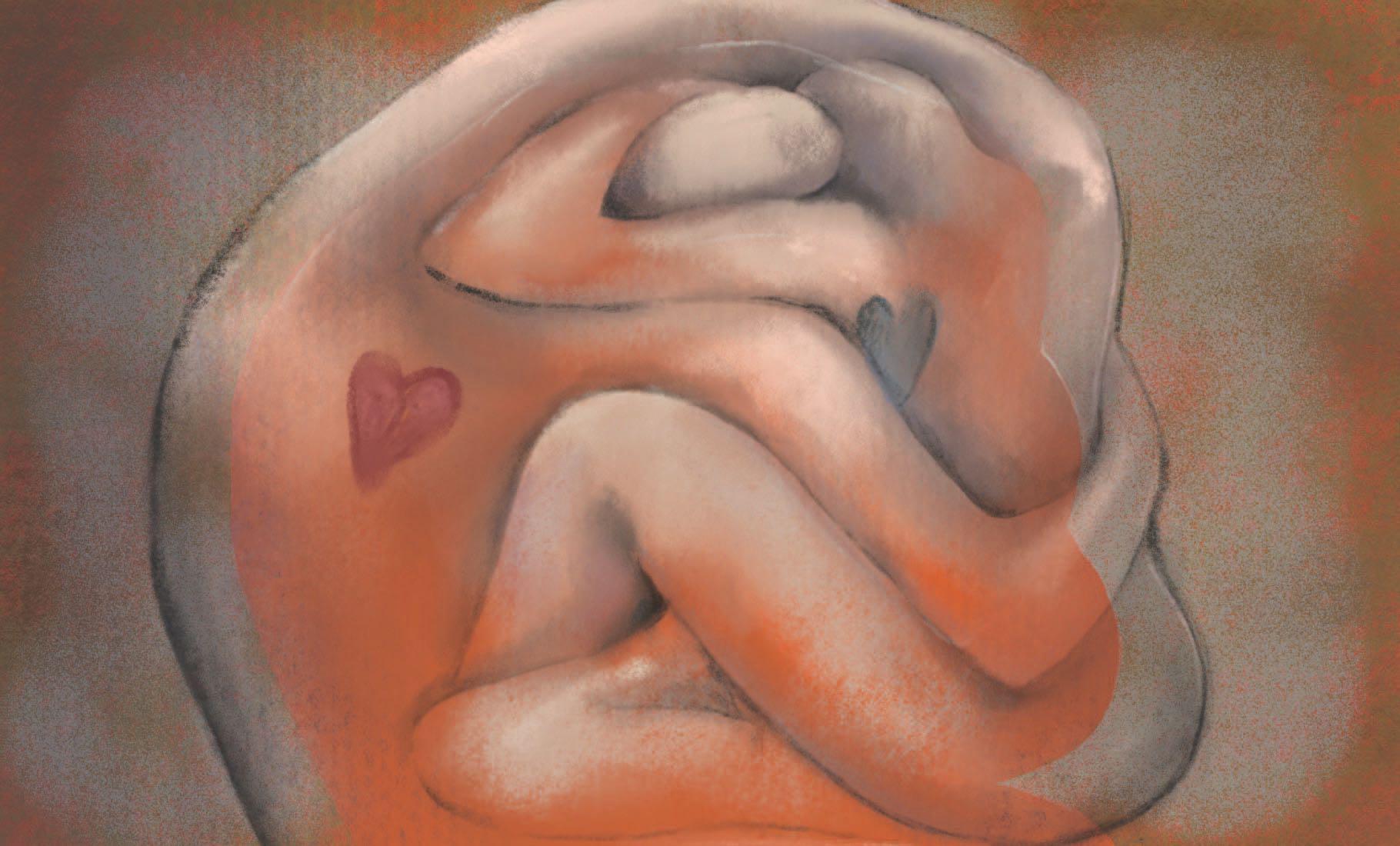
“where I does not exist, nor you, so close that your hand on my chest is my hand, so close that your eyes close as I fall asleep.”
Pablo Neruda, Sonnet XVII
In his dialogue The Symposium, Plato has Aristophanes recount his myth of the lovers. Human beings were once physically paired, Aristophanes says: creatures with two faces, four arms, four legs. In this form we were powerful enough to challenge the gods, and so Zeus split us forever in two. Condemned to this solitude, humans would wander the Earth searching for their lost halves, and on meeting them, “would throw their arms about each other, weaving themselves together, wanting to grow together.”
Aristophanes’ account speaks to a need still keenly felt today for an intimacy denied to us by the human condition: “Love is born into every human being; it calls back the halves of our original nature together; it tries to make one out of two and heal the wound of human nature.”
True, our psychological isolation is a necessary tragedy of our material individuation. We exist as physical beings, but we experience our selves as ephemeral coalitions of thought and feeling, forever bounded by flesh and bone. Words, endlessly ambiguous, are grievously imperfect vehicles for communication to another mind. Through them we give others not a window to our being and meaning, but a foundation on which to build their own; as Roland Barthes says, communication ultimately allows us representation in another’s mind, but never


هذه القصة من طبعة February/March 2024 من Philosophy Now.
اشترك في Magzter GOLD للوصول إلى آلاف القصص المتميزة المنسقة، وأكثر من 9000 مجلة وصحيفة.
هل أنت مشترك بالفعل؟ تسجيل الدخول
المزيد من القصص من Philosophy Now

Philosophy Now
Bilbo Theorizes About Wellbeing
Eric Comerford overhears Bilbo and Gandalf discussing happiness.

9 mins
December 2025 / January 2026

Philosophy Now
What Women?
Marcia Yudkin remembers almost choking at Cornell
11 mins
December 2025 / January 2026

Philosophy Now
Islamic Philosophers On Tyranny
Amir Ali Maleki looks at tyranny from an Islamic perspective.
4 mins
December 2025 / January 2026

Philosophy Now
Peter Singer
The controversial Australian philosopher defends the right to choose to die on utilitarian grounds
5 mins
December 2025 / January 2026

Philosophy Now
Another Conversation with Martin Heidegger?
Raymond Tallis talks about communication problems.
7 mins
December 2025 / January 2026

Philosophy Now
Letters
When inspiration strikes, don't bottle it up. Email me at rick.lewis@philosophynow.org Keep them short and keep them coming!
17 mins
December 2025 / January 2026

Philosophy Now
The Philosophy of William Blake
Mark Vernon looks at the imaginative thinking of an imaginative artist.
9 mins
December 2025 / January 2026

Philosophy Now
Philosophical Haiku
Peering through life’s lens God in nature is deduced: The joy of being.
1 mins
December 2025 / January 2026

Philosophy Now
Philosophy Shorts
More songs about Buildings and Food' was the title of a 1978 album by the rock band Talking Heads. It was about all the things rock stars normally don't sing about. Pop songs are usually about variations on the theme of love; tracks like Rose Royce's 1976 hit 'Car Wash' are the exception. Philosophers, likewise, tend to have a narrow focus on epistemology, metaphysics and trifles like the meaning of life. But occasionally great minds stray from their turf and write about other matters, for example buildings (Martin Heidegger), food (Hobbes), tomato juice (Robert Nozick), and the weather (Lucretius and Aristotle). This series of Shorts is about these unfamiliar themes; about the things philosophers also write about.
2 mins
December 2025 / January 2026

Philosophy Now
Hedonic Treadmills in the Vale of Tears
Michael Gracey looks at how philosophers have pursued happiness.
8 mins
December 2025 / January 2026
Listen
Translate
Change font size