يحاول ذهب - حر
A THEATRE OF HATE
November 2025
|BBC History UK
Did German U-boats conduct a 'clean' campaign during the Second World War?
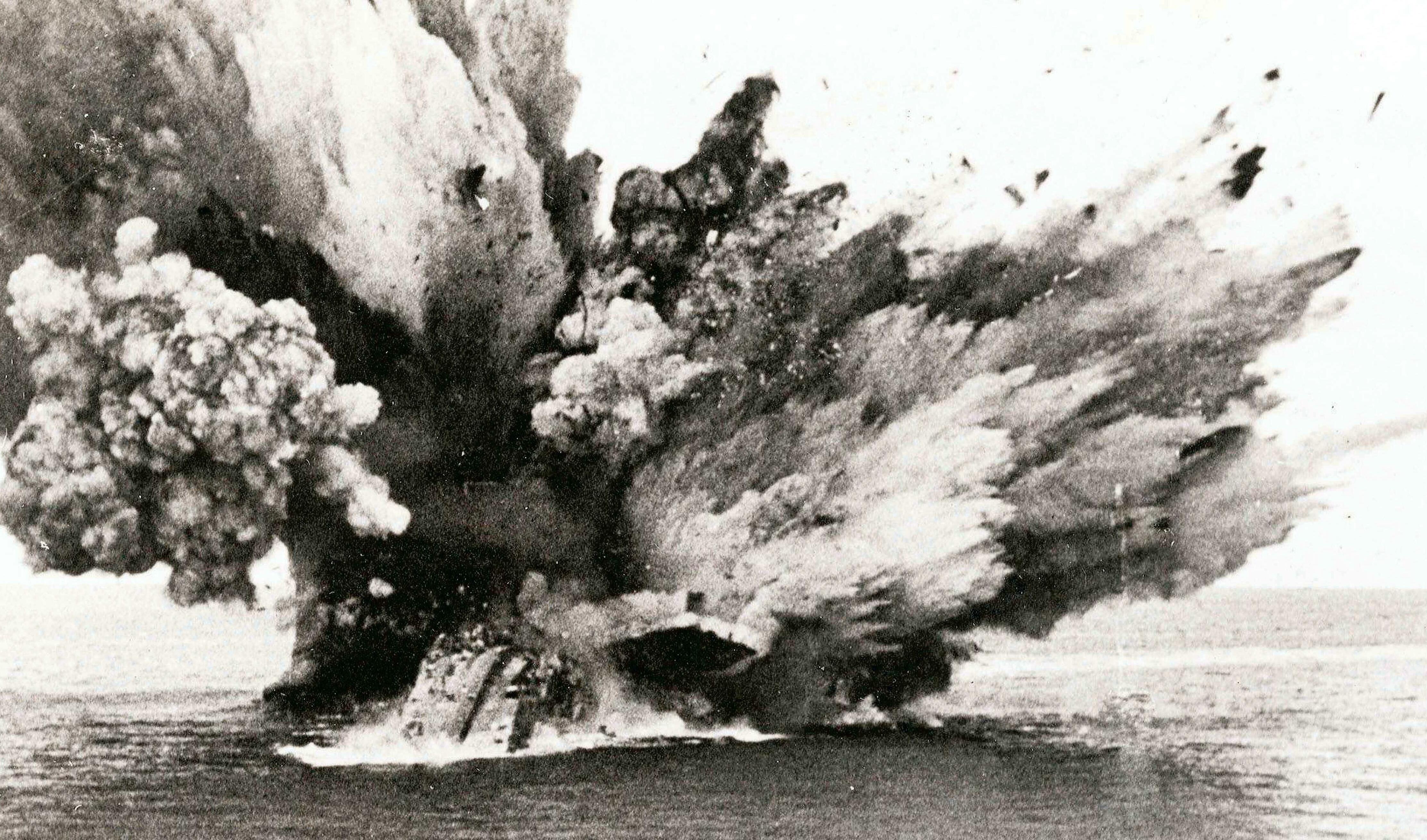
Or were they guilty of routinely murdering survivors in the water?
On the night of 13 March 1944, the Greek-registered steamship SS Peleus was en route from Freetown to Buenos Aires when she was hit amidships by two torpedoes, launched by a German U-boat, U-852. The twin-masted merchantman, of around 5,000 tons, swiftly began to sink, her internal bulkheads ruptured by the detonations. Within three minutes, the Peleus disappeared below the surface, leaving the surviving members of her 39-strong crew clinging to rafts and flotsam in the darkness.
As sinkings go during the naval war, it was unremarkable, one might even say routine. But what followed would set it apart. Soon after, U-852 surfaced close to the debris field, hoping to identify her prey and glean some information. Her captain, 27-year-old Kapitänleutnant Heinz-Wilhelm Eck, ordered one of his men - who spoke some English - to come up to the bow to question one of the survivors. After learning the identity of his target, Eck gave the order for U-852 to move away. But then he changed his mind.
Eck was nervous. Prior to his departure from port, he had been given a lecture from his superiors on the perils of passing through the Atlantic Narrows, around Ascension, and was told that all four of the previous patrols undertaken by his predecessors had ended with the vessels being sunk. Due to the heightened risk of air attack he was urged to take every precaution to avoid being spotted by enemy aircraft. Even debris from a sinking, it was stressed, could give away his position.

هذه القصة من طبعة November 2025 من BBC History UK.
اشترك في Magzter GOLD للوصول إلى آلاف القصص المتميزة المنسقة، وأكثر من 9000 مجلة وصحيفة.
هل أنت مشترك بالفعل؟ تسجيل الدخول
المزيد من القصص من BBC History UK
BBC History UK
Royal progress
Alice Loxton's new book begins with a compelling premise.

1 mins
January 2026

BBC History UK
"Leaving Muslim contributions out of European history has allowed Islamophobic sentiment to flourish"
THARIK HUSSAIN speaks to Danny Bird about the long but often overlooked and distorted history of Muslims in Europe - and the enduring resistance to its reappraisal
9 mins
January 2026

BBC History UK
7 UNMISSABLE TRIPS IN 2026
With new routes, big anniversaries and fresh ways of discovering familiar favourites, TOM HALL highlights historical destinations to explore this year
4 mins
January 2026

BBC History UK
SOPHIE SCHOLL
Novelist Simon Scarrow chooses
2 mins
January 2026
BBC History UK
Portrait of the artists
TRACY BORMAN is enraptured by a beautifully written and richly illustrated exploration of early modern English art
2 mins
January 2026
BBC History UK
Humble heroes
Statues celebrate monarchs, rulers and conquerors - but who remembers the brave folk who gave their lives to save others? Anna Maria Barry recounts stories of selfsacrificing but otherwise ordinary people from the 19th and 20th centuries who are commemorated in one London park.
9 mins
January 2026
BBC History UK
BACK FROM THE DEAD
Britain’s War Office thanked the SAS for its remarkable efforts in WW2 by abolishing it – yet soon realised the error of its ways. Gavin Mortimer tells the story of how the elite unit reinvented itself to confront the challenges of the postwar world
8 mins
January 2026
BBC History UK
Q&A - A selection of historical conundrums answered by experts
Were Roman gladiators vegetarian?
8 mins
January 2026
BBC History UK
Martha McGill on a pioneering study of folk beliefs in early modern England
I was recently chatting with a handful of early modernists about the history book we'd take to a desert island.
1 min
January 2026
BBC History UK
Independent empires
Viewing the British empire through an American lens provides an intriguing alternative perspective on the 'Land of the Free', says DAVID ARMITAGE
4 mins
January 2026
Listen
Translate
Change font size