يحاول ذهب - حر
WOMEN IN COMPUTING
Issue 134
|All About History UK
From Ada Lovelace to the codebreakers of WWII, John Croucher discusses the role of women in computing
-

What are some of the earliest examples of women in computing? Have they been there since the beginning?
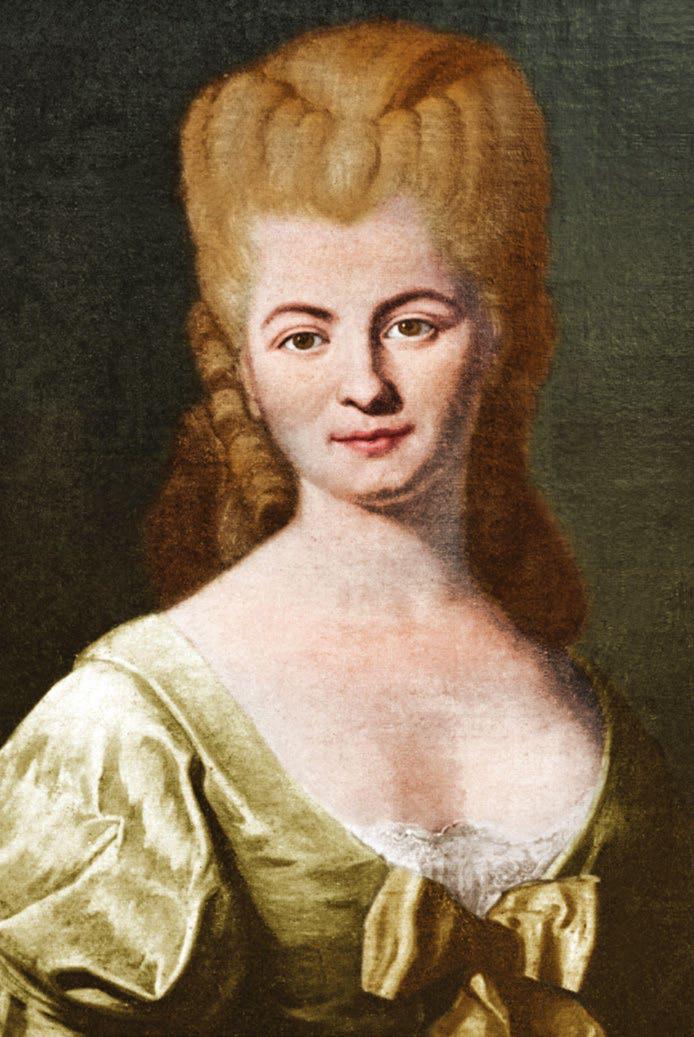
Even in what might be viewed as the beginnings of computing, women are involved. One of the earliest was NicoleReine Étable de la Brière (1723-1788), born in France, an expert in astronomy and advanced mathematics. For her amazing achievements, the asteroid 7720 Lepaute and the lunar crater Lepaute are named in her honour. Ada Lovelace (1815-1852) was the first person to see the enormous potential of Charles Babbage’s device, sensing that his Analytical Engine had the capacity to be programmed rather than simply perform basic operations. Her name is honoured in the Lovelace Medal, awarded since 1998 by the British Computer Society, and since 2008 in an annual competition for women students. Ada Lovelace is now widely regarded as being the world’s first computer programmer and her method as the first computer program.
Why, historically, was computing a field open to women as opposed to other fields of science?
During World War II, women comprised the vast majority of computer programmers in the US and UK. The war opened up the field for a number of women, including those termed ‘human computers’, doing manual calculations of things such as firing tables for guns and ballistic missile trajectories. This was typified by the amazing code-breakers at Bletchley Park, a British government cryptological establishment. Two of those involved were Mavis Batey and Ann Mitchell.

هذه القصة من طبعة Issue 134 من All About History UK.
اشترك في Magzter GOLD للوصول إلى آلاف القصص المتميزة المنسقة، وأكثر من 9000 مجلة وصحيفة.
هل أنت مشترك بالفعل؟ تسجيل الدخول
المزيد من القصص من All About History UK
All About History UK
THE KING'S TRAITOR
A comprehensive study of Reginald Pole, Henry VIII's arch rival

1 min
Issue 164
All About History UK
A ROYAL OUTCAST: THE LIFE AND SCANDAL OF PRINCESS LOUISE, PRINCE ALBERT'S MOTHER
The fascinating story of a little-known royal
2 mins
Issue 164

All About History UK
WHAT IF...THE NAZIS HAD THE ATOM BOMB FIRST?
With the ultimate weapon in his grasp, would Hitler have held Europe to ransom or reduced it to rubble?
6 mins
Issue 164

All About History UK
HISTORY VS HOLLYWOOD EDEN
How did the promise of Utopia in the Galápagos Islands really unravel?
1 min
Issue 164

All About History UK
15 Historic Deadly Diet Tips
UNCOVER SOME OF THE PAST'S STRANGEST AND MOST DANGEROUS EATING HABITS AND WEIGHT-LOSS FADS
5 mins
Issue 164

All About History UK
GUACAMOLE: CENTRAL AMERICA, 14TH CENTURY - PRESENT
Today guacamole is a common sight around the globe, frequently served with a plate of loaded nachos in your favourite drinking establishment or slathered through a spicy burrito.
1 mins
Issue 164
All About History UK
The Baroness of the Sea
Discover the life of the pioneering woman who broke boundaries in circumnavigating the oceans
6 mins
Issue 164
All About History UK
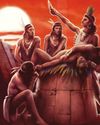
AZTEC SACRIFICE
Why this great empire believed bloody rites and cannibalism brought order to the cosmos
13 mins
Issue 164

All About History UK
RISE OF THE WAAF
How a group of women risked their lives to protect their nation in WWII and shatter social norms
6 mins
Issue 164

All About History UK
NAGAYA ROWHOUSE Edo Japan c.1603 - present
During the Edo period, residences were built to house the lower strata of Japanese society.
1 min
Issue 164
Translate
Change font size