يحاول ذهب - حر
Do You Know What's Crawling On Your Cattle?
July 2025
|Successful Farming
The Asian longhorned tick spreads theileriosis, a disease caused by a parasite that feeds off cattle’s red and white blood cells.
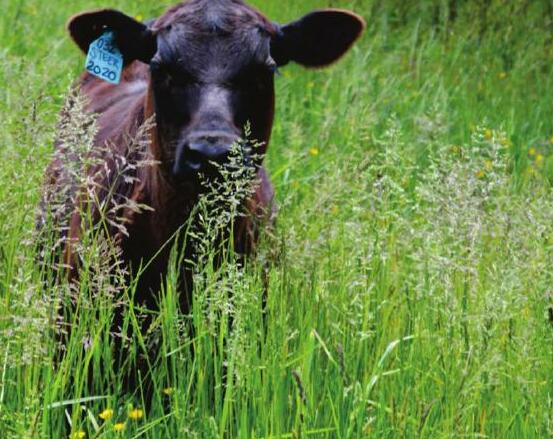
Eastern Virginia cattle producer Steve Hopkins knows his 300 Angus and SimAngus cows will encounter a pest or two while out on their lush summer pastures. But in 2018 the pests his cows were hosting were worse than he could have imagined.
That year, Riverview Farms Cattle lost seven cows. A year later, the farm lost two out of 22 bred cows Hopkins had recently purchased.
At first, Hopkins suspected it was anaplasmosis, a common tick-borne disease. But when he treated the cattle for it, they didn’t respond to the antibiotics. A call to his veterinarian and one blood test later, Hopkins would learn that 95% of his herd was infected with Theileria orientalis Ikeda, which causes theileriosis.
“Once you have the first wave, it gets better. All those that made it through are now resistant,” Hopkins says.
A Deadly Pest
Theileriosis is a disease caused by a blood-borne parasite that feeds off cattle’s red and white blood cells. The disease is spread by the Asian longhorned tick, an invasive species from northeast Asia. USDA discovered the tick in 2017 on sheep in New Jersey.
Since then, the tick has spread to 17 states: Arkansas, Connecticut, Delaware, Georgia, Kentucky, Maryland, Missouri, New Jersey, New York, North Carolina, Ohio, Pennsylvania, Rhode Island, South Carolina, Tennessee, Virginia, and West Virginia. In 2022, the tick was on two breeding bulls that fell ill and died in Kentucky, according to the state’s department of agriculture. The University of Missouri also found the tick in a pasture in Linn County, Missouri.
“This is troubling because this tick is spreading quickly and efficiently throughout the United States,” says Lindsay Fry, a USDA veterinary medical officer.
Unlike the common deer and cattle fever ticks, Asian longhorned females are parthenogenetic, which means a female doesn’t need a male to reproduce.


هذه القصة من طبعة July 2025 من Successful Farming.
اشترك في Magzter GOLD للوصول إلى آلاف القصص المتميزة المنسقة، وأكثر من 9000 مجلة وصحيفة.
هل أنت مشترك بالفعل؟ تسجيل الدخول
المزيد من القصص من Successful Farming

Successful Farming
VIP: Very Important Poultry
Minnesota producer John Zimmerman raised last year's Presidential Flock, helping keep the state's turkey legacy strong.

3 mins
November 2025
Successful Farming
Get to Know Your Bull
Winter is your bull's offseason, so now is the time to assess his health and determine if he will keep his position or is ready for retirement.
2 mins
November 2025

Successful Farming
Managing Mastitis
Non-antibiotic product helps manage dairy herd mastitis issues.
4 mins
November 2025

Successful Farming
Autonomous tractors are finally hitting the fields.
After years of research and development, autonomous technology has arrived.
5 mins
November 2025

Successful Farming
Mike Koehne
This first-generation Indiana farmer built a global business from scratch.
3 mins
November 2025

Successful Farming
Funding Pork Sustainability
Pork producers can get paid for adopting sustainable practices.
4 mins
November 2025

Successful Farming
Offseason Care Pays Off
Follow these seven steps to winterize your equipment now — saving time, money, and headaches next spring.
4 mins
November 2025

Successful Farming
Perennial Cover Crops
Is perennial ground cover a good alternative to annual cover crops?
4 mins
November 2025

Successful Farming
Access Tools Quickly With Storage Racks
Save time in the shop by building these storage racks to keep your tools visible and accessible.
2 mins
November 2025

Successful Farming
How to Support Up-and-Coming Agriculturists
With startup costs on the rise, a study conducted by the Coalition to Support lowa's Farmers provides insights on the obstacles facing tomorrow's farmers.
2 mins
November 2025
Listen
Translate
Change font size