يحاول ذهب - حر
GLOBAL STRATEGY: The New Rules of Doing Business With China
Summer 2025
|MIT Sloan Management Review
By moving beyond a simplistic view of “decoupling,” executives can better understand and strategically respond to Western policies aimed at Chinese companies.
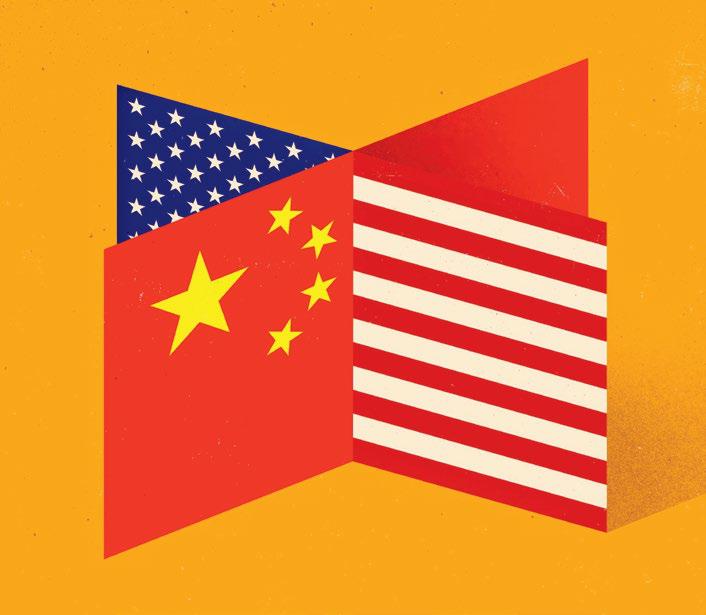
Geopolitical tensions between the West and China are deepening. As a result, Western governments, especially in the U.S. and Europe, are hardening their rules toward Chinese companies. Although many Western executives see these policies as moving in a common direction — toward an economic decoupling — this view is too limiting. Instead, by learning to classify the policies into three distinct buckets — techno-nationalistic, techno-localistic, and protectionist — Western executives can better understand not only the risks but also the opportunities they present and respond more strategically.
Western governments have placed Chinese businesses in their crosshairs for three reasons. The first is that Chinese companies are becoming increasingly competitive globally. Once dismissive, U.S. business leaders and policy makers have come to more fully recognize Chinese companies’ innovation capabilities. Similarly, in Europe, 60% of surveyed executives said that Chinese companies’ innovations are already on par or will soon catch up with those of their own organizations. These concerns are not relegated to consumer products and business model innovations. For example, 65% of German automotive companies believe that their Chinese competitors already lead or will soon surpass them in technological innovation.

هذه القصة من طبعة Summer 2025 من MIT Sloan Management Review.
اشترك في Magzter GOLD للوصول إلى آلاف القصص المتميزة المنسقة، وأكثر من 9000 مجلة وصحيفة.
هل أنت مشترك بالفعل؟ تسجيل الدخول
المزيد من القصص من MIT Sloan Management Review

MIT Sloan Management Review
Assess What Is Certain in a Sea of Unknowns
Understanding what won't change clarifies what might — and strengthens decision-making in volatile times.

13 mins
winter 2026

MIT Sloan Management Review
Ask Sanyin: Why Is It So Hard to Pull the Plug on a Project?
We're finding it difficult to wind down projects that no longer serve our priorities.
2 mins
winter 2026

MIT Sloan Management Review
Integrate Sustainability and Innovation to Find New Opportunities
Five common innovation practices can help leaders pursue sustainability as a growth strategy.
12 mins
winter 2026

MIT Sloan Management Review
The Case for Quiet Corporate Activism
Leaders concerned that they will be penalized for championing sustainability and diversity can still sustain their commitments.
11 mins
winter 2026

MIT Sloan Management Review
The Perils of Algorithmic Pricing
Some revenue management systems based on algorithms may lead to unintended collusion and antitrust violations.
9 mins
winter 2026

MIT Sloan Management Review
Broadening Future Perspectives at the Bank of England
Leaders at the U.K’s central bank sought to broaden their thinking about future risks and opportunities. Here’s how they built longer-term horizon-scanning capabilities and what they learned along the way.
9 mins
winter 2026

MIT Sloan Management Review
How Nesting Changes Platform Strategy
Should your platform host another platform — or be hosted by one? Here's how to think through the choices.
14 mins
winter 2026
MIT Sloan Management Review
Are You an Authentic Leader or an Authentic Jerk?
Leaders who are true to their values can inspire trust and respect, but not if \"being yourself\" becomes the problem.
13 mins
winter 2026

MIT Sloan Management Review
How to Make Scenario Planning Stick
Developing future scenarios can deepen leaders’ strategic insights. Establishing scenario planning as an ongoing capability and reaping its full benefits require linking it to other processes.
16 mins
winter 2026

MIT Sloan Management Review
A Faster Way to Build Future Scenarios
This streamlined approach to scenario planning incorporates AI and helps managers navigate future uncertainties more efficiently.
13 mins
winter 2026
Listen
Translate
Change font size