يحاول ذهب - حر
THE EFFECTS OF DIPLODIA EAR ROT ON MAIZE
May 22 - 29, 2020
|Farmer's Weekly
Diplodia ear rot is a notable maize disease in South Africa. Apart from causing severe damage to the crop, it can also produce a potentially fatal mycotoxicosis in cattle and sheep. It is therefore crucial that a maize producer be able to identify the disease, says Dr Belinda Janse van Rensburg, plant pathologist at the Agricultural Research Council’s Grain Crops Institute.

Diplodia ear rot, which is caused by the fungus Stenocarpella maydis, occurs worldwide. Drought in the early part of a production season, followed by rain during the late season, create favourable conditions for an epidemic, especially where high inoculum sources are present in the stubble (stover) on the soil.
S. maydis causes hardened, round, black, spore-producing structures. These can overwinter on maize stubble and produce spores in spring. After rain, or during high humidity, the structures release spores into the air; these land on maize plants and infect the base of the ear leaf junction. The disease then spreads upwards into the ear. The entire ear becomes filled with a white mycelial growth that affects grain quality. Infected kernels are light in weight and brittle, easily breaking during post-harvest handling, and eventually result in the downgrading of a consignment of maize.
A cross-section of an infected ear shows the black spore-producing bodies at the bases of the kernels. Late-season infection may occur when kernel moisture is low, but the symptoms are less obvious at this stage.
Diplodia ear rot can reoccur in certain areas. Should infected grain be mixed with healthy grain during harvesting, quality will be compromised, leading to a lower price. When early infections are present in an epidemic, yield losses can be of great economic importance.
DIPLODIOSIS
Another serious result of diplodia ear rot is that cattle or sheep that feed on diplodia-infected maize ears can become infected with diplodiosis, a nervous disorder.
Cases of diplodiosis occur from six days to two weeks after the animals are placed on lands with infected maize cobs.
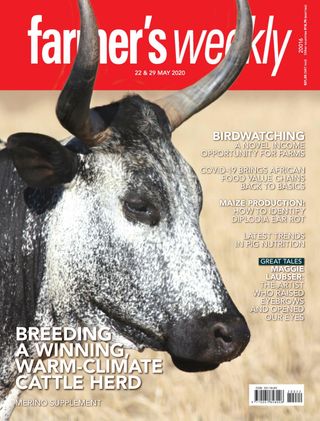

هذه القصة من طبعة May 22 - 29, 2020 من Farmer's Weekly.
اشترك في Magzter GOLD للوصول إلى آلاف القصص المتميزة المنسقة، وأكثر من 9000 مجلة وصحيفة.
هل أنت مشترك بالفعل؟ تسجيل الدخول
المزيد من القصص من Farmer's Weekly
Farmer's Weekly
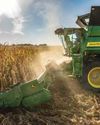
Power and intelligence working together
The new John Deere S7 Combine offers innovative improvements that help farmers get more out of every hour in the field.

2 mins
February 27 - March 06, 2026

Farmer's Weekly
A new market and better access will boost agri growth
The trade protocol for stone fruit exports to China presents an opportunity for South African farmers to expand their production and generate foreign earnings
3 mins
February 27 - March 06, 2026

Farmer's Weekly
Beware of excessive inbreeding during livestock production
Mating of closely related animals on communal farms not only has monetary consequences, but also has an impact on the genetic make-up of livestock, animal performance, and fertility, says Shane Brody.
3 mins
February 27 - March 06, 2026
Farmer's Weekly
Good rain bodes well for grain yields, but disease and price pressure mounts
Above-average rainfall has improved soil moisture and boosted prospects for an above-average grain crop across the summer rainfall region. However, delayed planting, disease pressure, limited heat units and low grain prices mean producers remain cautious as the season enters a critical phase.
3 mins
February 27 - March 06, 2026

Farmer's Weekly
Digitising cash wages for the unbanked
Paying wages to workers who do not have bank accounts is a real headache for many farms. Kosta Scholiadis, CEO of Street Wallet, spoke to Glenneis Kriel about how fintech is making this old problem easier to manage.
3 mins
February 27 - March 06, 2026

Farmer's Weekly
Serious misconduct does not mean automatic dismissal
A disciplinary hearing ensures that a fair procedure is followed and that there is a valid, substantive reason to justify the employee's dismissal
2 mins
February 27 - March 06, 2026
Farmer's Weekly
Cash flow budgets: keeping farmers in control of liquidity, risk, and their survival
Profit doesn't guarantee a farm's survival - cash does. Cobus du Plessis explains why cash flow budgets are one of the most important yet underused financial tools on South African farms.
5 mins
February 27 - March 06, 2026

Farmer's Weekly
Phone in your pocket: the digital literacy that farmers need
The mobile phone has become one of the most important tools an emerging farmer owns, but access alone does not guarantee better decisions or higher returns. Cobus du Plessis explores why digital literacy, rather than technology itself, is the critical missing link in digital agriculture.
8 mins
February 27 - March 06, 2026
Farmer's Weekly
Irrigation automation in action
Two producers spoke to Netafim Southern & East Africa's Marike Brits about their experiences with non-automated and automated irrigation, highlighting the benefits of switching to the latter.
5 mins
February 27 - March 06, 2026
Farmer's Weekly
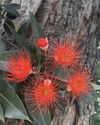
South Africa's magnificent gum trees
Since the 1830s, over 85 gum tree species have been successfully introduced to South Africa. Mike Burgess writes about the gum's destructive, invasive tendencies, but also its many gifts to South Africans.
2 mins
February 27 - March 06, 2026
Translate
Change font size