Denemek ALTIN - Özgür
SageMath: One Last Tango with Cybersecurity
Open Source For You
|January 2026
In the previous article in this series (published in the November 2025 issue of OSFY), we had a detailed discussion on secure key exchange and how the Diffie-Hellman key exchange scheme can be implemented using SageMath. As promised, in this article we will discuss digital signatures, hashing, and message authentication.
-

Let's begin by trying to have a theoretical understanding of the concepts of digital signatures, hashing and message authentication.
In the previous article, we looked at a practical situation where a digital signature becomes essential—when your friend emails you agreeing to lend ₹1 million and later denies ever sending the message. A digital signature is a mathematical technique used to verify the authenticity and integrity of digital messages or documents. When a message carries a valid digital signature, the recipient can be confident that it was indeed sent by the claimed sender and has not been tampered with. An added advantage is that a properly generated digital signature is far more trustworthy than a handwritten signature, since it is backed by strong cryptographic guarantees. Digital signatures can be created using various cryptographic algorithms such as RSA, DSA, and ECDSA, each offering different security properties and performance characteristics.
Hashing is a fundamental technique in cryptography that transforms an input message of any length into a fixed-size string of characters, called a hash value (informally called hash) or message digest (informally called digest). A good hash function is designed to be fast to compute while being practically impossible to reverse, meaning the original message cannot be reconstructed from its hash value. It also ensures that even a small change in the input—such as altering a single character—produces a completely different hash, a property known as the avalanche effect. Examples for hash functions include SHA-256, SHA-384, SHA-512, BLAKE2, BLAKE3, MD5, etc. Hash functions are widely used to ensure data integrity, verify passwords, generate digital signatures, and support many other security protocols.


Bu hikaye Open Source For You dergisinin January 2026 baskısından alınmıştır.
Binlerce özenle seçilmiş premium hikayeye ve 9.000'den fazla dergi ve gazeteye erişmek için Magzter GOLD'a abone olun.
Zaten abone misiniz? Oturum aç
Open Source For You'den DAHA FAZLA HİKAYE
Open Source For You
I2C and I3C: How Modern Devices Communicate
I3C and I2C are both two-wire communication protocols that help exchange data between multiple devices. While I3C preserves the simplicity of I2C, it introduces new features suited for today's sensor-rich devices.

8 mins
March 2026
Open Source For You
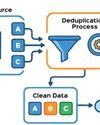
Data Deduplication Done the Right Way
Deduplication helps to save space on Linux-based storage systems. Choose the right platform and check whether it meets your goals.
5 mins
March 2026

Open Source For You
The Relevance of Rubber Duck Debugging in the Age of AI
Discover why rubber duck debugging is a powerful process today.
4 mins
March 2026

Open Source For You
Sending IoT Sensor Data to Public or Private Servers
This IoT system shows a simple and effective way to send sensor data using an ESP8266 microchip.
3 mins
March 2026

Open Source For You
Optimising RAM Usage with Python
Discover how we can make better use of RAM by applying various Python optimisation techniques.
7 mins
March 2026

Open Source For You
How a Job Portal Benefited from Microservices Architecture
Microservices architecture has emerged as a preferred pattern for building scalable and maintainable software applications. Here's how a monolithic job portal application was re-engineered into a microservices-based system. The migration process, key design decisions, the technology stack used, and measurable improvements in performance and flexibility are all laid out for you.
9 mins
March 2026

Open Source For You
The Role that Software Architects Play
Software architects design software projects and ensure these meet their goals. They must balance tech skills with leadership and mentoring abilities.
5 mins
March 2026

Open Source For You
The Path to Cybersecurity in the Quantum Era
The rise of quantum computing will be accompanied by a failure of conventional cryptography. Post-quantum cryptography and advanced threat detection methodologies, among other techniques, are being evolved to counter security threats in the quantum era.
8 mins
March 2026

Open Source For You
Why Open Source Large Language Models are Popular
Open source large language models mark a pivotal moment in the evolution of generative Al. By lowering barriers to entry and fostering collaborative innovation,these models are enabling a broader spectrum of organisations to benefit from Al.
7 mins
March 2026

Open Source For You
Ant Group open sources two frontier AI models
Ant Group has open sourced two trillion-parameter frontier AI models-Ling2.5-1T and Ring-2.5-1T-placing advanced large language and reasoning systems directly in the hands of developers and researchers worldwide.
1 min
March 2026
Listen
Translate
Change font size