
Magzter GOLD ile Sınırsız Olun
Sadece 9.000'den fazla dergi, gazete ve Premium hikayeye sınırsız erişim elde edin
Denemek ALTIN - Özgür
Organising Data in the Cloud is No Mean Feat
Open Source For You
|July 2024
Data management is a complex process, made tougher due to the humongous amount of data being generated each day. Databases were developed to make sense of this data but these need to evolve continuously with the increasing demands being made on them. Following a few best practices will also help to manage data well.
-

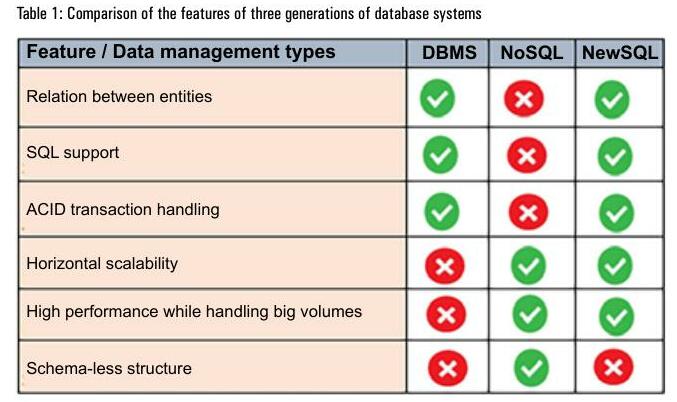
Databases came into the limelight during the initial growth of application programming. As data grew in volume, a second generation of database architecture evolved called NoSQL databases. These offered strong support in architecting a data warehouse or data lake-based application design.
First-generation database systems (e.g., Oracle, MySQL) have a lot of flexibility in terms of developer access for querying and accessing/interpreting the data as compared to second-generation (NoSQL) database systems like Hadoop and MongoDB. On the other hand, second-generation database systems are designed to address the limitations of RDBMS in terms of handling volume and multi-branched structural data.
To cater to online transaction processing (OLTP) of first-generation databases and the structural accessibility for large volume data handled by second-generation database systems, hybrid database systems called NewSQL have emerged as third-generation database systems.
NewSQL database systems try to address the shortcomings of second-generation database systems by combining some of the advantages of first-generation systems like relation between entity models, ACID transaction handling capability, etc. Popular NewSQL database systems are VoltDB, ClusterixDB, CockroachDB and NeoDB.
 Polyglot databases in cloud platforms
 A data store is an integral component of any application development as it is the persistent store for handling all the data required for processing logic. Database solutions are moving towards polyglot databases, which combine multiple types of databases for an enterprise architecture. Polyglot databases are typically used in microservices architecture as they use multi-types of database systems in an integrated solution.


Bu hikaye Open Source For You dergisinin July 2024 baskısından alınmıştır.
Binlerce özenle seçilmiş premium hikayeye ve 9.000'den fazla dergi ve gazeteye erişmek için Magzter GOLD'a abone olun.
Zaten abone misiniz? Oturum aç
Open Source For You'den DAHA FAZLA HİKAYE

Open Source For You
Sending IoT Sensor Data to Public or Private Servers
This IoT system shows a simple and effective way to send sensor data using an ESP8266 microchip.

3 mins
March 2026

Open Source For You
Popular FOSS Tools for LLM Observability, Monitoring and Evaluation
This overview of popular tools for monitoring large language models also sheds light on how LLM-as-a-judge enhances their performance.
2 mins
March 2026
Open Source For You
Data Deduplication Done the Right Way
Deduplication helps to save space on Linux-based storage systems. Choose the right platform and check whether it meets your goals.
6 mins
March 2026

Open Source For You
The Relevance of Rubber Duck Debugging in the Age of AI
Discover why rubber duck debugging is a powerful process today. There's also a step-by-step guide on how to use it in the age of artificial intelligence.
4 mins
March 2026

Open Source For You
GitHub weighs turning off pull requests as AĬ slop floods projects
GitHub has formally acknowledged that AI-generated 'slop' is overwhelming open source projects, forcing maintainers to sift through poor pull requests (PRS), abandoned submissions and guideline violations - and is now considering restricting or even disabling pull requests, the core mechanism of open collaboration.
1 min
March 2026

Open Source For You
Global banks are deploying Ethereum's Layer-2 stack
Banks are standardising on Ethereum's open source stack as production financial infrastructure, shifting from experimental pilots and proprietary blockchains to live Layer-2 networks for tokenised deposits, interbank payments, and cross-border settlement.
1 min
March 2026

Open Source For You
OpenClaw's creator joins OpenAl
In a move that reinforces its commitment to open development rather than acquisition, OpenAI has brought Peter Steinberger, founder of OpenClaw, into the company while placing the popular AI agent under a foundation structure to ensure it remains open source.
1 min
March 2026
Open Source For You
LibreOffice 26.2 comes with native Markdown support
LibreOffice 26.2 has been released by The Document Foundation, strengthening its position as a fully free and open source office suite for Windows, macOS, and Linux, with support for more than 120 languages.
1 min
March 2026

Open Source For You
Indian government mandates labelling of Al-generated content and quicker deletion of illegal deepfakes
India has introduced sweeping AI content rules that immediately place pressure on social platforms and open source AI ecosystems to label, trace and rapidly remove AI Open ource synthetic media at scale.
1 min
March 2026
Open Source For You
I2C and I3C: How Modern Devices Communicate
I3C and I2C are both two-wire communication protocols that help exchange data between multiple devices. While I3C preserves the simplicity of I2C, it introduces new features suited for today's sensor-rich devices.
8 mins
March 2026
Listen
Translate
Change font size