Denemek ALTIN - Özgür
Rapid rubber
Cycling Plus UK
|January 2026
We step inside Specialized's S-Works Tyre Factory to see how it keeps making pro riders faster

There aren’t many bike brands making their own tyres, let alone racing them in the Tour de France.
Specialized, however, are one such business who regularly go toe to toe with companies that make tyres and nothing else. What's more, their sponsored riders, using their tyres, frequently win.
So, how do Spesh compete with the tyre giants? The S-Works Tyre Factory, in the small town of Lage, Germany, is the key to answering this question. It’s the American brand’s tyre innovation centre, delivering small batches of special tyres for special riders - sometimes in under 48 hours.
Behind closed doors
Drive into the quiet industrial estate and you'd be hard-pressed to pick out the building that houses the S-Works Tyre Factory. There are no flashy signs or telltale giveaways - in fact it’s so unassuming, it's almost covert.
This is Specialized’s first tyre innovation centre. While it’s been here for 10 years, it’s only more recently that the brand have been able to produce tyres from start to finish in-house. And, while there are only seven people working at the facility, they’re able to produce 5,000 to 10,000 tyres per year. That may sound like a lot - until you hear that a specialist manufacturer such as Continental can pump out around 10 times that number... per day.
The point of the S-Works facility isn’t full-on mass production, though. It’s to turn around small batches of prototype tyres quickly and create the best-performing tyres possible for the fastest racers in the world, whether they’re on tarmac or dirt. Interestingly, the first product that Specialized produced was a tyre, way back in 1976.
Back to today, and information learned at the factory is then shared with suppliers so that production tyres can be improved, whether that’s through refinements to the manufacturing process, changes to the rubber compounds or tweaks to the overall structure.
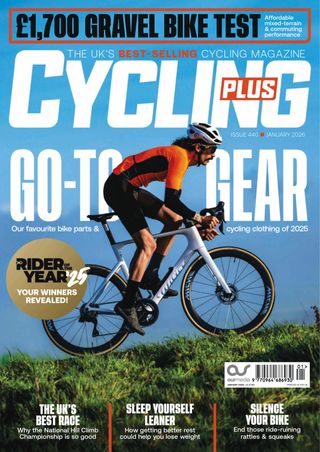

Bu hikaye Cycling Plus UK dergisinin January 2026 baskısından alınmıştır.
Binlerce özenle seçilmiş premium hikayeye ve 9.000'den fazla dergi ve gazeteye erişmek için Magzter GOLD'a abone olun.
Zaten abone misiniz? Oturum aç
Cycling Plus UK'den DAHA FAZLA HİKAYE

Cycling Plus UK
Ask the experts
We answer your burning bike-related questions

4 mins
January 2026
Cycling Plus UK
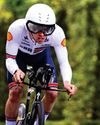
NEWCOMER OF THE YEAR
The young Paralympian has been busy - we talk to him about his successes to date, what makes him tick and what his aspirations are for the future
4 mins
January 2026
Cycling Plus UK
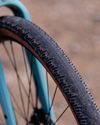
Schwalbe G-One RS Pro gravel tyre
£74.99 This speedy off-road rubber impresses in almost all scenarios
4 mins
January 2026
Cycling Plus UK
Brompton Electric T Line
From £5,799 The brand's lightest e-bike yet
2 mins
January 2026
Cycling Plus UK
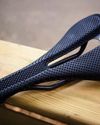
Samassi 3D-printed bike components
A composite saddle for £77 and a titanium computer mount for £69 from the Asian brand
1 mins
January 2026

Cycling Plus UK
Boost your ride
Performance Q&A The big cycling questions answered by our team of expert coaches, nutritionists and riders
17 mins
January 2026
Cycling Plus UK
AFFORDABLE GRAVEL BIKES
We test a trio of models built for off-road excursions, which will also cope well with the commute to work
3 mins
January 2026

Cycling Plus UK
Artistic licence?
Simon von Bromley thinks the UCI's vague new helmet regulations could cause issues
3 mins
January 2026
Cycling Plus UK
Specialized Turbo Vado SL 2 4.0
£3,099 This new model goes further, but it's heavier
5 mins
January 2026

Cycling Plus UK
RIDER OF THE YEAR '25
WE WERE PACKED TO THE RAFTERS FOR OUR THIRD ANNUAL AWARDS
1 mins
January 2026
Listen
Translate
Change font size