
Magzter GOLD ile Sınırsız Olun
Sadece 9.000'den fazla dergi, gazete ve Premium hikayeye sınırsız erişim elde edin
Denemek ALTIN - Özgür
The Scariest Problem in Math
Scientific American
|June 2026
The most important unsolved mystery in mathematics is nearly 170 years old, and there’s a million-dollar reward for its solution. Why is hardly anyone trying to find it?
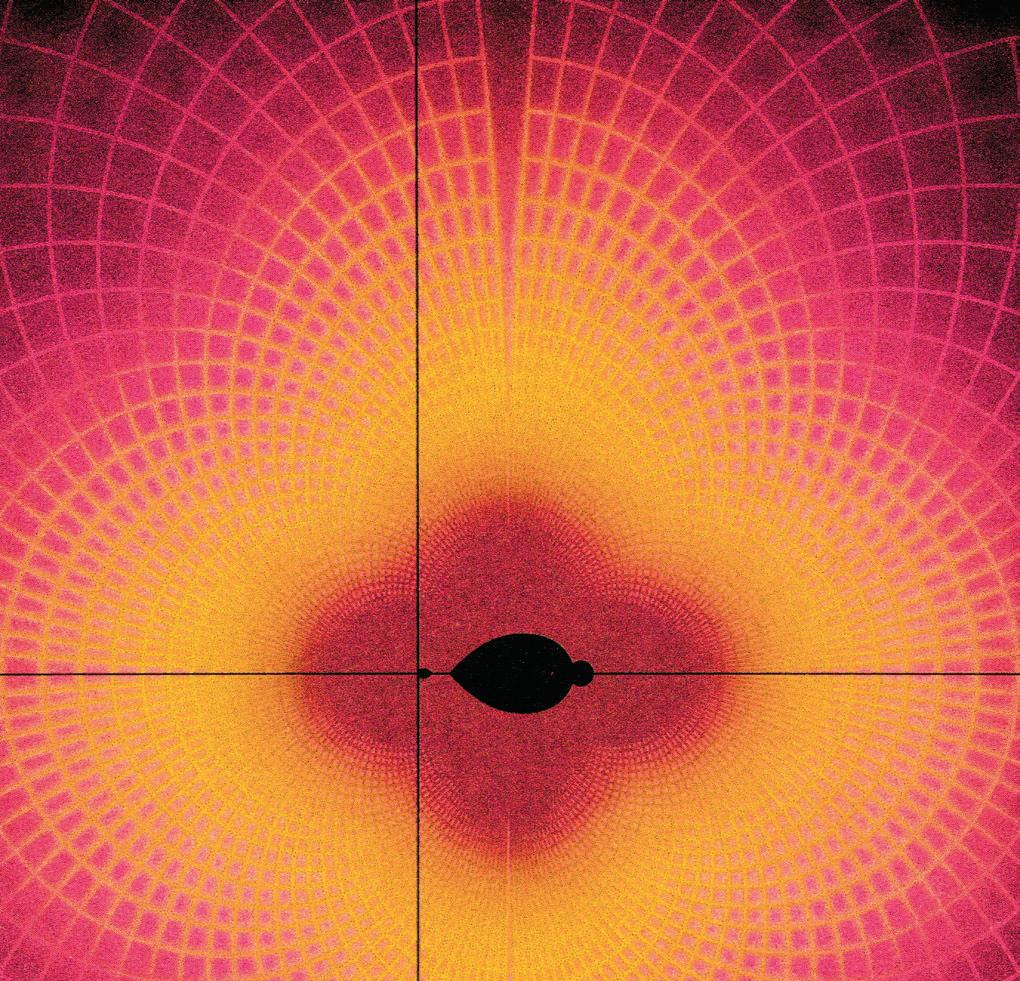
IN OCTOBER 2024 I ATTENDED A WORKSHOP AT HARVARD UNIVERSITY where mathematicians talked through the uses of artificial intelligence in their field. Most were less worried about the future of math than excited about a new tool they might use. During one coffee break, I found myself in a group of participants who all agreed that it made no difference whether a human or a computer solved their favorite open problem. They just wanted to read the proof.
“So you really don’t care whether the Riemann hypothesis gets solved by a human or AI?” I asked. I thought I clocked a slight chill, exchanged smirks, knowing looks. It’s not unusual for me to feel a step behind in these circles.
“An AI that can prove the Riemann hypothesis is not one I’d want to meet,” said Andrew Sutherland, a number theorist at the Massachusetts Institute of Technology. “If that happens, mathematicians having jobs will be the least of our problems.”
I’d merely been tossing out the name of an open question I’d heard of. But I began to wonder: What is this math puzzle that is so complicated only a truly formidable superintelligence could resolve it?
Ever since it was first published, in 1859, Bernhard Riemann’s conjecture about prime numbers has made every list of the most important unsolved mysteries in mathematics. In 1900 mathematician David Hilbert drafted a list of problems to be solved as a blueprint for 20th-century math, and one of them was Riemann’s hypothesis. But at the end of that century the still-open question warranted another wanted poster. In 2000 the Clay Mathematics Institute promised a million-dollar bounty to anyone who solved the Riemann hypothesis, making it one of its seven “Millennium Problems”—the 21st century’s own aspirational to-do list.

Bu hikaye Scientific American dergisinin June 2026 baskısından alınmıştır.
Binlerce özenle seçilmiş premium hikayeye ve 9.000'den fazla dergi ve gazeteye erişmek için Magzter GOLD'a abone olun.
Zaten abone misiniz? Oturum aç
Scientific American'den DAHA FAZLA HİKAYE

Scientific American
War in Plain Sight
Near-real-time satellite coverage means militaries can no longer hide. So they are learning to lie better

4 mins
June 2026

Scientific American
A Bridge-Crossing Puzzle Led to New Math
Are you smarter than an 18th-century Prussian?
5 mins
June 2026
Scientific American
Nocturnal Navigation
These ants use a sophisticated lunar compass
2 mins
June 2026
Scientific American
Early Plates
Scientists found the oldest direct evidence for Earth’s tectonic motion
3 mins
June 2026

Scientific American
Mating Arm
Reproduction in octopuses is even weirder than you think
3 mins
June 2026

Scientific American
Battleship Science
Game-playing AI can show us how to do science better
2 mins
June 2026

Scientific American
WHAT’S A QUANTUM COMPUTER GOOD FOR, ANYWAY?
Quantum computing promises profound power in cryptography, materials design, telecommunications, and much more. But those dreams won’t become reality overnight—if ever
11 mins
June 2026

Scientific American
Atomic Snowflakes
Could each atom in the universe be unique?
2 mins
June 2026
Scientific American
The New Moon Race
The triumphant Artemis II mission marks a new era of lunar exploration and science. Here’s how it went down and what comes next
7 mins
June 2026

Scientific American
What’s Wrong with Quantum Mechanics
A 100-year-old theory might explain the confusion
6 mins
June 2026
Listen
Translate
Change font size