
Magzter GOLD ile Sınırsız Olun
Sadece 9.000'den fazla dergi, gazete ve Premium hikayeye sınırsız erişim elde edin
Denemek ALTIN - Özgür
Lunar Geology
Scientific American
|June 2026
If NASA’s ambitious lunar-exploration plans succeed, scientists will cover the moon with sensors—and find answers to several long-standing questions about the inner solar system
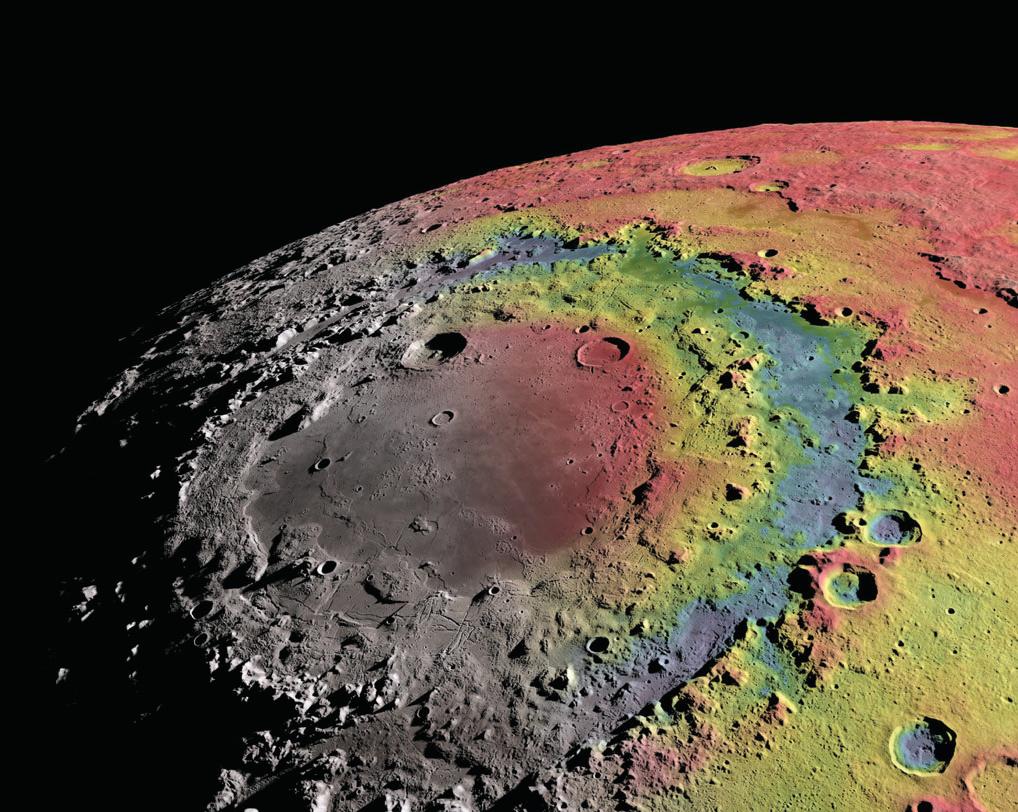
AT NASA’S “IGNITION” EVENT this March in Washington, D.C., the agency’s administrator, Jared Isaacman, made it clear that Artemis II is only the beginning of a larger U.S. effort to populate the moon with astronauts and resource-prospecting robots. If this quest advances at the breakneck pace Isaacman desires, then Earth’s celestial sidekick will also become a source of profound scientific revelations.
Despite the moon’s proximity, we know surprisingly little about it with much certainty. The Apollo astronauts hauled back moon rocks and left behind a few short-lived geological experiments, but most of our lunar knowledge comes from moon-orbiting satellites, telescopic observations from Earth and the handful of sample-return missions undertaken recently by China. Plenty of researchers are itching to use the moon as a Rosetta Stone for studying the origin and evolution of our world and the solar system at large. Earth’s tectonics, volcanism, oceans, atmosphere and life have all erased the geological records of the planet’s earliest eras. But the moon, lacking such tumult, has preserved its historical evidence. That makes the silvery orb “a perfect geological laboratory,” says Sara Russell, a planetary scientist at London’s Natural History Museum. With new lunar access, here are the biggest mysteries moon-focused scientists are hoping to solve.
How is the moon still geologically alive?
The churning heat deep within planets and moons is what gives them geological “life,” from volcanic eruptions and earthquakes to the uplifting of mountains and the excavation of ocean basins. But when the heat wanes, a world dies, geologically speaking.

Bu hikaye Scientific American dergisinin June 2026 baskısından alınmıştır.
Binlerce özenle seçilmiş premium hikayeye ve 9.000'den fazla dergi ve gazeteye erişmek için Magzter GOLD'a abone olun.
Zaten abone misiniz? Oturum aç
Scientific American'den DAHA FAZLA HİKAYE
Scientific American
War in Plain Sight
Near-real-time satellite coverage means militaries can no longer hide. So they are learning to lie better

4 mins
June 2026

Scientific American
A Bridge-Crossing Puzzle Led to New Math
Are you smarter than an 18th-century Prussian?
5 mins
June 2026
Scientific American
Nocturnal Navigation
These ants use a sophisticated lunar compass
2 mins
June 2026
Scientific American
Early Plates
Scientists found the oldest direct evidence for Earth’s tectonic motion
3 mins
June 2026

Scientific American
Mating Arm
Reproduction in octopuses is even weirder than you think
3 mins
June 2026

Scientific American
Battleship Science
Game-playing AI can show us how to do science better
2 mins
June 2026

Scientific American
WHAT’S A QUANTUM COMPUTER GOOD FOR, ANYWAY?
Quantum computing promises profound power in cryptography, materials design, telecommunications, and much more. But those dreams won’t become reality overnight—if ever
11 mins
June 2026

Scientific American
Atomic Snowflakes
Could each atom in the universe be unique?
2 mins
June 2026
Scientific American
The New Moon Race
The triumphant Artemis II mission marks a new era of lunar exploration and science. Here’s how it went down and what comes next
7 mins
June 2026

Scientific American
What’s Wrong with Quantum Mechanics
A 100-year-old theory might explain the confusion
6 mins
June 2026
Listen
Translate
Change font size