Denemek ALTIN - Özgür
ATMOSPHERIC SCIENCE: Ignorosphere Surfers
Scientific American
|January 2026
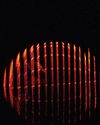
SCIENTISTS HAVE DEVISED tiny featherweight disks that could float freely in Earth's mesosphere or the thin air of Mars, theoretically even while carrying payloads.
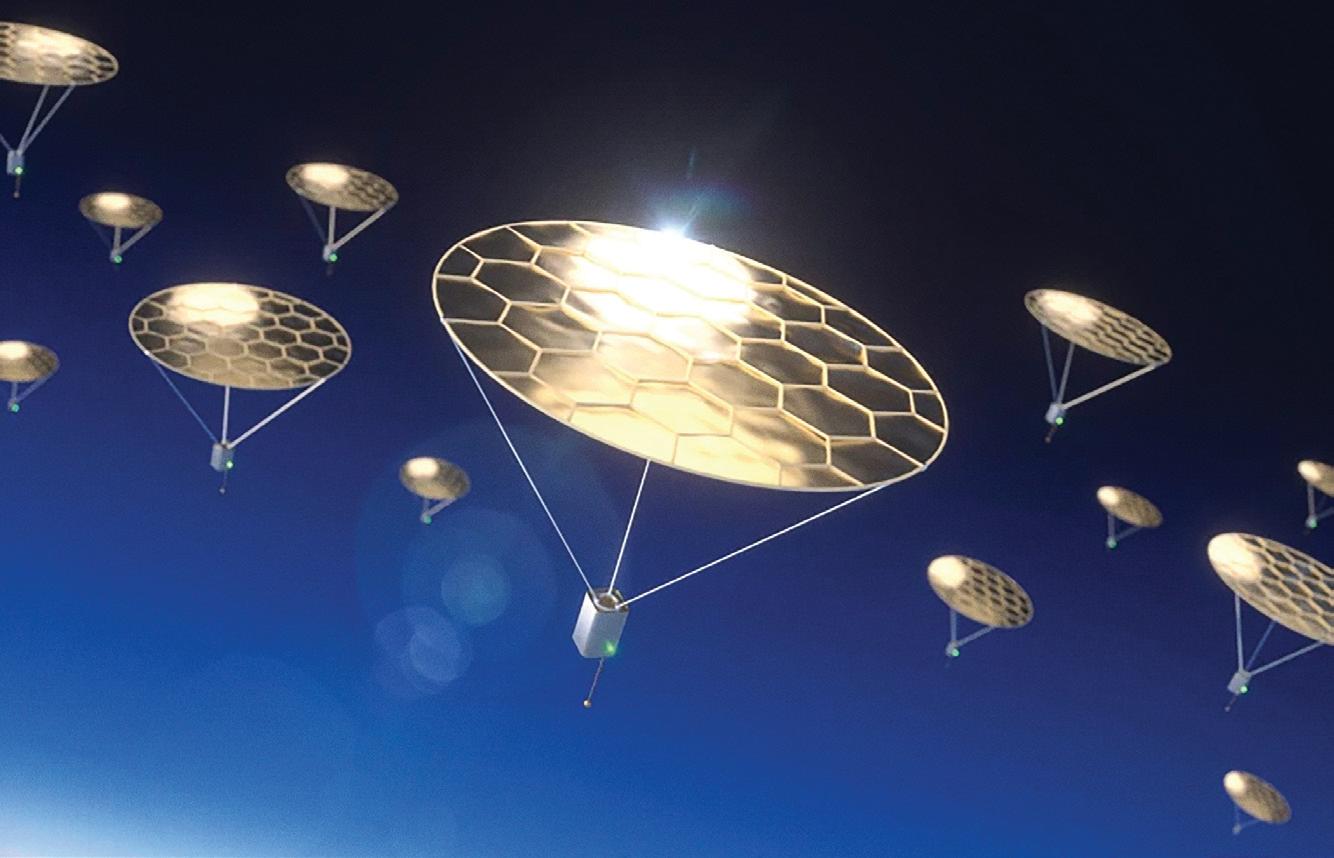
Our mesosphere, which extends about 50 to 85 kilometers above the planet's surface, is sometimes called the "ignorosphere"-it's too high for aircraft and weather balloons to reach but too low for access by satellites, making it one of Earth's least-studied regions. Versions of the researchers' light-powered fliers could potentially carry sensors through this zone.
The new centimeter-wide prototype disks are made from two thin, perforated membranes of aluminum oxide connected by minuscule vertical supports.
They are kept aloft by a force called photophoresis: the light-induced movement of small particles at very low atmospheric pressures. In laboratory experiments described in Nature simulating mesospheric air pressure and illumination, the researchers showed that their devices could float passively without any power source.


Bu hikaye Scientific American dergisinin January 2026 baskısından alınmıştır.
Binlerce özenle seçilmiş premium hikayeye ve 9.000'den fazla dergi ve gazeteye erişmek için Magzter GOLD'a abone olun.
Zaten abone misiniz? Oturum aç
Scientific American'den DAHA FAZLA HİKAYE
Scientific American
Sailing the Sun
By designing vertical panels that move in a gale, two Swedish inventors are unlocking a solar future for the windswept north

9 mins
March 2026
Scientific American
Covered in Bees
Ancient bees burrowed deep into discarded mammal jawbones
2 mins
March 2026
Scientific American
Fire Starters
Ancient humans were making fire 350,000 years earlier than thought
3 mins
March 2026
Scientific American
Relativity Revealed
Physicists have observed a bizarre prediction of special relativity for the first time
8 mins
March 2026

Scientific American
Everything You Wanted to Know about Polyamory (but Were Afraid to Ask
The practice is not a faddish excuse to sleep around, research shows. And it has deep roots in American culture
14 mins
March 2026

Scientific American
Let the Rivers Run
An investigation into the rights of nature
4 mins
March 2026

Scientific American
Hidden Proof
\"Effective zero knowledge\" beats long-standing cryptographic impossibilities
2 mins
March 2026

Scientific American
The Universe's Weirdest Optical Illusions
Sometimes the farther away an object is, the bigger it seems to be
4 mins
March 2026
Scientific American
Earthquake Life
Yellowstone quakes spark bursts of microbial growth underground
2 mins
March 2026

Scientific American
Living in the COPILOT SOCIETY
The promise and peril of artificial intelligence everywhere
2 mins
March 2026
Listen
Translate
Change font size