
Magzter GOLD ile Sınırsız Olun
Sadece 9.000'den fazla dergi, gazete ve Premium hikayeye sınırsız erişim elde edin
Denemek ALTIN - Özgür
INCREDIBLE SOLAR SYSTEM CRATERS
How It Works UK
|Issue 198
Why these spectacular craters carved out by past impact events are among the most widespread and distinctive geological features in the Solar System
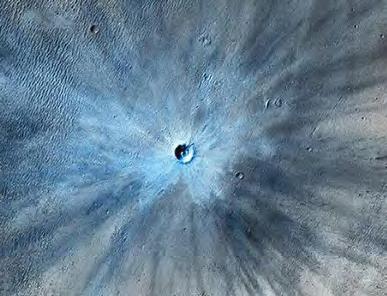
The planets and moons of the Solar System travel in neat, almostcircular orbits, which means they never run the risk of crashing into each other. But that's not true of smaller bodies like asteroids and comets, which are essentially chunks of material left over from the Solar System's formation. These move on much more eccentric orbits that can and do - collide with each other and with the larger members of the Solar System. Most of these collisions occur at very high speeds, typically many thousands of miles per hour, producing enough energy to vaporise the impactor and melt the surrounding rock. When the dust clears, all that's left is a big hole in the ground - an impact crater.
Impacts have been happening ever since the dawn of the Solar System. In fact, they reached their peak a few billion years ago, when there was far more rocky debris around. We still see evidence of these primordial impacts in places like the Moon and Mercury, where there's never been any atmosphere to erode the crater-covered terrain. On the other hand, our own planet lies at the opposite extreme. Not only do we have plenty of weather to wear the craters away, but they also get destroyed by volcanic activity and the gradual movement of tectonic plates. So finding traces of past impact events here on Earth often involves quite a bit of geological detective work.
The usefulness of craters for planetary scientists goes well beyond the impacts that formed them. Craters allow different terrains to be dated simply by counting them - the more craters, the older the surface. And because impacts often eject deeply buried material onto the surface, the composition of planetary interiors can be studied without the need for any digging or drilling.
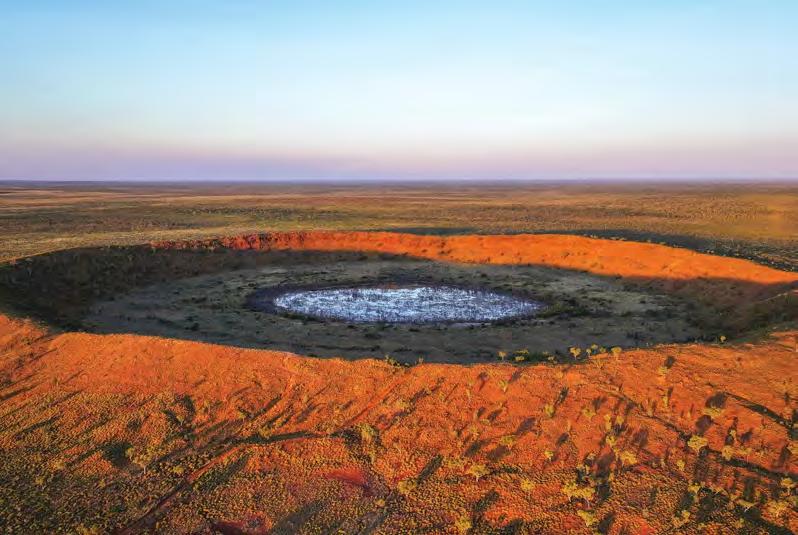 WOLFE CREEK
 LOCATION: EARTH
IMPACT SITE AGE: 120,000 YEARS

Bu hikaye How It Works UK dergisinin Issue 198 baskısından alınmıştır.
Binlerce özenle seçilmiş premium hikayeye ve 9.000'den fazla dergi ve gazeteye erişmek için Magzter GOLD'a abone olun.
Zaten abone misiniz? Oturum aç
How It Works UK'den DAHA FAZLA HİKAYE

How It Works UK
WHY ANIMALS PLAY DEAD
These species have mastered faking their own deaths for several different reasons

1 min
Issue 214
How It Works UK
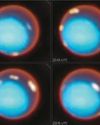
THE JAMES WEBB SPACE TELESCOPE MAPS 3D AURORAE ON URANUS
An international team of researchers has uncovered new insights into the upper atmosphere of Uranus, where ions swirling above the ice giant's clouds meet its magnetic field.
1 min
Issue 214
How It Works UK
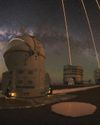
LASERS BEAM 'ARTIFICIAL STARS' INTO CHILE'S SKIES
The European Southern Observatory has released a breathtaking photo of the Milky Way shining over Paranal Observatory in Chile as lasers create artificial 'guide stars' in the dark sky above.
1 min
Issue 214

How It Works UK
WHISKERS AT WORK
How long hairs on a cat's face fine-tune their senses
2 mins
Issue 214

How It Works UK
HOW AI IMPROVES CAR SAFETY
The vehicle technology that saves lives today - and the innovations that will soon make the roads safer for everyone
4 mins
Issue 214

How It Works UK
APOLLO 17: THE LAST CREWED MOON LANDING
It's been over 50 years since the final Apollo mission, so why haven't we put astronauts on the Moon since then?
4 mins
Issue 214

How It Works UK
WHAT IS LIMESCALE?
Why 'hard' water leaves chalky, flaky deposits wherever it settles
2 mins
Issue 214

How It Works UK
Astronauts describe the moment a crack was discovered on their spacecraft
Chinese astronauts have described what happened when they were nearly stranded in space last year after a suspected piece of space junk struck their return capsule.
2 mins
Issue 214
How It Works UK
The Vera C. Rubin Observatory found 800,000 objects of interest in a single night
The newly commissioned Vera C. Rubin Observatory has issued 800,000 astronomy alerts in just one night, a staggering number of nightly discoveries that's expected to grow nearly tenfold by the end of this year.
2 mins
Issue 214

How It Works UK
RETURN TO THE MOON
Project Artemis is accelerating its push to put humans back on Earth's orbital dancing partner before the end of the decade
5 mins
Issue 214
Listen
Translate
Change font size