
Magzter GOLD ile Sınırsız Olun
Sadece 9.000'den fazla dergi, gazete ve Premium hikayeye sınırsız erişim elde edin
THAT NIGHT, 40 YEARS AGO
Down To Earth
|December 16, 2024
Bhopal gas disaster is a tragedy that people continue to face

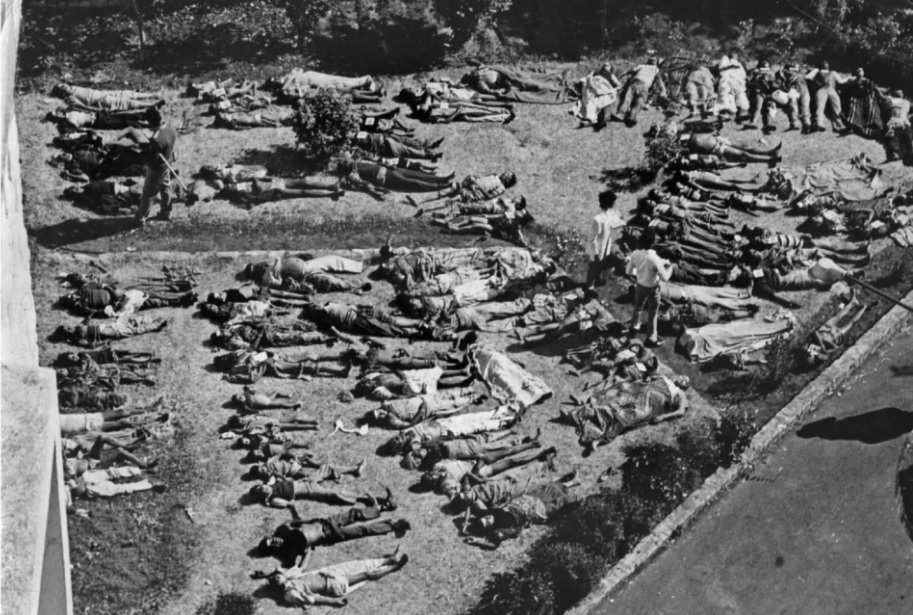
EVERYTHING WAS going well in life until that dark night arrived." For Bano Bi, a 72-year-old resident of Bhopal's JP Nagar, the night E of December 2, 1984 is where life and time froze. That night, 40 tonnes of toxic methyl isocyanate (MIC)-a gas 500 times more poisonous than hydrogen cyanide-leaked from the Union Carbide India Limited's (UCIL's) pesticide plant next to Bano's residence and spread to a 7 kmradius around the plant. More than half a million people were exposed to the leak. The disaster has resulted in up to 30,000 deaths in the region since then.
Bano mostly talks about the past-"I live a life linked to that gas leak," she says.
Bano, her husband and eight children woke up vigorously coughing that night.
"When we stepped outside, we saw people running everywhere. Cries and screams echoed all around," she says. Bano got separated from her children and husband while escaping the gas chamber the city had become. A day later, she found her family members in hospitals in conditions that defied descriptions.
Within a year, she lost her husband.
Over the next few months, four of her children died. "I was left behind to bear the burden of the gas tragedy and am still suffering," Bano says. She has what the Indian Council of Medical Research (ICMR) terms as the "Bhopal Gas Disease". ICMR ran a decade-long research on the gas-affected population of Bhopal to define this new disease as "a condition of ill-health due to exposure to Bhopal's toxic gases". About half-a-million people in Bhopal suffer from this disease, which has some 40 symptoms, ranging from backache to breathing difficulties. And there is no treatment per se; all one can do is symptomatic medication.


Bu hikaye Down To Earth dergisinin December 16, 2024 baskısından alınmıştır.
Binlerce özenle seçilmiş premium hikayeye ve 9.000'den fazla dergi ve gazeteye erişmek için Magzter GOLD'a abone olun.
Zaten abone misiniz? Oturum aç
Down To Earth'den DAHA FAZLA HİKAYE

Down To Earth
KING OF BIRDS
Revered for centuries, western tragopan now needs protection as its forests shrink, human pressures mount

3 mins
December 16, 2025

Down To Earth
WHISKERS ALL AQUIVER
Climate change threatens creatures that have weathered extreme environments for thousands of years
2 mins
December 16, 2025

Down To Earth
GOLDEN SPIRIT
Survival of the shy primate is closely tied to the health of Western Ghats
3 mins
December 16, 2025

Down To Earth
RINGED EYES IN THE CANOPY
Rapid habitat destruction forces arboreal langur to alter habits
2 mins
December 16, 2025

Down To Earth
HANGING BY THE CLIFF
The Himalaya's rarest wild goat is on the brink of local extinction
2 mins
December 16, 2025

Down To Earth
ANGEL OF THE BEAS
Conservation reserves, citizen science, and habitat protection give the Indus River dolphin a fighting chance in India
2 mins
December 16, 2025

Down To Earth
UNDER MOONLIT SCRUB
Survival of this hidden guardian tells us whether our scrublands still breathe
2 mins
December 16, 2025

Down To Earth
SYMBOL OF SILENT VALLEY
Lion-tailed macaque remains vulnerable despite past victories
2 mins
December 16, 2025

Down To Earth
THE APE IN OUR STORIES
India's only non-human ape species is a cultural icon threatened by forest fragmentation
2 mins
December 16, 2025

Down To Earth
SENTINEL OF THE HIGH COLD DESERT
The bird's evocative call may not continue to roll across the cold desert valley for long
3 mins
December 16, 2025
Listen
Translate
Change font size