
Magzter GOLD ile Sınırsız Olun
Sadece 9.000'den fazla dergi, gazete ve Premium hikayeye sınırsız erişim elde edin
Denemek ALTIN - Özgür
Read the signs
Down To Earth
|July 01, 2025
Tribal communities believe that nature provides signs of the oncoming season, but climate change has made traditional weather forecast methods unreliable
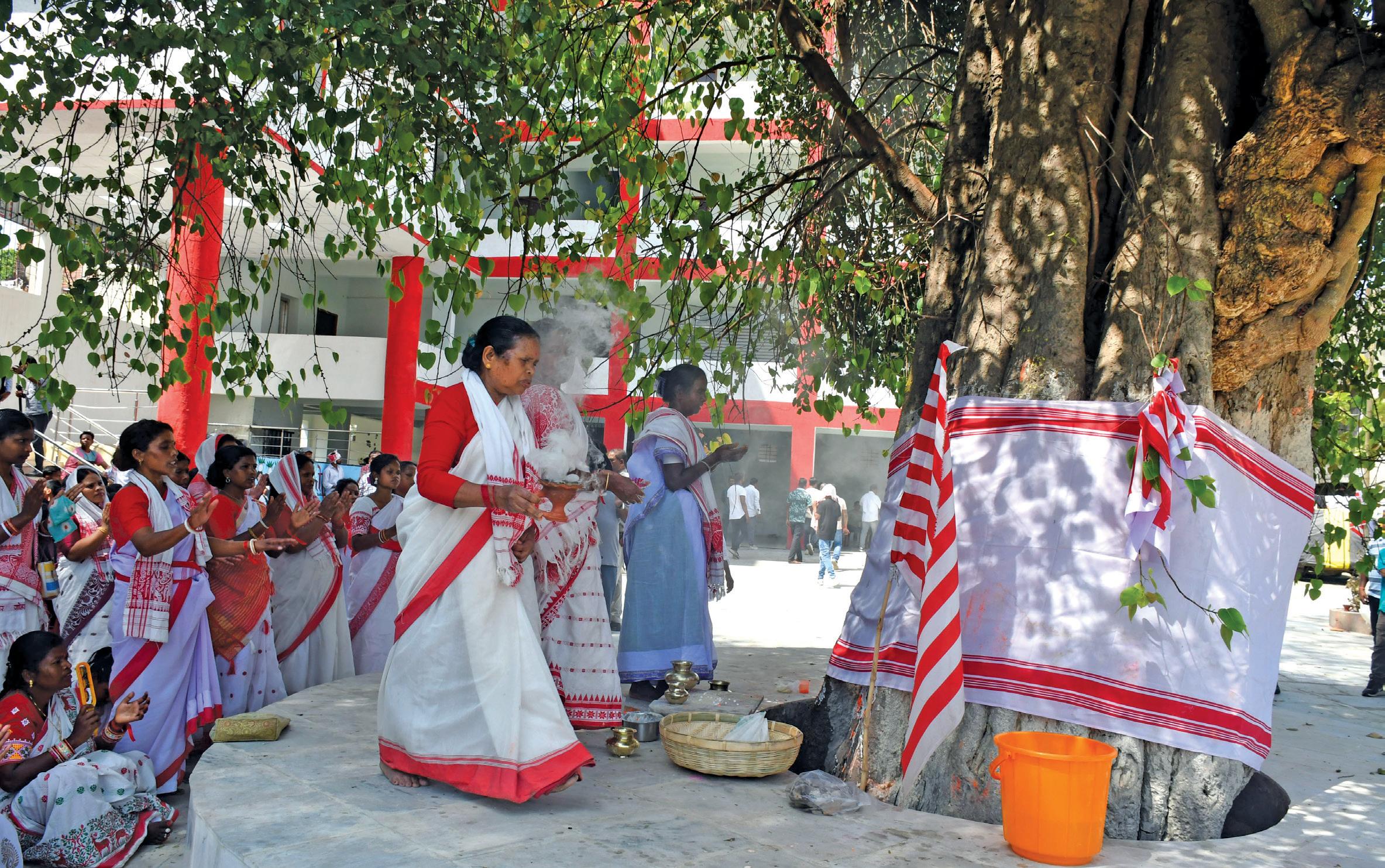
IF THE lipi bird (common swift or Apus apus) makes its nest larger than usual, it is an indication that the rainfall in the coming season will be feeble. The vice versa is also true,” says Ashok Munda, gram pradhan (village head) of Chitramu village in Jharkhand’s Khunti district. “There are many such signs that help us assess and prepare for the coming season,” he says.
Since time immemorial, tribal communities of Jharkhand have kept track of the weather in their area through reading what Munda calls “signals of nature”. Quite a few of these signals pertain to the monsoon, which is understandable considering the season’s importance in rain-fed agriculture practices of tribal communities. Sample the following cases.
A day before Sarhul—a nature festival celebrated in the month of Chaitra (March-April), the first month of the year as per the Hindu calendar—two earthen pots are filled with water up to a marked level and then checked the next day. If the water level has decreased, it indicates less-than-normal rainfall during the monsoon, while no change in the level reflects that the rain will be normal. Similarly, on the day of Karma festival—celebrated in July-August—a basket made of bamboo is hung through a rope and bamboo stick. It is believed rainfall will continue till the rope breaks. “Flowers are a great sign of rain too. If the spacing between amaltas (


Bu hikaye Down To Earth dergisinin July 01, 2025 baskısından alınmıştır.
Binlerce özenle seçilmiş premium hikayeye ve 9.000'den fazla dergi ve gazeteye erişmek için Magzter GOLD'a abone olun.
Zaten abone misiniz? Oturum aç
Down To Earth'den DAHA FAZLA HİKAYE

Down To Earth
SAJANA SAJEEVAN - CRICKETER
In April 2024, Sajana Sajeevan got her maiden call up to the national women's cricket team on the back of a 12-year domestic career that began in the paddy fields of Wayanad, Kerala.

4 mins
January 01, 2026

Down To Earth
JINALI MODY - ENTREPRENEUR
In September 2025, UN Environment Programme announced Mumbai-based Jinali Mody, founder of material-science startup Banofi Leather, as a Young Champion of the Earth.
2 mins
January 01, 2026

Down To Earth
IT'S AN ENDLESS BATTLE
A decade spent tackling waste still feels vanishingly small
2 mins
January 01, 2026

Down To Earth
'NUMB, AND UNABLE TO ACT
As disasters grow more frequent, I find myself wondering how long I can continue living here, waiting for the next storm
2 mins
January 01, 2026

Down To Earth
NILA MADHAB PANDA - FILMMAKER
Few storytellers bring dramatic despair of ecological loss to the big screen like Nila Madhab Panda. The national-award winning filmmaker often makes nature his central character, be it in his 2017 film Kadvi Hawa or in the 2023 web series The Jengaburu Curse.
4 mins
January 01, 2026

Down To Earth
CHETAN SINGH SOLANKI: SCIENTIST | SOCIAL ENTREPRENEUR
For the past five years, Chetan Singh Solanki has been on a singular journey.
2 mins
January 01, 2026

Down To Earth
ʻLIVING SLOWLY, RELUCTANTLY
The pleasures and burdens of attempting a sustainable life in a fast-moving world
2 mins
January 01, 2026

Down To Earth
KIRAN RAO
Filmmaker and producer Kiran Rao has mastered the art of mainstreaming social commentary, as seen in her early films like Dhobi Ghat and more recently in Laapataa Ladies and Humans in the Loop.
4 mins
January 01, 2026

Down To Earth
I SEE THE RISE OF DEFENDERS
When a species disappears from a land, the loss extends far beyond the species itself.
2 mins
January 01, 2026

Down To Earth
MANISH MEHROTRA - CHEF | RESTAURATEUR
Manish Mehrotra is globally recognised for his innovative approach to preserving India's culinary heritage.
4 mins
January 01, 2026
Listen
Translate
Change font size