
Magzter GOLD ile Sınırsız Olun
Sadece 9.000'den fazla dergi, gazete ve Premium hikayeye sınırsız erişim elde edin
Denemek ALTIN - Özgür
GLOBAL SOUTH REIMAGINED
Down To Earth
|October 01, 2025
In an increasingly fractured world marked by unilateralism and weakened climate cooperation, civil society must elevate Global South cohesion as a top climate agenda
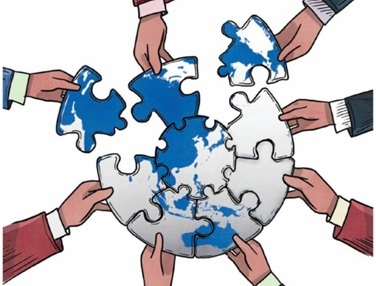
WITH THE latest round of punitive tariffs imposed by US President Donald Trump, Brazil's President Luiz Inácio Lula da Silva announced he would engage with leaders of BRICS—a grouping of 11 full-time member-states including India—to address the dismantling of multilateralism by the US. It was a rare proactive moment from the bloc but one that should be far more common. Civil society must amplify shared struggles to foster Global South unity, empowering BRICS and other developing countries to lead the fight against climate change.
Countries of the Global South— often grouped under G77, a coalition of developing countries—share histories of colonialism, underdevelopment and unequal global governance. Despite internal differences, moments of unity have sparked crucial political change.
The 1955 Bandung Conference stands as a foundational example, bringing Southern countries together to oppose colonialism and affirm nonalignment. Decades later, at the 1992 Rio Earth Summit, developing countries embedded the principle of common but differentiated responsibilities at the heart of the newly formed UN Framework Convention on Climate Change (UNFCCC). During the cov-ID-19 crisis, Global South power reemerged, with India and South Africa leading a waiver call for Trade Related Aspects of Intellectual Property Rights (TRIPS) at the World Trade Organization and Cuba dispatching doctors worldwide. At the 27th Conference of the Parties (COP27) to UNFCCC in Egypt, G77 united to secure a Loss and Damage Fund—culminating a 30-year effort led by island states.

Bu hikaye Down To Earth dergisinin October 01, 2025 baskısından alınmıştır.
Binlerce özenle seçilmiş premium hikayeye ve 9.000'den fazla dergi ve gazeteye erişmek için Magzter GOLD'a abone olun.
Zaten abone misiniz? Oturum aç
Down To Earth'den DAHA FAZLA HİKAYE
Down To Earth
THINK TWICE BEFORE FELLING SAL TREES
Many trees considered to be affected by sal borer in the 1990s are still alive today

1 mins
February 16, 2026
Down To Earth
EDGE OF SURVIVAL
Caste divides deny marginalised communities land, resources and essential aid, leaving them more vulnerable to climate disasters
6 mins
February 16, 2026

Down To Earth
A WISH LIST?
Union Budget for 2026-27 conveys the impression of a roll-call of intentions and ambitious proposals, with little detail on their formulation
6 mins
February 16, 2026
Down To Earth
Break down the gender wall
THE RULING National Democratic Alliance (NDA) government has been heavily invested in the goal to make India a developed economy by 2047.
2 mins
February 16, 2026

Down To Earth
MENSTRUAL HEALTH, NOW A FUNDAMENTAL RIGHT
In a landmark judgement, the Supreme Court has recognised menstrual health and hygiene as a fundamental right under Article 21 of the Constitution of India, which guarantees the right to life and dignity.
8 mins
February 16, 2026

Down To Earth
Of devolution and new disasters
The 16th Finance Commission pushes for changes in view of new fiscal and climatic conditions
11 mins
February 16, 2026
Down To Earth
Rising risks of plastics
NEGATIVE IMPACTS on human health due to emissions linked to the plastic lifecycle could double by 2040, according to a study published in The Lancet Planetary Health in January.
1 min
February 16, 2026
Down To Earth
GAP BETWEEN EPIDEMICS NARROWING
A watershed-based and landscape-level approach is needed to address forest degradation
2 mins
February 16, 2026
Down To Earth
WAITING TO STRIKE
Sal heartwood borer is considered the biggest threat to forestry in India, especially to the sal tree, where it lives and breeds.
11 mins
February 16, 2026
Down To Earth
A SPRING DELIGHT
Mustard flowers are not meant only for the eyes. Invite them to your plate once in a while
3 mins
February 16, 2026
Listen
Translate
Change font size