Denemek ALTIN - Özgür
INSIDE THE SKY AT NIGHT
BBC Sky at Night Magazine
|January 2026
2026 is going to be a fantastic year for exoplanet research. The Sky at Night presenter George Dransfield tells us why she's counting down to a flood of new discoveries
-
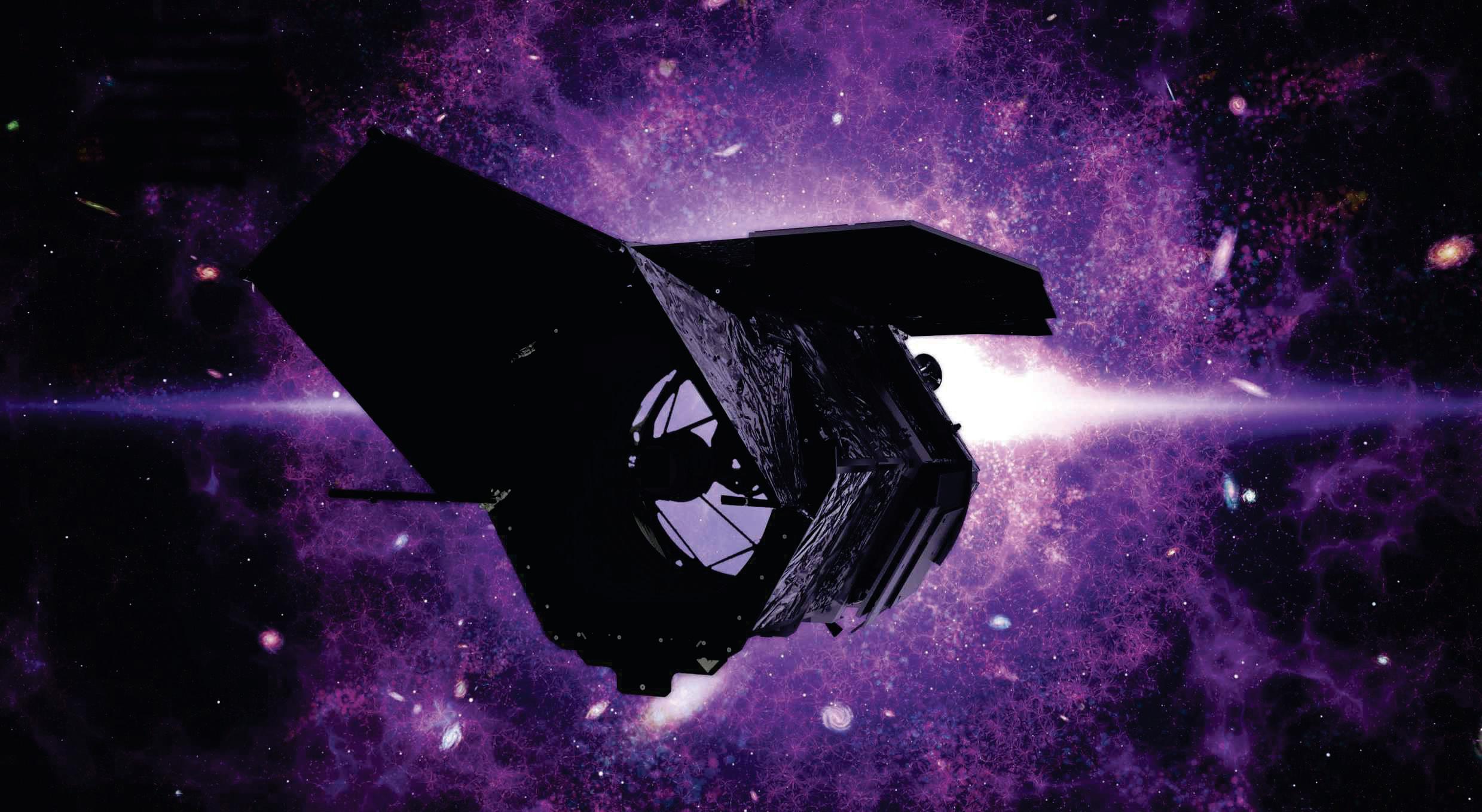
There are some Really Big Things coming up in the world of exoplanets in 2026.
Sadly, they're not until the tail end of the year - tough for someone like me who struggles with patience. (True story: as a child, I'd get so excited about my birthday that I'd spend the night before throwing up – I. Just. Couldn't. Wait.) So, yes, there's a nonzero chance I'll be nauseous with exoplanet anticipation for months.
If you watched July's episode of The Sky at Night, you'll know that PLATO – PLAnetary Transits and Oscillations, ESA's upcoming planet-hunting space telescope – is due for launch in December 2026. PLATO's precision will be exhilarating; it's going to find the kind of exoplanets I love: long-period, really slow-orbiting, cold planets far from their stars.
As if that's not enough, the astronomical community will also welcome the fourth release of data from Gaia (rest in peace, you lovely mission). Gaia, another ESA satellite, changed our field forever; it's impossible to overstate its impact. We now have precisely measured distances to around 1.8 billion stars. Before Gaia, only about 118,000 stars had had their distances measured precisely, and around 2.5 million had good distances at a lower precision.

Bu hikaye BBC Sky at Night Magazine dergisinin January 2026 baskısından alınmıştır.
Binlerce özenle seçilmiş premium hikayeye ve 9.000'den fazla dergi ve gazeteye erişmek için Magzter GOLD'a abone olun.
Zaten abone misiniz? Oturum aç
BBC Sky at Night Magazine'den DAHA FAZLA HİKAYE
BBC Sky at Night Magazine
MOONWATCH
January's top lunar feature to observe

2 mins
January 2026
BBC Sky at Night Magazine
Speed up your processing workflow
How to use Photoshop's Actions tool to drastically cut your processing time
3 mins
January 2026
BBC Sky at Night Magazine
Chasing Canada's polar lights
With solar maximum peaking and a new Moon promising dark skies, Jamie Carter travels to Churchill, Manitoba to hunt the Northern Lights - and dodge polar bears – in Canada's far north
7 mins
January 2026

BBC Sky at Night Magazine
Beyond Pluto: The search for the hidden planets
Could one – or even two - undiscovered planets lurk at the edges of our Solar System? Nicky Jenner explores how close we are to finding the elusive 'Planet 9'
6 mins
January 2026
BBC Sky at Night Magazine
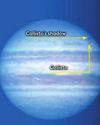
Jupiter moon events
Jupiter is a magnificent planet to observe.
2 mins
January 2026

BBC Sky at Night Magazine
What samples from space have taught us
Alastair Gunn explains what scientists have learnt in the 20 years since the first unmanned mission brought materials back from alien worlds
3 mins
January 2026
BBC Sky at Night Magazine
The Milky Way as you've never seen it before
This is the largest low-frequency radio colour image of our Galaxy ever assembled
1 min
January 2026
BBC Sky at Night Magazine
Merger of ‘impossibly' massive black holes explained
Scientists discover how enormous, fast-spinning black holes can exist after all
1 mins
January 2026
BBC Sky at Night Magazine
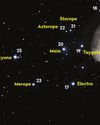
Lunar occultation of the Pleiades
BEST TIME TO SEE: 27 January from 20:30 UT
1 min
January 2026
BBC Sky at Night Magazine
The Universe's expansion may be slowing down
New study suggests current theories of dark energy could be wrong
1 mins
January 2026
Listen
Translate
Change font size