Denemek ALTIN - Özgür
US military could slash a whole country's emissions, finds study
BBC Science Focus
|Summer 2025
The world's largest fighting force is also one of its biggest emitters
-

A new study has revealed the astronomical scale of the US military’s carbon footprint and how relatively modest budget cuts could significantly reduce it.
Published in the journal PLOS Climate, the research found that US Department of Defense (DoD) spending is tightly linked to energy consumption and greenhouse gas emissions. Reducing military expenditure, the authors argue, could yield dramatic benefits for the planet.
The US military is the largest emitter of greenhouse gases of any institution on Earth, generating an estimated 636 million metric tonnes of CO₂ equivalent (a standardised measure of greenhouse gas emissions) between 2010 and 2019.
If the US military were a country, it would rank 47th globally in emissions — ahead of nations like Sweden and Portugal.
And that’s just the tip of the iceberg. These figures only include what’s known as Scope 1 and 2 emissions — the direct emissions from fuel combustion and purchased electricity. They exclude indirect (Scope 3) emissions from employee travel, waste disposal and the supply chain, meaning the true carbon footprint is likely much higher.


Bu hikaye BBC Science Focus dergisinin Summer 2025 baskısından alınmıştır.
Binlerce özenle seçilmiş premium hikayeye ve 9.000'den fazla dergi ve gazeteye erişmek için Magzter GOLD'a abone olun.
Zaten abone misiniz? Oturum aç
BBC Science Focus'den DAHA FAZLA HİKAYE

BBC Science Focus
HEALTH: Eating oats could lower your cholesterol in just two days
The health benefits of a two-day porridge diet lasted for weeks afterwards

1 mins
April 2026

BBC Science Focus
Most people are too sure they can identify fake human faces
Even 'super recognisers' struggle with the challenge. Can you do better?
1 min
April 2026

BBC Science Focus
WHAT'S THE WORST THING YOU CAN DO FOR THE PLANET ONLINE?
Human beings can barely move a muscle without some kind of deleterious effect on the environment around us.
2 mins
April 2026

BBC Science Focus
A bug in the system
The complex arrangement of equipment you see here is part of a particle accelerator.
1 min
April 2026

BBC Science Focus
Snug as a bug in a rug
At first glance, you might feel envious of this little leafhopper, swaddled beneath the folds of what appears to be a luxurious fur blanket.
1 min
April 2026

BBC Science Focus
WHY DO WE ROOT FOR THE VILLAIN IN MOVIES?
Whether it's Darth Vader or Cruella de Vil, we all have a favourite movie villain.
1 mins
April 2026

BBC Science Focus
A TURN TO DISPERSE
Why a fart walk after dinner does more than release your gas
3 mins
April 2026
BBC Science Focus
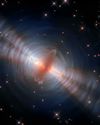
Hatching a nebula
Welcome to the Egg Nebula, an enigmatic structure formed by ejected stardust in the Cygnus constellation around 1,000 light-years from Earth.
1 min
April 2026

BBC Science Focus
7 TIMES AI GOT IT SPECTACULARLY WRONG
For the past four years, AI has been reshaping how we work and live. But its failures are proving just as transformative as its triumphs
8 mins
April 2026

BBC Science Focus
CHARLES ADCOCK, VIA EMAIL: COULD DARK MATTER BE ALL AROUND PLANET EARTH BUT UNDETECTABLE?
Astronomers have gathered overwhelming evidence that 80 per cent of all matter in the Universe is invisible.
1 min
April 2026
Listen
Translate
Change font size