Denemek ALTIN - Özgür
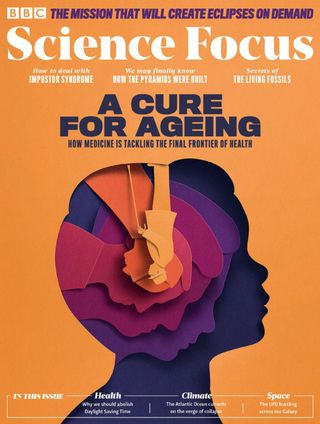
Do We Finally Know How the Egyptian Pyramids Were Built? - A number of breakthrough studies are beginning to paint a picture of how these wonders of the world were built, but much of the story still remains a mystery...
BBC Science Focus
|September 2024
A number of breakthrough studies are beginning to paint a picture of how these wonders of the world were built, but much of the story still remains a mystery...How the Egyptian pyramids were built has long been a mystery. Constructed as tombs for the pharaohs over 4,000 years ago, more than 100 of them remain. The largest one, the Great Pyramid of Giza, was originally 147m tall (482ft). It's made up of about 2.3 million stone blocks, each weighing between 2.5 and 15 tonnes, and would have had to be transported to the building site and lifted into place with techniques available at the time. To put this into context, it's akin to lifting a double-decker London bus to the top of St Pauls Cathedral a few million times.

How the Egyptian pyramids were built has long been a mystery. Constructed as tombs for the pharaohs over 4,000 years ago, more than 100 of them remain. The largest one, the Great Pyramid of Giza, was originally 147m tall (482ft). It's made up of about 2.3 million stone blocks, each weighing between 2.5 and 15 tonnes, and would have had to be transported to the building site and lifted into place with techniques available at the time. To put this into context, it's akin to lifting a double-decker London bus to the top of St Pauls Cathedral a few million times.
There's still debate between scientists on the exact method of raising these heavy blocks to such great heights, says Dr Eman Ghoneim, a professor at the University of North Carolina Wilmington in the US.
Recent research is helping to fill in pieces of the puzzle, however. The most widely accepted theory is that ramps were used to haul the stones up, and it's supported by remains of inclined structures found close to some of the pyramids. But the steepness of these ramps has been the subject of debate.
In 2018, Dr Roland Enmarch, a senior lecturer in Egyptology at the University of Liverpool and his team made a breakthrough by discovering a ramp cut into rock at a quarry at Hatnub, in the Eastern Desert of Egypt, which was an important source of alabaster used in the pyramids. The angle of the ramp was more extreme than expected, with a slope of more than 20 per cent (previous estimates suggested that ramps in Ancient Egypt wouldn't have exceeded 10 per cent). The team was studying inscriptions at the quarry that date back to the time the Great Pyramid was built, suggesting that a similar ramp could have been used in its construction.

Bu hikaye BBC Science Focus dergisinin September 2024 baskısından alınmıştır.
Binlerce özenle seçilmiş premium hikayeye ve 9.000'den fazla dergi ve gazeteye erişmek için Magzter GOLD'a abone olun.
Zaten abone misiniz? Oturum aç
BBC Science Focus'den DAHA FAZLA HİKAYE

BBC Science Focus
HOW UNLIKELY IS OUR UNIVERSE?
Our understanding of the Universe has revealed that its existence, and indeed our own, relies on a particular set of rules.

1 mins
December 2025

BBC Science Focus
DOES YOUR NAME AFFECT YOUR PERSONALITY?
Research is revealing that nominative determinism isn't as easy to dismiss as you might think
5 mins
December 2025

BBC Science Focus
HOW DIFFICULT WOULD IT BE TO FLY THROUGH THE ASTEROID BELT?
In the 1980 film Star Wars: The Empire Strikes Back, Han Solo and friends try to escape pursuing imperial forces by flying through an asteroid field. Droid C-3PO remarks, \"the odds of successfully navigating an asteroid field is approximately 3,720 to 1\". The scene depicts a chaotic, dense field of rocks swirling and spinning through space. This scenario has been played out many times in the cinema.
1 min
December 2025

BBC Science Focus
HOW CAN I BE MORE PERSUASIVE?
Most of us like to think we're rational people. If someone shows us evidence that we're wrong, we'll change our minds, right? Well, not necessarily, because it's not always that simple. Being wrong feels uncomfortable and sometimes threatening. That's why changing someone's mind is often much harder than it seems.
2 mins
December 2025

BBC Science Focus
This bizarre optical illusion could teach us how animals think
By seeing which animals fall for a classic visual trick, scientists are uncovering how different brains make sense of the world
1 mins
December 2025

BBC Science Focus
LIFE AT THE PARTY
The secret that keeps the superagers so sprightly could be socialising
3 mins
December 2025

BBC Science Focus
AIN'T NO MOUNTAIN HIGH ENOUGH
Could an exoskeleton help you scale every peak with ease? Ezzy Pearson straps on some cyborg enhancements to find out
5 mins
December 2025

BBC Science Focus
A slice across the sky
The green flash slicing through the skies in this shot is a fireball.
1 min
December 2025

BBC Science Focus
TB is surging. Should we be worried?
Cases of the world's deadliest infection are climbing in the UK and US. Why is tuberculosis returning and how do we fight back?
4 mins
December 2025

BBC Science Focus
I survived the worst fire in the history of space exploration and had to keep it a secret
Astronaut Jerry Linenger opens up about one of the worst accidents in space, and the cover-up that followed
1 mins
December 2025
Listen
Translate
Change font size